Getting ready for Glacier

14 05 2014

Hi Ho Hi Ho it’s back to the wilderness I go.

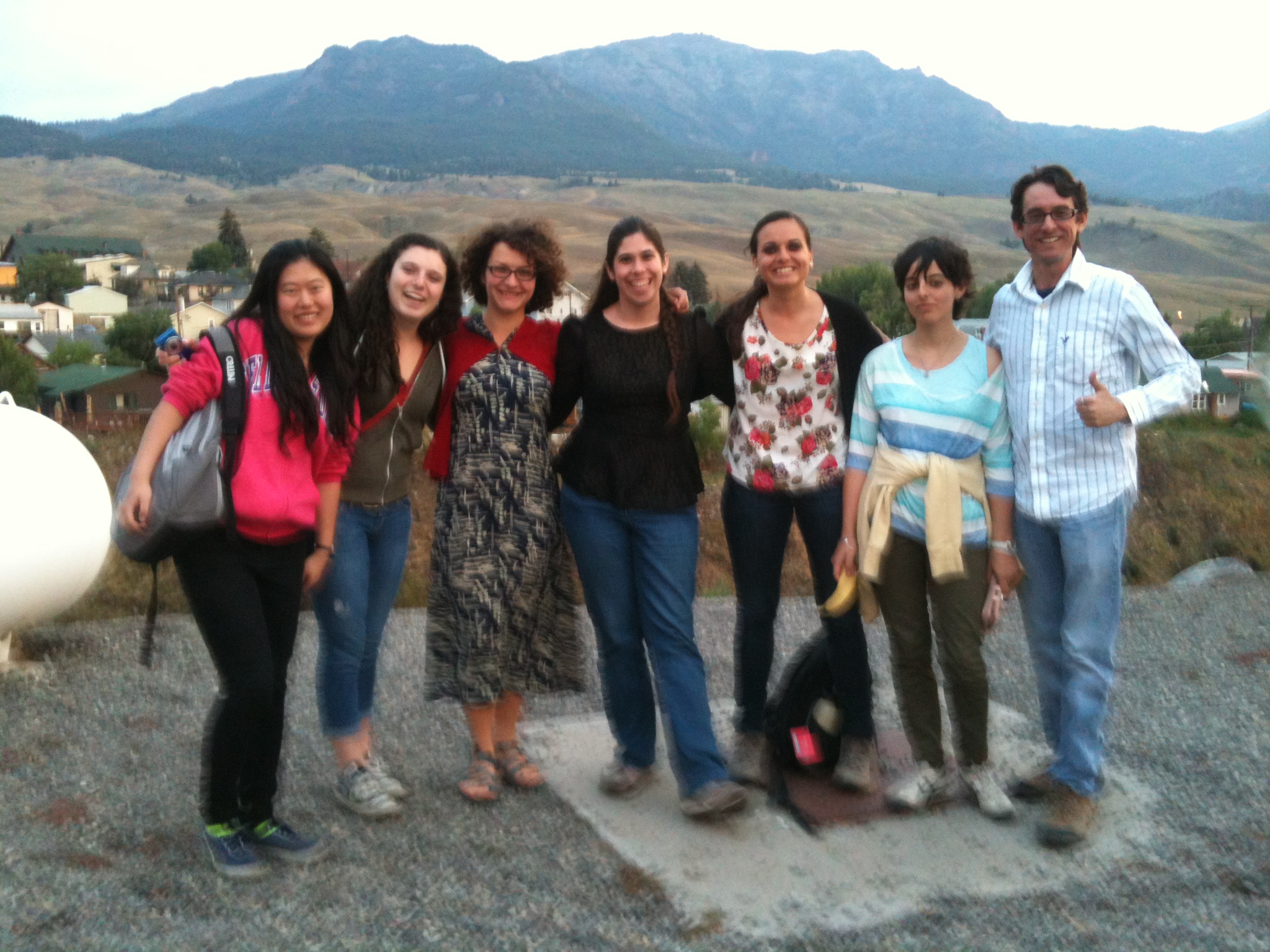
Soon I embark on another summer of duty in America’s National Parks. This year I am headed to Glacier National Park in northwest Montana on the border with Canada. This was a late decision as I had planned to return to Yellowstone and negotiated, what I thought, was a better contract. And then in early April, out of the blue, I got the call from the human resources director for Xanterra Parks & Resorts, the new concessionaire at Glacier.

“We would like to steal you away from Yellowstone, John,” the nice lady on the other end of the phone said.

I was flattered. For the first time in a long time I was a hot commodity in the workplace.

I explained to Glacier’s recruiter that I was committed to Yellowstone and had just signed a new contract. I was excited to be moving to a new location — Lake Hotel — the park’s oldest hotel and by far the swankiest facility in hundreds of miles. The Glacier recruiter, however, was relentless.

“John, Lake McDonald Lodge is celebrating its 100th anniversary this year and we sure would like you to be a part of that,” she said.

Wow. A Lodge with my family name. How could I not listen to the offer.

I agreed to hear her out and she then proceded to ask me a few general management questions. She was interested in how I would handle certain situations of dispute and what not. They were also aware of my certification by the National Association for Interpretation and all those years of studying French seemed to be finally paying off.

Satisfied with my answers the recruiter said she would call back later with an offer. I returned to writing my gay stories, still planning to return to Yellowstone, yet intrigued by this new development.

I kept David apprised of the situation. The move to South Florida had certainly been a struggle and finding a steady paycheck that offered a fair wage was the goal. We were both still dealing with closing the door up in Panama City, trying to sell a house that was draining us of the proper resources required to make the transition to South Florida a success.

I tried to remain chipper, but my freelancing barely kept gas in the tank and food on the table. I began to lose weight from the stress of it all. Living in poverty is truly awful no matter how hard you try to look to the bright side. I could write a book just on my demoralizing experiences at the food pantry.

So when the recruiter from Glacier called back with her offer I was stunned. They wanted me in management at a salary I had not received in what seemed like forever. I accepted immediately and called Yellowstone with the news. They understood.

If there is one thing I have learned — and learned well — through the last six years of my walk through poverty, it is grace. I know, deeply, what it is like to have nothing and to be invisible to society. I know the hurt of shame, the yearning of hope and the compassion of community. While soul crushing as this journey has been at times, I believe it has made me a better person. Stronger and much wiser.

I now leave for a summer to work in my fortress of solitude. Eager to see what life throws at me next.



Chantel’s Story

16 02 2014

New Year. New Life. Much to be grateful for and humble.

I am working a lot. New York calls quite frequently now. I am living on a golf course where they host professional tournaments. Physically, I am in the best shape of my life. It almost feels like a dream.

But it’s not.

Chantel has yet to respond to my emails. We toured Art Basel together and dined on Lincoln Road where she granted me an interview. Balans, she insisted, would do. As we walked the outdoors mall in Miami Beach, I playfully teased her that the N.F.L. was looking to expand in the European market and I was not referring to soccer. She was having none of it.

Chantel turned into much more than I had bargined for. She was young — 29 as a matter of fact, but at first glance it would be easy for someone to mistake her for much younger. I had observed throughout the day that she was clearly a person who could get things done. She had such confidence when speaking with the gallery representatives at Art Basel. This, no doubt, instilled by her mother. Chantel spoke of her mother fondly, saying she was responsible for raising social justice awareness in the family, particularly those key issues on the continent of Africa.

“She told us which brands not to buy from,” Chantel said of her mother’s consumer advice.

We were in the convention center for hours. We talked about a lot of issues of importance in Britain and America. People stared at us. I was flattered to be in her company.

“I believe the human spirit is inherently good,” I said. Chantel was not as convinced. She seemed more interested in my taste of art and design than my philosophical views.

At Balans, Chantel proposed we dine inside so I could conduct the interview free of the hustle and bustle of Lincoln Road. She asked the manager if she could use her Balans card at this location. He said yes, but I took the the bill. Chantel told me she attended a prestigous university in London — a red brick school as I recall — and was on her way to Los Angeles in hopes of publishing a novella about sexuality. She also admited to having a girlfriend — confirming her bisexuality which she revealed during our walk through the convention center. She refused to give her name.

She then turned the tables as I hurried to jot down her words.

“John, have you ever written about human trafficing?” Chantel asked.

I was stunned. The burger I had woofed down just minutes before suddenly felt like coming up.

“Pardon me,” I said.

“In your writings, John, have you ever covered sex workers?” she asked again.

I had not. It was just not the kind of topic I was assigned while working the sports desk back in Dothan, Alabama. But I was not naive about the subject matter. Chantel, it turns out, had done the research, extensive research, in Britain, America, Thailand and Africa. She then asked me if I had ever been a “rent boy” ?!

I said no, of course. This conversation began to make me feel uncomfortable. I didn’t know what to say next. The interview was over.

We hugged as we parted ways outside of Balans.

“Be well,” she said.

I have yet to receive any e-mail from Chantel acknowledging our meeting.

Her story is now a mystery.

Ghosts

Ghosts


Art Basel Introductions

28 12 2013

Miami and I have battled to a stand still.

Some — actually probably most — thought I could not make it here. The traffic, the people, all the realities that come with living in a metropolitian market. It has been a different change of pace than sleepy Panama City and certainly worlds away from what I experienced in Yellowstone.

David is on the mend, recovering from an invasive procedure. His surgeon reminds me a little bit of Albert Einstein. He’s from the North and now practices at a Catholic medical center in Broward County, Florida. Needless to say, he is a busy man.

The doc has also been educating me on the realities of ObamaCare — the good, the bad and the ugly.

“They didn’t consult a physician when they passed this thing,” is his biggest complaint.

No matter how you slice it, whoever has the most money will always come out on top in capitalistic America, because the best drugs cost the most money. This we are painfully learning.

But alas, there have been good times here as well.

My work is getting published a lot. One of my Instagram photos even appeared in the Fort Lauderdale Sun-Sentinel. A few of my stories have gone national, including a fun little preview of the Gay Ski Week in Aspen, Colorado.

But it was Art Basel where I wanted to make my mark. I had my eye on this event for quite some time. It has a reputation in art circles for gathering elite galleries together from around the world to showcase groundbreaking modern art. I attended the first installation in Miami Beach years ago as a wide eyed young features writer for the Panama City News-Herald. I remember it being pretentious beyond belief. Little has changed in that regard.

David and I drove down to Miami Beach in the Beamer on a Saturday afternoon. Although just 24 miles away it took nearly two hours with the traffic. We chose to take U.S. 1 (or Federal Highway as it is also known) and I was pleasantly surprised with the gentrification taking place in North Miami. Once over the causeway and into Miami Beach, parking became the issue as we circled the streets looking for a spot to land. Parking was never an issue in the Panhandle. Here it is part of everyday living. I’m getting used to that.

Chantal at the Co-Op

Chantal at the Co-Op

Once on foot we strolled through several exhibits, including the “public” portion of Art Basel erected on the lawn outside of the Bass Museum. There were interesting pieces, but rarely did I find something I would display proudly in my home. It was a lot of message and shock art. Eventually, we found our way into a Lincoln Road co-op … and that is where I met Chantal.

She was volunteering at the co-op, visiting Miami from Great Britain, a tall slender young lady of mixed features with a delicate British accent. I informed her I was a journalist looking for a story. And, oh boy, did she have one for me.

Not long into our discussion, Chantal revealed she too was a writer and her subject matter focused on sexuality. I took her picture and she introduced me to a few of her newfound friends. All was quite cordial. “Have you been to the convention center?,” she asked.

I had, but refused to pay the high dollar entrance fee. My press request had been denied two weeks eariler. The Swiss, I was told, were being quite stringent with access.

“I have two VIP passes for Sunday, would you care to go with me?,” Chantal asked.

The offer surprised me. I glanced quickly at David, emersed in conversation across the room, but realizing I didn’t need his approval, I accepted Chantal’s offer and quickly made arrangements to call her tomorrow. I would be returning to Art Basel for one more day with a lot to prove and a story to tell.


Going under in South Florida

2 12 2013

Two months in South Florida and already I’m dreaming of Yellowstone. I came here to see David and relax in a tropical climate. It has been anything but relaxing.

Challenging is the word. I have returned to journalism, currently writing for the South Florida Gay News, an alternative weekly publication with legitimate press ties. This week we put out a 96-page print edition. They only do that kind of stuff in Canada anymore. Thus, there is potential here.

And there are people here. Lots of them. Miami-Dade County alone has 2.5 million of Florida’s 19 million people. You must travel by car here because the buses and trains seem inadequate and traffic is thick. I’ve dropped anchor in Broward County where Fort Lauderdale seems more navigable. The locals, the vast majority transplants from the Northeast (New York and Boston), have been friendly and welcoming. David and I have joined a gym, attend civic meetings and regularly monitor our health. South Florida is home to a wonderful medical community. NFL stars have all their sporting operations here — and so do the Cougars for facelifts.

I am writing just enough to support myself and, thank God, the Jeep is running well. I have yet to travel by train or bus — save a one way ticket to Panama City on the ol’ dirty dog herself. The Tallahassee station is still the worst on the route. Filthy.

Down this way, the landscaping and planning are first class and the condominiums quite towering. My articles are serious and typically cover health. I have written about cancer, HIV/AIDS, substance abuse and poverty. The subject can be depressing, but I am learning a great deal, getting a paycheck and coming to understand this region of the country.

Yellowstone seems so far away in so many ways.

The wealth here in South Florida is staggering. People are showy with their toys, especially the sports cars. Coming from Subaru country, it was surprising to see so many Ferraris, Porsche, Rolls Royces and Maseratis on the roads. When I first arrived, David secured a loaner car from the BMW dealership and we motored around in style, making our first excursion into Miami’s South Beach where models, aspiring and oblivious, stroll the outdoors Lincoln Road mall by the dozens. A few blocks away from Lincoln Road, where the tourists feel safe to shop is where you will find the real story of Miami Beach.

The island is going under.

Miami Beach is a 7.5-mile barrier island. It’s a densely populated playground for the rich and famous and it has a flooding problem.

David and I discovered this first hand — or more appropriately first foot — as we hiked the back streets from Lincoln Road to Espanola Way. It was my birthday. A time to celebrate. I do not recall a heavy rain that day but soon the sidewalks were under water and the streets were disappearing as well. I mistakenly thought you could pass with a little tippy toe dance through the water. I was wrong and my toes plunged deeper than thought to find firm footing. The water was ankle deep. I would be dining with wet shoes. Not a pleasant situation.

David was able to get around the standing water easier. He has longer legs. The experience, nevertheless, prompted me to pause and contemplate climate change. There is no doubt the situation is changing in Miami Beach. Waters are rising, but not everyone appears concerned. The young girl working as a hostess at the Espanola Way restaurant we came to brushed off my report of flooding conditions as if it were no big deal.

“Oh it’s Miami Beach,” she said with just the right amount of arrogance to indicate this sort of thing happens all the time. The rest of the restaurant staff spoke Spanish as a first language. This is a language I must improve in. We dined on a mediocre, overpriced meal that night — just as thousands of tourists had done before — fooling ourselves to think we were paying for the ambience.

Living here has opened my eyes to realities of the urban world, realities not found around the Old Faithful geyser basin. Practicing journalism again has reminded me of the discoveries that sometimes you wish had remained buried. Tides change on every new moon in Miami Beach. Billion dollar fortunes are just one hurricane away from disaster. Could there be such a storm on the horizon?


Canyon Cures

11 08 2013

My Yellowstone experience has definitely picked up since transferring to Canyon. I’m now working at the corrals which are 12-hour days that go fast because I’m so busy. I enjoy being around the horses and wranglers. It can get a little hectic, trying to get our guests on a scale to be weighed, but I manage without too much protest. For a fleeting moment, I considered doing this again next year. Another year in the park would be much different, provided I had a vehicle.

Surprisingly, I’ve been given a company car since the corrals are a mile up the road. It’s an old, white Chevy Cavalier. So old it still has a cassette player. Nevertheless, it gets me from point A to B just as my very own Cavalier did not too long ago. At one time in my life, I drove a 1999 silver Cavalier. It was the first car I ever purchased on my own and it was a damn good one. I bought it in Dothan, Alabama while working as a sports writer for the Dothan Eagle. I remember my dad coming to town to help me with the process, but refusing to co-sign despite prodding from my mother. I also remember being slightly aggravated with this decision. Still, I bought the car with help from a local bank and, years later after I paid off the loan, dad’s decision made perfect sense. He wanted me to establish my own line of credit.

And then greed crept in.

Not satisfied with a car that ran fine and was paid off, I sold the Cavalier and used the money to make a payment on a brand spanking new Honda Element. Along with greed it was an obvious overcompensation for something and I wish I knew what. I was in a problematic relationship at the time and trying to play the “Big Daddy” role — ultimately failing miserably. About a year and half after foolishly parting with the Cavalier, the Repo Man came calling for the Element, taking it in the middle of the night. It was early 2009. I had not quite hit rock bottom yet. But I was falling fast.

Four years later and I’m in Yellowstone — driving an older model Cavalier than the one I once owned — to a corral where I sell horse rides by the hour. Much poorer, much wiser, much happier.

Canyon life has been much better than Old Faithful for several reasons, none of which pertain to lodging or food. Old Faithful has the amenities, but Canyon has the charm. It’s a closer knit group here, far away from the over-regulated geyser basins. At Canyon, the atmosphere is laid back and easy going. We’re thick in the woods here. On my first night, I heard howling wolves in the distance. I’ve seen bear, bison and moose while hiking on nearby trails and we’re so deep into the wilderness, the news of the day (USA Today) doesn’t arrive until noon. Two of my colleagues from training are also here — Ashly and Kirk. Ashly is a quiet girl from Indiana who recently graduated college. We split the hours at the corrals. Kirk is from Georgia, in his 50s and comes from a distinguished Atlanta family. He’s a Tea Party supporter so we do not discuss politics much. Thankfully, Kirk gave me a crash course on the Canyon when I arrived. The area is incredibly diverse with towering waterfalls, a huge canyon with yellow stone walls, hidden lakes, scattered thermal features and wildlife abounds.

I’m rooming with another Asian, a nice kid from Taiwan. My previous roommate in Old Faithful was a gay 22-year-old Singaporean graphic artist with an obsession for Pokemon. He left without saying a word. I transferred to Canyon the following day.

I was definitely wounded when I arrived in Canyon. The summer has been challenging, at times it has been downright cruel.

And then I met Ann.

It was a difficult time for both of us, one might even say we were brought together by depression. I had signed up for the recreation center’s trip to Gardiner to see the Montana Shakespeare Company perform “Theater in the Park.” I did this not so much out of a strong desire to see theater, but more of along the lines of enjoying the drive to Gardiner and the incredible scenery of Dunraven Pass. There were nine of us on the trip. I was the only male. I noticed Ann’s accent right away and for a second presumed she could be French. Even better, as it turned out, she hails from Italy, a beautiful country which I visited for the first time this past January.

Theater Goers in Gardiner, Montana

Theater Goers in Gardiner, Montana

We talked the entire way to Gardiner. Once there we learned that thunderstorms had forced the outside performance to be moved into a nearby school cafeteria. The play was “The Recruiting Officer,” a peculiar work by Irish writer George Farquhar. Ann said she did not understand much of what was said. The accents were “Old English” and much of the theatrics were over the top with the obligatory gender bending roles that one comes to expect from a Shakespeare troupe.  All and all, it was a pleasant evening. Ann and I talked all the way back to the Canyon. Two days later we would go on our first hike together — learning more about each other. Step by step.


Fantastic Sky

17 07 2013
The boys of summer

The boys of summer

I tend to look at the sky a lot out here. There’s good reason why this part of the country is called “Big Sky.”  The cloud formations are incredible, especially those puffy cumulus clouds mixed with a blue atmosphere that goes on and on. I am grateful to awake each morning to a new adventure, new people and new stories.

I dutifully walk over a mile to work every morning and eat three square meals a day in the EDR (Employee Dining Room). The deal is, to work in a national park like Yellowstone, you have to live inside the park and so you are provided housing and meals. Those charges are taken out of your paycheck and usually there’s just enough money left over for gas.

“You are not here for the money,” we remind ourselves daily. Still, I’m wondering if I’ll have enough in the bank to get back to Florida. I did not bring my jeep out here which was a major miscalculation. Public transport is inept at best. Tales of people being left stranded throughout the park are quite common as is the sight of hitchhikers thumbing a ride.

During our training in Mammoth, I was lucky enough to bum a few rides from my colleagues. I rode to Bozeman one day with Jerry, a retired banker from the Orlando area, Terry, a school teacher from Nebraska and Joe, my roommate. Jerry and Terry, both Vietnam veterans in their 70s, were quite a pair. They played well off each other and kept the rest of us smiling. Terry is especially entertaining, with his storytelling and sincere love for Yellowstone. He first worked in the park in the early 1960s, returning five decades later, admittedly, to seek out lost youth.

“We used to feed the bears you see,” Terry would say, always emphasizing the “you see” part for dramatic effect. When Terry would enter the EDR, someone would invariably announce his arrival with the word, “Showtime!” Terry is well liked by many of his co-workers. “There was a dump out in West Yellowstone you see,” Terry continued. “And we would ride out there at night to watch the bears eat. They’d stand up on two legs and growl at each other. It was FANTASTIC!”

Everything in Yellowstone is fantastic to Terry and he loves hearing other people share their experiences. On our trip to Bozeman, the four of us piled into Jerry’s full size king cab pickup truck. We stopped in Livingston and paid a visit to Dan Bailey’s fly fishing shop. Across the street sat the train station where Terry was quick to reminisce about passenger service which had long been discontinued.
Once in Bozeman, I got the guys to agree on trying a hippie co-op downtown that Joe and I discovered on our first night in Montana. All the food is fresh from local farms, grown organically and many of the dishes even I could not pronounce. There were several flavors of protein shakes, entrees of tofu and kale and plenty of gluten free grub to go around.

“I wonder if people eating this will get a whole new set of medical conditions,” Jerry mused. Hanging out with such a senior set, health and wellness issues were always on the tip of a nearby tongue. There were obvious risks at play. Since arriving in the high altitude of Yellowstone, Joe had struggled with his balance and took to walking with a stick. He was also having trouble grasping the company’s computer system, although he wasn’t the only one, still privately there was talk that Joe might not be cut out for Yellowstone living. I hoped this would not be the case. Joe is a kind hearted person, quick to share his pistachios or crack a joke to lighten the mood. When I had come down with a sore throat a few days after settling into Mammoth, it was Joe who dug through his medicine bags and found just the right remedy.

On the drive back to Mammoth, Terry regaled us with code words from his Vietnam days. As we drove through the stunning Gallatin and Absaroka mountain ranges, I learned for the first time what — or rather who — a “Mackerel Snapper” is. Raised Catholic, I found this outdated slur to be amusing. The day itself was a blast. One of the better ones I’ve had here. Sadly, Joe and Jerry are gone now. Both have returned to Florida for different reasons. Terry, at last count, is working at the Lake Yellowstone location, while I’m still predicting eruption times at Old Faithful and looking to the sky — cherishing every minute.

Big Sky over Mallard Lake

Big Sky over Mallard Lake


Smoke them if you got’em

5 02 2013

After the hike to the river, the rest of my time in Grand Canyon seemed rather trivial. I promised to work for six months and intended to fully meet those obligations. I had been promoted to a leadership position and given keys to the shop, rising every morning at 6 a.m. to greet the tourists and fellow co-workers needing their cigarette fix.

The Bulgarians and Turks smoked like chimneys. I was amazed how they would go through a pack, sometimes two, a day and wondered if they were saving any of the money they were making, not to mention having any left over to spend on food. Cigarette prices, like everything else in the Canyon, were ridiculously high and halfway through the summer, they raised the prices even higher. And yet, the workers still bought them. They were, after all, trapped by their isolated surroundings and strong addiction. And I was their enabler.

“Mah-bah-row,” they would utter, one by one, striding into the shop to begin another day of work. The Native American women I worked with would always get a good chuckle at my ability to master the exact foreign pronunciation of Marlboro. The laughs were a welcome diversion from the everyday drudgery of dusting pottery and folding t-shirts.

Away from work, my friendship with the Singaporeans was strong and we began planning a trip to Los Angeles. My roommate, Brian, the sports fanatic, was still battling depression and a turbulent relationship, but managed to eek out a smile when I would report on the day’s proceedings at the gift shop.

“Did ya dust today, John?,” Brian would ask, adding just the right amount of comedic touch. “Because, I was in there today and I think you missed a spot.”

I was glad Brian was able to find joy in my situation. There is something comically humbling about underemployment, if you can bring yourself to overlook the negative. Here I was, a college educated, award-winning professional journalist who had just run for the Florida House of Representatives on my hands and knees dusting Grand Canyon coffee mugs made in China.

The fact that half of our merchandise was made in China really struck a nerve with some guests. Many times a guest would have their gift in hand ready to buy only to discover the tiny words “Made in China” inscribed somewhere and this would immediately change their mind. I was also impressed with how Cheng Yew, my Singaporean colleague, would handle this blatant contempt. To the average observer, he looked quite Chinese and with Cheng Yew displayed on his name tag, he was obviously not a Native American.

Cheng Yew working hard

But Cheng Yew’s salesmanship was anything but foreign. It was, rather, quite remarkable. Polite and helpful at all times, Cheng Yew never got mad. He never protested. And he never called in sick. Time and time again, he was able to send the rudest customer on their way with a smile. I was amazed at this ability and so too was upper management. In just 10 weeks of service, Cheng Yew racked up more accolades and special recognition than people who had worked there for years. When selling memories, attitude is everything and Cheng Yew certainly had the right one.

I was, undoubtedly, going to miss my Singaporean friends. Our trip to LA would be the culmination of cultures coming together and living in harmony. I had learned much from our short time together and I’m sure they had too. I managed to request just enough time off to make a quick dash to Southern California and back. I would travel the train, experiencing a new part of America via an old mode of transportation.

California here we come.


Rooming with Arthur

26 05 2012

Nearing the 90-day mark of my Grand Canyon tenure and things are going quite well. I have been promoted at my job, met a great group of friends and moved out of Victor Hall.

I had almost forgotten what success felt like.

The cold and unfriendliess that I encountered when I first moved here has melted away with the winter snow. I think a lot of that frosty attitude comes from the fact that so many people don’t make it through the first week.

As my roommate Arthur attested, “I’ve seen people pack up after the first couple hours.”

Arthur was leery of me at first. A Vietnam veteran, Arthur fit the classic description of one of those cranky, crusty old white guys. The kind of guy that Clint Eastwood captured magnificently in Gran Torino. He is also an avid surfer and semi-practicing Mormon. It had been suggested by the folks at housing, that Arthur would make a good roommate, not because of any shared ideals or interests, but because the other people with no roommates looked like, “serial killers.”

So they placed me with Arthur, Victor Hall’s own brooding Clint Eastwood, and we got along just fine. Arthur worked the early shift at the El Tovar dining room as a waiter. By the time he got off, I was just starting my gig at the gift shop. We were like ships in the night. A perfect deal. And neither of us had to worry about the other getting drunk and doing something stupid.

Arthur has been working the National Park circuit for some time, with stops at Yellowstone, Death Valley and Zion just to name a few. Recently, he settled into a routine where he works Grand Canyon in the winter and transfers to Crater Lake, Oregon for the summer.

“This place is way too busy in the summer for me,” he said of Grand Canyon.

Sometimes we would have philiosophical discussions about culture and world events and he would usually make a crack about my higher learning.

“I’m not college edumacated,” he’d say.

Arthur is in good shape for a man well into his 60s and he took full advantage of living in the parks. He was also a great resource for hiking and day trips. But he did have his prejudices. He didn’t care too much for all of the international workers in the park.

“Unemployment on the Navajo reservation is 14 percent and they’re bringing in these Flips and Thais,” he said. “And most of them can’t even speak English.”

In the hospitality industry, the employment of international workers on J1 Visas has become quite the norm, although during a time of high unemployment among Americans the practice of bringing in foreign labor doesn’t come without criticism. I experienced the same situation back in Panama City Beach during my futile attempts at finding work. There were times, especially when applying for resort jobs, that it felt as if being an American was a liability.

Conversely, for as many Americans whining about losing jobs to internationals, there are those who quit before their first paycheck. Maybe that’s the reason for the importing of labor. Once they’re here they have no where to go and they must fulfill their contract.

Once the locals realized I was going to stick it out, conversations were easier to strike up and people began to smile.

Before Arthur left for Oregon, he bestowed a rare complement on me, “You’ve been a good roommate,” he said.

But he also offered some parting advice about Victor Hall.

“Watch your back,” he said. “Even when you’re in the shower … because nobody here is your friend.”


Isolation sets in

1 04 2012

I’ve only been here a month, but it seems like a year.

I thought I knew what isolation was like, living in Panama City. That was nothing. The Grand Canyon is remote. It is a National Park, after all, on the edge of a cliff, some 7,000 feet up. It’s a good place to go into exile.

Many of the workers here are older people who have retired from their career jobs or military service and are now enjoying a little extra cash in a natural setting. There are also a large number of Native Americans working in the park. The Navajo, Hopi and Apache reservations are close by and their numbers are well represented inside Grand Canyon. And then there are the foreign workers, brought in from countries like Ecuador and Thailand for a three month stay and usually made to clean rooms and bus tables.

I have been assigned to work inside the gift shop at the Maswik Lodge, where my retail experience has helped tremendously. Running a cash register is kind of like riding a bike, you never forget how to do it. My first cash register work came as a high school teenager at the Port St. Joe Piggly Wiggly and now, more than 20 years later, I’ve never been robbed and my drawer has never come up majorly short. Knock on wood. Big ponderosa pine wood.

But I’m not selling necessities at Maswik. I’m selling souvenirs — from t-shirts and jewelry to pottery and greeting cards crafted out of mule dung. Of the dozen or so gift shops in the park, Maswik is the only one designed to be a “green store” and by “green” I don’t mean money. The Maswik gift shop is an example in environmental stewardship and United States ingenuity. Almost all of the merchandise is designed and distributed within the United States and this manufacturing is carried out with strong regard to softening the environmental impact.

It’s a refreshing change from the Wal-Marts and Targets of suburban America, supplied by China.

However, aside from the store’s feel good eco-friendly message, I have noticed some of our top sellers are Tylenol, Advil and Tums. The elevation catches many tourists off guard. So many assume Arizona is the desert and the Grand Canyon is on a river. And while they are right on both accounts, Northern Arizona is not Phoenix or Tucson and very few visitors to the park actually make it to the bottom of the Canyon.

I haven’t ventured in yet, although I do plan on making an initial hike tomorrow, weather permitting. So far, it has been very cold and windy on my off days. The second week I was here, a huge winter storm blew in and dropped 18 inches of snow on the Canyon. Needless to say, I am very much looking forward to warmer conditions.

And as difficult as the isolation can be, I am thankful to be working a lot and saving money. I had a plan in mind when I accepted this assignment. You might call it a mission in discipline and capitalism. The early going, as they say, is always tough. If I can stick it out, the rewards will be great.


Greetings from the Grand Canyon

14 03 2012

So it has been a while since I have been consistently blogging and a lot has changed in my life. I am writing to you from the Grand Canyon in Northern Arizona where I have accepted a job working — and living — inside America’s most famous National Park. It was a very hard decision to come here and I still am not sure if I have made the right decision.

The bottom line is I need to work and it was becoming obvious to everyone that it wasn’t going to happen in Panama City. I had revealed my political leanings and championed labor during a state level campaign and for that I was blacklisted, just as my campaign manager had warned.

“You’ll never work again in Panama City after this, John. You realize that.” she said.

But I didn’t realize it and instead continued to apply for jobs and attend job fairs with the hopes that my public community service would be beneficial in landing a job. Ironically, it was my very public service that was keeping me from being employed again.

Frustration began to set in after Sears canceled an interview. If I couldn’t get on at a shopping mall department store, it was truly a lost cause.

It was around that time that a phone call came from Arizona. It was Thom, Jim’s friend from the Grand Canyon, and he was curious as to why Jim did not make his annual visit. I had to inform Thom of Jim’s untimely passing which led to a long conversation. I was glad Thom called, I enjoyed his company. He was a gregarious burly man and very bright. Thom was also a published author and quite the authority on the Grand Canyon, having lived there for more than 30 years.

It was during our telephone chat that I relayed to Thom how depressed I had become at my long term unemployment. I asked him if the Canyon was hiring and he said yes, but added the conditions “could be hard a tender fellow from Florida.”

Of course, I took this as a challenge and when the application arrived in the mail a few weeks later, I promptly filled it out and mailed it back. Having completed so many applications I really didn’t give it much thought. It had become so routine.

But then the email came with words that were almost unrecognizable: “Job Offer”

Surprised by this sudden turn of events, I talked it over with David, who was happy for me. If anyone knew the struggles of the last four years, it was David. The next step was breaking the news to my family and friends. Mom and Dad were very hostile at first, worried that I was going off on some mid-life crisis. Most of my friends were supportive.

“How many times do you get to live inside one of the seven wonders of the world?,” my whimiscal artist friend Paulette asked.

To satisfy the folks, I made one last run at employment in Panama City. With a job offer in hand from a world class tourist destination, I attended the Windham Job Fair at Bay Point in Panama City Beach — just a few blocks away from my house. It was at this job fair where I became convinced I was indeed blacklisted in Bay County.

The human resources manager had a look of distain as she reviewed my resume and application. She was anything but pleasant. When I pressed her about the job opportunities available, she promised to be in touch. Of course, a call never came.

Roseanne, my dear sweet campaign manager, was right all along.

I would never work in Panama City again.