Coming to My Senses in Canada

17 08 2026

It was the summer of 2026 when I finally let River go.

There was no ceremony to it, no last conversation in which everything was explained and the scales were somehow balanced. Life rarely gives us endings that clean. What remained instead was the knowledge that I had spent three years trying to understand someone who had hurt me, as though understanding the hurt might somehow make it hurt less. I kept looking for the explanation that would turn cruelty into confusion, indifference into damage, damage into something I could forgive.

For a long time, I told myself he might not know what he was doing. Perhaps his aloofness was an act, some private wound behind it. Perhaps he simply couldn’t see what his behavior did to another person. Was my compassion generous, or had it become a hiding place?

Eventually, there was only one fact left that I could no longer explain away: he didn’t care. That realization arrived quietly. I began to understand that my patience had become permission. Sometimes wisdom consists of knowing when the generous interpretation of another person has become an ungenerous interpretation of yourself.

I had people around me who understood this before I did: friends who had traveled their own versions of this road, coworkers who expected more of me than I was expecting of myself, and David, my husband, who had been right more often than I wanted to admit. They had watched me make accommodations for behavior I would have told anyone else never to tolerate. Sometimes hope is the enemy.

Now that I had ended it, I needed distance. Distance from River, certainly, but also from the version of myself that had remained standing at the same locked door, waiting for it to open. I rediscovered my best self in Canada.

Our trip to Vancouver did not begin auspiciously. The train was three hours late, and by the time David and I arrived it was after midnight. At the border came the familiar questions.

“Why are you coming to Canada?”

“Where are you staying?”

“How long will you be here?”

“How are you leaving?”

There was nothing particularly menacing in the questions, but there was a chill to the exchange, the bureaucratic suspicion of two tired men arriving after midnight with luggage and an explanation. Then I mentioned that David and I had come up from Portland for Pride. Something in the officer’s face changed.

“Enjoy your stay,” he said.

And we did.

Vancouver seemed to rise out of water and glass. Towers caught the shifting northern light while mountains stood beyond them, enormous and indifferent. The harbor moved constantly—freighters carrying the serious business of commerce, sailboats and yachts carrying the less serious business of pleasure. Everywhere there seemed to be green: forests climbing toward the mountains, parks opening unexpectedly inside the city, trees reflected in the blue-gray water.

Stanley Park sea wall

David and I settled into the rhythm that marriage often teaches you. Our differences became less something to overcome than something to use. I pushed him to walk farther than he wanted. He indulged my determination to dance late into the night in a cocktail lounge overlooking the harbor. We ate well, talked to strangers, bicycled through Stanley Park and watched a city celebrate Pride without appearing to apologize for its happiness.

Travel inevitably produces the question: “Could we live here?” Vancouver was a yes.

In some ways it resembled Portland: the mild wet climate, the devotion to green space, the proximity of water and mountains, the particular Pacific Northwest conviction that civilization and wilderness can coexist within sight of each other. But there was something else in Vancouver, something harder to photograph. There was a sense of joy.

I don’t mean that everyone in Vancouver was happy, but there was an ease in the streets, a sense that people expected something pleasurable might happen to them. After three years of allowing another person’s darkness to occupy too much space in my own life, I noticed that ease immediately, probably because I had begun to want it again.

We returned to Portland carrying our luggage and the residue of a good weekend — the pleasant exhaustion, the private memories, the feeling that life might be easier somewhere else. That feeling was confirmed before we even reached our front door.

The contrast was immediate. The despair I had grown accustomed to now felt heavier, as though something in the city had hardened. Vancouver had reminded me what it felt like to move through streets animated by pleasure and possibility. Back in Portland, the atmosphere felt different: frayed, angry, unpredictable. What happened next seemed to confirm everything I was feeling.

Outside our building, a young man was destroying the thin trees planted along the sidewalk. They were hardly grand trees, just skinny urban saplings held upright by stakes, the kind cities plant as small declarations of faith in the future. He was breaking them deliberately.

David told him to stop. The man turned.

He was much younger than David, larger, perhaps forty years his junior. For a second there was only that primitive calculation one makes when a stranger begins moving toward you and you realize the ordinary rules governing public life have disappeared.

Then he hit David in the face.

I dropped the luggage and reached for my phone. Before I could do much of anything, another man—a stranger, younger and fitter than either of us—came running. He chased the attacker away.

Then there was silence. David’s nose was bleeding, but it wasn’t broken. We stood there on the sidewalk beside our luggage and the damaged trees, taking inventory of what had happened. A few seconds earlier we had been travelers coming home from a weekend away. Now we were two men confronting the strange fact that violence can enter an ordinary afternoon without invitation.

Something else had happened, too. I wasn’t afraid.

Or perhaps that isn’t quite right. Fear was there, but it no longer had the authority I had been giving it. Standing beside David on that Portland sidewalk, I understood something I had failed to understand during those three years with River: being compassionate does not require being passive. Understanding another person’s suffering does not obligate you to become its casualty. There are moments when turning away is wisdom, and there are moments when refusing to turn away is wisdom too.

River had humbled me. I can admit that now. He forced me to see the limits of my own compassion and the danger of confusing endurance with strength. Canada reminded me of something equally important: the self I thought had been destroyed was not gone. It had simply been buried beneath all that forgiving and hoping.

I had spent enough time examining my failures. I knew where I had been weak. I knew where I had surrendered ground. I knew the difference now between compassion and capitulation.
The trees outside our building would have to be replaced. David’s nose would heal. Vancouver remained across the border, glittering in memory, while Portland was still our city, damaged and difficult and asking something of us. I picked up the luggage.

The age of reflection was over. The age of action had begun.

I had spent enough time examining my failures. I knew where I had been weak. I knew where I had surrendered ground. I knew the difference now between compassion and capitulation.


Rolling with River

27 10 2024

With Stanley’s words ringing in my ear, I set out to find a little joy in my life.

Working the graveyard shift in the train yard made doing things on my days off a challenge. When I was up and ready to go, most people were sound asleep.

So while David slept, I put on headphones and watched a lot movies in our little studio apartment. I did some writing and cooking too and worked out in an empty gym.

But I was lonely. Very lonely.

Then one night, I came to work and everything changed.

I walked into the cleaners’ shack to find a new guy sitting at the table, staring intensely at his phone with a big backpack by his side.

A young man in his late 20s, tall and lanky with curly hair and a smooth skin tone that showed he had recently spent some time in the sun.

I sat down beside him as the other workers filed in and prepared for another tedious shift of cleaning trains. He looked up from his phone, nodded his head at me and immediately turned his attention back to the phone.

“Are you new here?,” I asked.

“Yep, first day,” he replied, without looking up while pecking away at his phone.

“Well, welcome aboard, I’m John.”

“Hey buddy, I’m River.”

I felt good energy between us. Positive vibes for sure.

After our crew meeting, the supervisor pulled me aside. A highly intelligent Navy mechanic, the sup knew how to communicate with me with little words or explanation.

“Look out for River, will ya,” he said.

“Sure thing,” I replied.

Model Cleaners

The sup informed me River would be taking the train to work too, which gave me a little more peace of mind on the commute. There was always some sort of drama on the train not to mention it had basically become a rolling homeless shelter — another casualty of Portland’s laissez faire attitude.

River’s attitude, on the other hand, was upbeat and cheerful.

He gave compliments without hesitation, was quick with a joke and talked frequently of his bold plans for the future.

“I want to own a house in different places all the world,” he told me one morning on our ride home.

“How are you going to do that?,” I asked.

“Oh, I have connections,” he grinned.

Those connections came from his previous work. It was a lifestyle that I was quite familiar with, albeit buried deep in my past.

“I was a dancer before I got this job,” he said. “Made a lot of money too, but I spent it just as fast as I made it.”

“What kind of dancing?,” I naively asked, already decided that I was going to play dumb for a while.

“Strippin’ at the bars downtown.”

As I listened, memories of my very first relationship with a man came flooding back into my consciousness like a tidal wave of emotions.

He went on, “There’s videos and pictures of me all over the internet.”

Before he could say any more, the train reached my stop and I wished River a good day.

“Get some sleep and I’ll see you later,” I said.

But I wouldn’t.

That was the night River was attacked.


Moving on up

10 05 2024

Having finally had enough of the abhorrent behavior from the sidewalk campers in the neighborhood, I set out to find us a better home.

We toured several apartment buildings before choosing a cute little studio in the Pearl District. It was high up enough that the problems on the street couldn’t reach us. The zone we would be moving to was a crucial business and tourism district that would not tolerate the antics from our previous neighborhood. Try as they might, pitching their tent and smoking crack on the sidewalk around breweries, bookstores and salons had an expiration date that was rapidly approaching.

David’s brother and my friend, Kieran helped us move. We rented a U-haul and packed up our stuff right in front of the druggies, who of course got in their last minute heckling. It took every ounce of discipline I had ever mustered to keep my composure. I remember losing my temper with the landlord in South Florida when he sold the apartment and gave us a month’s notice to vacate. It wasn’t a pretty scene and I was not going to take bait again.

“Ignore them,” David instructed. Kieran and I did just that as we loaded furniture into the U-haul.

I met Kieran at the grocery store, where we both worked menial jobs. He had flunked out of college and was washing dishes. Skinny with long brown hair that flowed down past his shoulders, Kieran reminded me a lot of myself at that age.

He was smart, but undecided on what kind of career to pursue. He still is.

We talked about going hiking a lot until one day, he said, “Do you want my number?” Looking back, it has been the most aggressive move he’s ever made.

We would go on a lot of hikes together and to the movies, concerts and out to eat. David gave his seal of approval and graciously understood that it was a friends night out. For the longest time, Kieran was the only person in Portland who I felt truly understood me. He has a sensitive soul and compassionate heart.

So Kieran and Russ helped us move into our new place. God bless Russ. David’s younger brother had helped us move in and knew the routine. We loaded up a dolly full of heavy boxes into an ancient elevator, the kind where you close one door and pull a metal gate in front of you before you can go anywhere.

Then we dollied the boxes down sets of narrow marble stairs, igniting loud bangs with each drop, before finally rolling out onto the street. We had been so happy to move in here four years ago and now couldn’t get out fast enough.

Portland had changed drastically in those four years and it wasn’t a good change either.

A fresh start was needed. We were moving from a building over 100 years old to one barely a year old. Quite a difference. Awaiting us was a beautiful view of the west hills, a kitchen complete with a dishwasher, onsite gym, rooftop clubhouse and many more amenities.

“John, you finally got your box in the sky, David quipped.

Now I had to get the job to pay for it and the clock was ticking…

David on the roof


Vulnerability

19 09 2020

Sept. 14, 2020

What day is it? I don’t know anymore.

Smoke has covered the city for a week now. Hazardous air conditions added to the on-going health pandemic and civil unrest in a city that has become a magnet for political extremists.

I had intended to finish the travel blog about our train ride to Wisconsin, but plans change.

The job at the grocery store is over. I’d rather not go into the details there. Not now.

I’m still writing. It’s what I know and I can do it well and quick when needed. The election is seven weeks away although I doubt it will be decided during the first week of November — or possibly December.

Uncertainty, much like the smog in Portland, hangs over America. There are more than two camps out there even though we are given just two viable options on the ballot.

And while I’ve been pushed around, gas lit, humiliated — the list goes on and on — I am determined to persist.

Change has to happen. New communities are being born out of the novel coronavirus as leaders survey what matters most in life. The old ways are going up in smoke. Disinformation campaigns are fully operational. The foolish easily duped by silly and often outlandish conspiracy theories. Blame and condemnation get attention, but the real work involves trying to understand how government agencies function and what opportunities are available in the private sector.

This is where anger must be cast out. Let’s not degrade public service into some sick soap opera reality show and strive to have a healthy and prosperous society. Leaders have to be bold now and grasp the FACT that the country is on the wrong track and it’s time to make adjustments.

Change must take place. I feel it brewing inside my soul. I will not give up. I know what I want and need. I am not naive to think I can go it alone nor do I want to. I miss friends. I yearn for affection again.

We’ve seen the worst.

Now let’s go be better.


Building Update

3 09 2020

Hi,

Yes, i am still in America. It is not as bad as they say.

We visited a few Midwestern states for vacation. Traveling in the age of COVID-19 takes some getting used to. We took the train on this trip. Mandatory mask wearing for coach travelers and no access to the dining cart. It was a projected 46-hour ride — both ways.

We chose the Empire Builder.

It was a beautiful ride, sleep be damned. I did not realize how enchanting fields of corn, grain and sunflowers could be.

Cascadia

From Portland, Oregon, train travelers have multiple options. Amtrak operates routes to Seattle, San Francisco, Los Angeles and beyond. The Empire Builder ends in Chicago. We got off one stop before, in Milwaukee, Wisconsin. It was quite a journey.

The Washington stretch is nothing short of amazing. Traveling along the Columbia River Gorge, we were front row to spectacular views of mountains, waterfalls, farms, villages and fishing boats. Looking back, the train made good time.

We climbed out of the gorge and onto a plateau near Spokane, Washington. Once in Spokane, we hooked up with the train coming from Seattle. The Seattle cars were placed up front behind two engines. A dining car and an observation/lounge/cafe car separated the Seattle section from the coach and sleeper cars that had originated in Portland. The train was far from full, which allowed for proper physical distancing.

Yes, pandemic protocols were still in effect as we were required to wear face masks at all times, except when eating and drinking. I did my best to stay properly hydrated. Sleeping in coach chairs proved to be a challenge. Our car’s air cooling system had no problems. Perhaps Amtrak was testing its future chill car.

From Cascadia, The train makes one stop in Idaho and then tours through Glacier National Park and into Montana. This could be considered the high point of the route. Jagged mountain tops and crystal clear rivers. We were lucky enough to see Glacier and Blackfeet Nation lands on the “to” and “from” routes.

Eastern Montana and pretty much all of North Dakota are grasslands. Fields of grain and crops.  On some parcels of land there appeared to be the presence of hydraluic fracking operations. Wells extracting natural resources. Designated by a flame.

That process is called flaring. This is where we are now.

Good night, America. Write soon.

John


Pandemic Pains & Wisdom

19 05 2020

I am writing this to you wearing a surgical face mask. We are now entering phase two of this pandemic.

But all is not lost.

The buses still run in Portland. Ridership is down and unemployment rising. More people appear to be living and sleeping on the streets. Not a pretty sight in some cases. COVID-19 is turning the old town and Chinatown sections of the city into slums. I have been witness to awful screaming and fighting among the homeless. The city, much like the nation, often challenged to do more for the mentally ill.

The pandemic has brought forth all the pain America has to bare.

Personally, I’m in decent shape all things considered. Last week, an oral surgeon took three of my teeth. Extracting wisdom, as we say. The process of discovering a health problem was painful. X-rays determined surgery was needed and for the first time in good while, I drifted off to sleep. When I woke up the teeth were gone and my mouth full of bloody gauze. They wheeled me down to the car where David picked me up and drove us home.

Four days later I’m writing to you, readers and loyal followers to say thank you. Thank you for reading and supporting my endeavors through the years and the wonderful journey life has provided.

COVID-19

These are truly challenging times. I have lost dear friends to this pandemic. I have listened attentively to my friends, neighbors and co-workers concerns about society and government. The Coronavirus has impacted so many lives and created intersections that are not always fatal.

I have been privileged to meet the acquiantances of and become friends with some truly remarkable people. You will never forget those people you worked with through this pandemic. The level of learning I have experienced is off the charts. Not exactly the original job description of a housekeeper.

Helpers, scoundrels, the naive and dumb, egotiscal tech bros, mama hens and grizzled veterans have all been exposed. I have found who cares, who acts and who sits on the sidelines.

I have fallen in love at times and felt the sting of disappointment as well.

How we got forth as a world will be interesting.

We must re-evaluate what we prioritize, fund and take care of. We must change our behaviors and consumer habits. Most importantly, we have to look out for each other beyond wearing masks and checking symptoms.

Don’t let relationships reach a dead end without seeking or asking for help.

Pull yourself together and check on your spouse, partner, friend, family member, pet, building superintendent, area supervisor, etc. etc.

And remember, you got this.

See ya on the next travel adventure, hopefully.

Ciao for now.

John


Cold Calculations

1 03 2019

It’s winter in Oregon. The winds blowing through the gorge can be harsh at times. There is very little snow fall in the city. That’s ok.

Getting through my first winter in the pacific northwest has been quite interesting. I was warned about the long nights, cold, dampness and the need to stock up on vitamin D. I am also coming to understand the nihilistic, doom and punkish attitude populating parts of Portland. “Keep Portland Weird!” is a frequently used expression.

It’s annoying sometimes. I’ve been harassed on the streets here so much that I worry my demeanor may be sinking to the level of those sludge covered “homeless” campers.  The empathy I had upon arrival is shrinking. Originally instructed to recognize these gypsies’ existence, I now recognize ignoring their savage tactics is the best option.

In the face of these challenges there is still much to be learned. What I am discovering about the pacific northwest millennial species is they are complex, creative, intelligent and quite daring. Winters push most indoors. There are those who brave the mountains, skis in hand. I haven’t ventured up to the slopes yet. This old Florida dude is still adapting.

At work I have benefitted from social policies enacted by left wing bureaucrats. The goal is to continue performing well and lifting the company. David reminds me not to focus all of my energy there. Journalism remains my passion. I write now for love and peace.

Travel-wise, San Francisco and Alaska have been on my mind. San Francisco is obviously one of America’s great cities and Alaska a newer frontier that seems forrested in mystery. Bored with work, I have decided to pursue a graduate degree in urban planning and design.

Entering the university academic realm again seems odd and the threat of student debt is like a flagger on a construction site. However, there are advantages to returning to campus. For starters, the interactions and access to a diverse representation of society is important. There is a human tendency to retreat into safe spaces and minority bubbles. We all live, from time-to-time, in our own little echo chambers. This probably best describes my tenure in south Florida.

After two meetings with the graduate studies director, I decided to seek a master’s in urban and regional planning. I ordered a book from the library in Burbank, California. It was recommended by my friend Wong in San Francisco. Guide to California Planning states there are five elements to planning:

  1. Laws & Regulation
  2. Environmental Analysis
  3. Socio-economic Analysis
  4. Political Approval
  5. Design

Dreams the way we planned them — if we work in tandem.

Shall we begin.


Future Designs Downsized

23 12 2018

PDXStudio

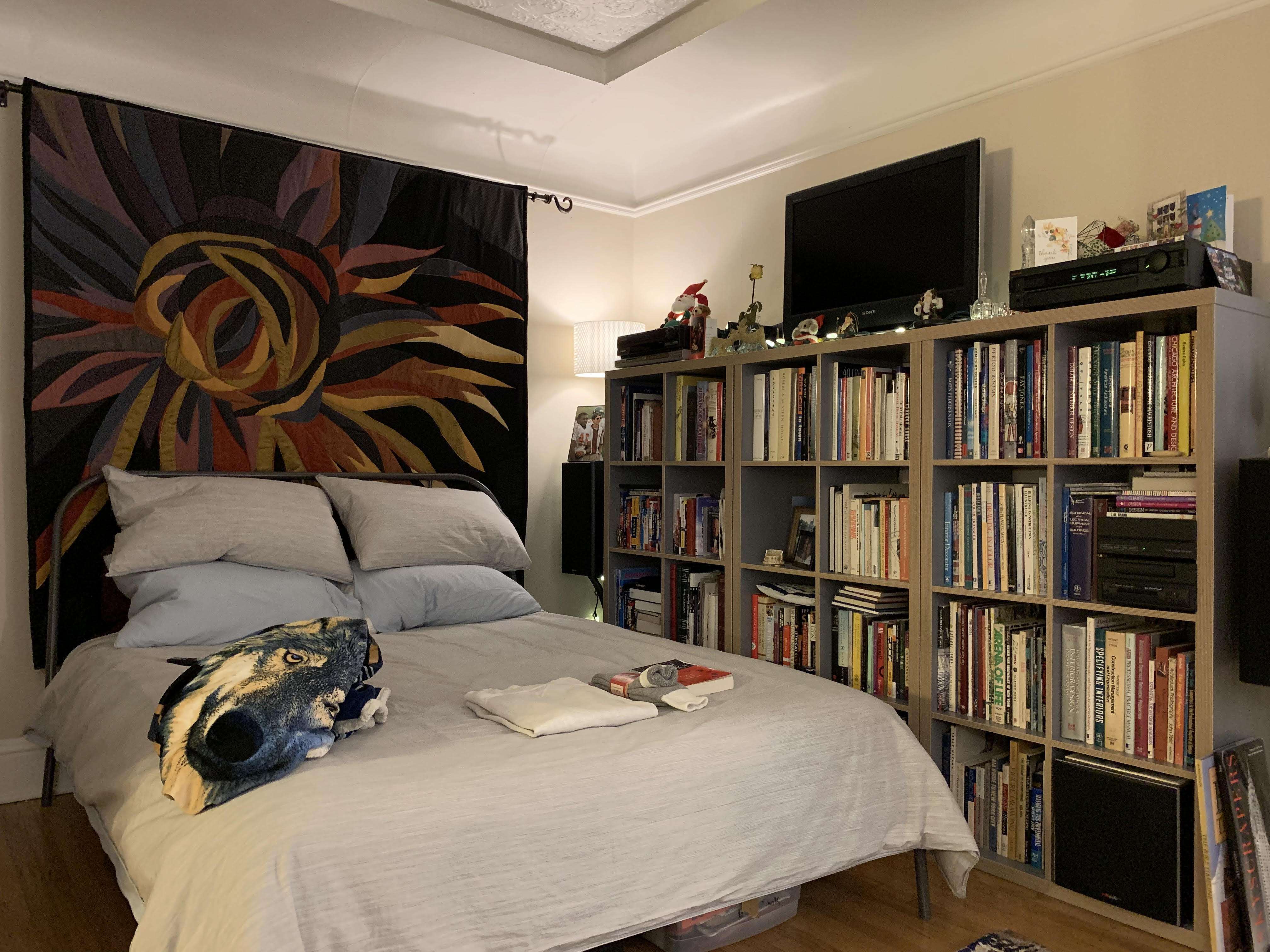
Space comes at a premium in most urban American cities. I’m fortunate to be living with a master designer and am getting quite a lesson here in Portland.

It’s winter now. I have my boots and heavy parka coat ready — if Alaska calls.

Working at the grocery store is making me stronger and wiser. Major construction projects continue around our market. Cranes coming in, yellow vested workers becoming more frequent and long nights with plenty of rain.

David has worked miracles with his design on our studio. I’d love to see him get a chance in the neighborhood. Portland’s northwest has some landmark structures, no doubt.

I have been learning how to operate in tight spaces. At home, at work, in life.

There are times when you must move your body certain ways. City living is a lot like yoga class only at a faster pace. Although David says this is nothing like New York. The market floorplan can be challenging for both consumer and employee. Even more so in a full, petit warehouse. I believe I am holding my own quite well, thank you.

David has done much of his studio design with a modest budget. Portland has some real gems in thrift stores but for furniture, we have leaned heavily on Ikea, the Swedish retailer out by the airport. You can shop and munch on meatballs as the jets hum overhead. It’s fantastic.

Our studio is 500 square feet. At first we took what we could get from thrift stores but it was never a proper fit. The studio is nearly completed now, just in time for the holidays. We have a dwarf Alberta spruce decorated with lights and ornaments. The idea is to put the tree back into the ground after the new year. It’s a different concept from before when we relied on artifical trees or ones chopped down in the prime of life.

Recycling and sustainibility are central themes of our new life here in Oregon.

When space matters, trash is reduced. A limited amount of room means clearing out the things you can live without and removing toxic elements. There are times when I miss Florida’s sunshine, but I will not weep over its entrenched political culture. It’s a deeper dive on the West Coast. Liberal positions on the environment, planning and engineering, social economics and human rights are embraced and implemented. At last, I have a job that pays a fair and livable wage.

Am I satisfied? No.

Getting a foundation should have never been this hard. Perhaps, that is my southern, white male privilege showing. I know I must let go of the frustration with Florida. Bitterness will only drag me down. I am determined to be happy and cherish all that life offers. I am committed to providing for my family and grateful for the strength to earn.

May these blessings continue in 2019.

Red Dawn


Gratefully Injured

11 11 2018

I injured myself. It was bound to happen.

“You’re lifting too much,” Ani said. Smart kid, that Ani.

Yes, my housekeeping duties require extensive lifting and reaching. It’s a physical job and I’m grateful to have it. Aside from cleaning chores, the interactions with co-workers like Ani are important. After years of indepedent contractor work, it is refreshing to be a part of a company again.

Great cities are built by great companies, mind you.

Life in Portland is going just swell. I have been invited on two press tours since my arrival here — Long Beach, California and Puerto Rico. Long Beach was a solo adventure and Puerto Rico a group effort. Both destinations interesting in their own way. Long Beach, in the shadow of Los Angeles, is run by a young mayor. A gay man determined to improve living conditions by implementing new concepts in this coastal southern California port city.

Puerto Rico, still suffering from a barrage of hurricanes, offers beautiful nature and lots of rum. Bacardi is the major player there. I learned how to make a simple refreshing cocktail. Pronounced Die Q Re. It’s basically sugar, superior Bacardi rum and ice. It’s hot in the tropics and ice is a key ingredient.

My tour group in Puerto Rico was a lot of fun. It included seasoned travelers and newcomers. It was designed for the LGBTQ community. There were journalists from Los Angeles, New York and San Francisco there. I managed to connect on a personal level with some of them.

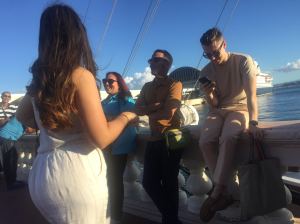
Our group sets sail.

Long Beach seemed to be this vision of what we can accomplish. Puerto Rico offered a chance to relax from the heavy work load, over-reaching and contenious mid-term elections. I knew I was hurt when the luggage became hard to handle at the airport. Perhaps I could have packed lighter. I did not use the laptop, but the sports coat was put to good use.

David gave his blessing on both trips. He stayed in Portland continuing to piece together our studio. We both received influenza vaccinations before I departed to San Juan. When I returned the doc diagnosed me with lateral epicondylitis, aka tennis elbow.

So I’m slowed down. Just in time for the holidays.

Time to reflect on the incredible year we have had. A cross country move. New friends and new challenges. A rennaissance of the soul.

I believe this injury is divine intervention to force my conscience into absorbing the events of the past year. To still be standing and breathing — much less working — is something to be eternally grateful for. I am in a good place in life. Time to cherish that and offer a rum filled toast to even better times ahead.

Long Beach stairs


New Seasons in the PAC-Northwest

27 09 2018

The leaves are changing and some are falling. Autumn is here. I am content with my life in New America. The financial difficulties and poverty struggles are in the past, although the memory still fresh in my mind and it serves me well in my daily interactions with the less fortunate.

The streets of Portland and Seattle this summer were riddled with the lost — San Francisco, I heard, is way worse. In Seattle last week, I had a delightful time with a local son — a true west coaster. Kyle showed me the sights around Capitol Hill, a neighborhood I had previously visited five years prior with my good friend, Ryan.

Ryan is on the slow boat to China, but that’s another story.

Kyle is a visual merchandiser for a major American department stores chain headquartered in Seattle. He is a handsome man who likes to read and is interested in things that nourish your soul. He also enjoys a good laugh. We got a long famously.

Seattle, like Portland only to a larger extent, appears to be a growing city with cranes of construction abounding. It is picturesque with its hills and harbor — protected from the ocean storms that often batter the east coast around this time of year. From my perspective, Seattle is a politically left-leaning city that gets business right and welcomes tourists from around the globe.

SeattleKylesView

Before skipping around Capitol Hill with Kyle, I had to participate in yet another episode of David’s car breaks down. He drove the BMW up from Portland and took it down into the masses at Pike Place Market where the vehicle promptly overheated upon entering the parking garage. Smoke fumed from under the hood as we descended into the underground garage.

It would take 18 hours to get the car out of the garage. Two tow trucks couldn’t fit and AARP offered little assistance. Frankly, I did not handle the situation well. I have long since lost my patience with David’s desire to rehab this particular car. Fans, radiators, tires, you name it — I’m over it.

I wonder how many marriages have become divorces because of cars?

But I digress.

I remain grateful for our life here on the West Coast. The challenge of learning a new city, state and regional culture is exciting. Working your way up a ladder is fun and seeing David’s design spirit come to life is true joy. Revisiting Portland is a glimpse into where he was born and raised. The hospital is still here. We drove past his boyhood home in Mount Tabor. David was a junior in high school when President John F. Kennedy was assassinated.

“My passion is still with architecture and design,” David said recently. “But I have yet to find my vision here in Portland,” he added.

DavidPortland2018

We still have our tiny flat in one of America’s queen cities. I now work for a B corporation and we are starting to make friends. I would like to see Kyle again. I’m not sure what that agreement would be. Maybe a trip to San Francisco or Japan?? You know, to save the lost…..