The City I Thought I Knew

16 11 2026

On losing an election, leaving a neighborhood, and the uneasy business of beginning again.

I am writing this sitting on a cardboard box in a house that does not yet feel like home. Around me are the scattered remains of another life: furniture waiting to be arranged, possessions wrapped in paper, the familiar disorder of beginning again. David and I have crossed the river, leaving behind the neighborhood and the routines that had come to define our lives in Portland. Outside, the city continues its ordinary business, indifferent to our departure. Inside, I find myself wondering whether we have simply changed addresses or begun the more complicated process of leaving something behind.

Much has happened since I last wrote. I ran for Portland City Council and lost, an outcome I had anticipated almost from the beginning. I entered the race late, without the machinery, money, or political relationships that serious campaigns require. I knew the odds, although knowing something intellectually is different from experiencing it. Still, I enjoyed the improbable freedom of becoming a candidate, of standing before strangers and speaking without the usual restraints about a city I had watched change, sometimes beyond recognition.

The decision to run had been gathering force for some time. David had been attacked on the street, an experience that altered our sense of safety in ways that statistics and political assurances could not repair. Portland, meanwhile, seemed unable to emerge from the long shadow of the pandemic. Storefronts remained empty, public spaces felt neglected, and the peculiar lethargy that had settled over the city began to feel less like a temporary condition than a permanent state of mind. I had spent years watching these changes from the ground, working on the front lines of the service economy, encountering the city not through policy papers or campaign briefings but through the people who lived and worked in it. I thought that perspective might count for something.

And for a while, it did. There was something unexpectedly liberating about speaking publicly from the authority of one’s own experience. I was not a career politician, nor did I pretend to be. I knew what it meant to work a shift, to depend on a paycheck, to watch a neighborhood deteriorate while officials spoke reassuringly about progress. I believed there ought to be room in government for someone whose credentials came not from committees and endorsements but from the ordinary, sometimes exhausting business of making a living.

What I discovered was that politics had its own ideas about whose experience mattered.

The other candidates were accomplished, disciplined, and, in many cases, far better prepared than I was. I came to respect the seriousness of their campaigns, even as I began to understand how little room the process left for an amateur. At one forum, the woman who would eventually win the election, an older candidate with an impressive political résumé, made a remark about my work in the service industry that I experienced as condescending. It was the kind of small public humiliation that can pass almost unnoticed by everyone except the person receiving it. I remember feeling the heat rise in my face, followed by an anger I struggled to contain.
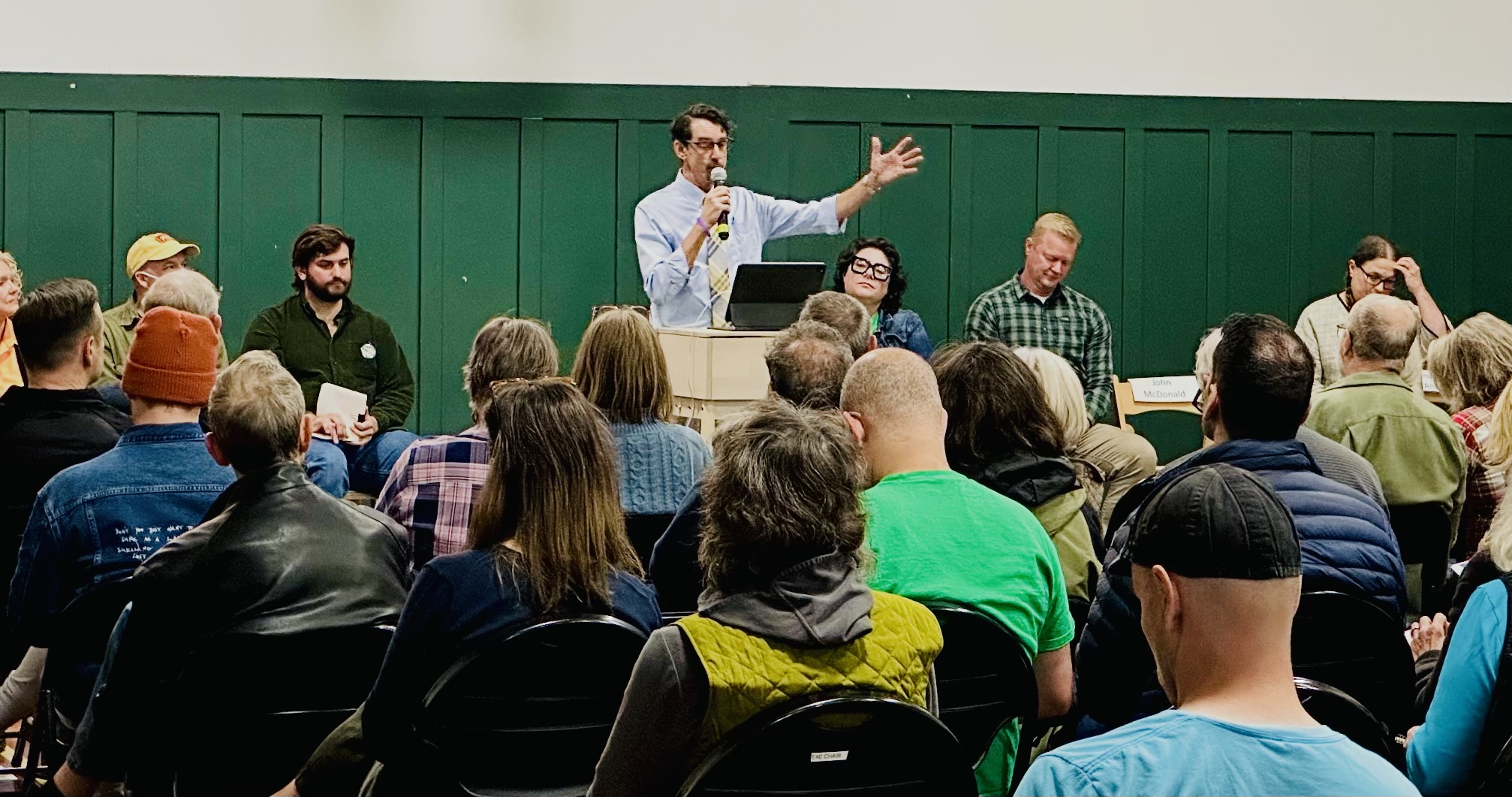
What made the moment particularly galling was her support from organized labor. I had assumed, perhaps naively, that unions would recognize something of their own membership in a working man running for office. Instead, I began to see the distance between the people who do the work and the institutions that speak in their name. Endorsements were negotiated, alliances maintained, political debts remembered. The workers themselves, the men and women whose hands built the city, often seemed strangely absent from the conversation.

During another debate, I listened as the same candidate described her role in bringing major transportation projects to Portland. I thought of my brothers back in the shop, men who had spent years laboring over the bridges and rail lines that politicians now invoked as evidence of their accomplishments. I knew what their days looked like, the physical demands of their work, the fatigue they carried home. I wanted to interrupt, to ask who had actually built those things, whose labor had made the achievements possible. But another candidate had warned me against making an enemy of her, and so I remained silent. I have thought about that silence more often than I have thought about losing.

Perhaps it was a mistake. Perhaps it was restraint. Politics has a way of making the distinction difficult.

I had been around the political world before, and much of what I encountered felt depressingly familiar. The language had changed, the faces were different, but the rituals of self-promotion and the careful distribution of credit remained intact. On Portland’s west side, those faces also seemed to reflect a remarkably narrow range of the city’s population. I found myself looking across rooms filled with people who spoke earnestly about inclusion while reproducing, almost unconsciously, the same social arrangements they claimed to be changing.

I had hoped to bring something different to those rooms. I spoke about kindness, about the harassment I had experienced during my years in Portland, about the occasions when speaking openly had brought consequences, including being censored on the radio. I believed those experiences might open a conversation about the distance between the city’s progressive self-image and the lives of people who did not always feel protected by it. Instead, I often encountered polite indifference. The words were heard, perhaps, but they did not seem to travel very far.

The press offered little consolation. Having worked as a journalist myself, I knew how easily a political story could harden into a familiar narrative, with certain candidates assigned significance and others relegated to the margins. I watched that process from the other side of the notebook and found it no more appealing. Reporters appeared to have decided what kind of election this was going to be, and a late-arriving service worker with an unconventional campaign did not fit comfortably into the story they were telling.

In the end, I received nearly 800 votes. It was not enough to win, or even to come close, but it was more than I had expected from a campaign conducted largely around my regular work schedule. I had continued going to my job, paying my bills, and living my life, declining to turn every conversation into a request for money. There was a certain dignity in that choice, or so I told myself. What I failed to appreciate was that fundraising had become one of the principal measures by which a candidacy was judged.

The irony was difficult to ignore. In a political culture that regularly condemned the influence of money, the ability to raise it remained a powerful indicator of legitimacy. Candidates with substantial financial support were treated as serious contenders, while those without it struggled for attention, regardless of what they had to say. I was equally troubled by the city’s use of public funds to subsidize campaigns at a time when municipal departments were facing budget cuts. Perhaps there were sound arguments for the system, but from where I stood, the contradictions were impossible to miss.

There were smaller revelations, too, some of them more personal than political. Friends I had expected to help disappeared into their own lives, offering encouragement but little else. Others surprised me with their generosity, giving time, advice, and support without being asked. Campaigns have a way of stripping relationships of their comfortable ambiguities. You learn who will stand beside you when there is nothing obvious to gain, and who prefers to admire your courage from a safe distance. I came away with fewer illusions, which is not necessarily the same thing as having fewer friends.

I do not regret running. For a brief period, I stepped outside the familiar boundaries of my life and tested an idea that had been troubling me for years: that if I wanted my circumstances to change, I might have to become an agent of that change myself. The campaign gave me an education no amount of reading or political commentary could have provided. I saw the machinery up close, its strengths and its absurdities, the sincere idealism of some participants and the calculations of others. I also saw how difficult it is to challenge a system while attempting to gain admission to it.

The election reaffirmed Portland’s commitment to a broadly progressive approach to government, much of which I continue to support. But I left with a sharpened suspicion of political orthodoxies, whatever language they use to describe themselves. No ideology possesses a monopoly on virtue, and no system is immune to the temptations of power, favoritism, or self-preservation. I had entered the race believing that some of the city’s problems could be addressed by better leadership. I emerged wondering whether the habits that produced those problems were more deeply embedded than I had understood.

And then there was the city itself.

Portland had once seemed to me a place of unusual possibility, a city whose eccentricities were part of its charm and whose imperfections could be forgiven because they existed alongside a genuine spirit of invention. There had been a time when the streets felt alive with that possibility, when neighborhoods seemed to be discovering themselves, when the city’s confidence was infectious rather than defensive. I do not know exactly when that feeling began to disappear. Cities rarely lose their character all at once. The change happens gradually, through a succession of small disappointments, until one day you find yourself looking at familiar streets and wondering what happened to the place you remember.

Perhaps some of this is age. I am not getting younger, and the patience I once had for waiting out a city’s difficult periods has begun to diminish. I have reached a point in my working life where the possibilities for advancement seem increasingly limited, and I am no longer certain that Portland’s recovery, however it eventually unfolds, will happen on a timetable that has much to do with my own. I can imagine the city finding its way again. What I find harder to imagine is myself spending another decade waiting for it.

David and I agreed that our new home would be temporary. One year, we told each other, enough time to settle ourselves, take stock, and decide what comes next. It was an oddly comforting arrangement, a lease with an expiration date and, beneath it, the suggestion that our lives might still contain an unexpected turn. Somewhere beyond Portland there are cities we have not lived in, streets we have not walked, mornings that have nothing to do with the disappointments we have accumulated here.

For now, I am still sitting on the box. The rooms are unfamiliar, and the work of making them ours has barely begun. Across the river lies the city I tried, in my small way, to change, a place I have loved and resented, defended and criticized, sometimes in the same breath. I do not know whether we will leave it for good or whether this restlessness is simply another expression of the affection I have never quite managed to relinquish.

The box beneath me will eventually be unpacked. The furniture will find its place, the walls will acquire pictures, and the unfamiliar rooms will begin to hold the ordinary evidence of our lives. But I suspect the question that followed us across the river will remain long after the last piece of packing tape has been thrown away.

At what point does a place stop being home? And how do you know when it is time to go?


Coming to My Senses in Canada

17 08 2026

It was the summer of 2026 when I finally let River go.

There was no ceremony to it, no last conversation in which everything was explained and the scales were somehow balanced. Life rarely gives us endings that clean. What remained instead was the knowledge that I had spent three years trying to understand someone who had hurt me, as though understanding the hurt might somehow make it hurt less. I kept looking for the explanation that would turn cruelty into confusion, indifference into damage, damage into something I could forgive.

For a long time, I told myself he might not know what he was doing. Perhaps his aloofness was an act, some private wound behind it. Perhaps he simply couldn’t see what his behavior did to another person. Was my compassion generous, or had it become a hiding place?

Eventually, there was only one fact left that I could no longer explain away: he didn’t care. That realization arrived quietly. I began to understand that my patience had become permission. Sometimes wisdom consists of knowing when the generous interpretation of another person has become an ungenerous interpretation of yourself.

I had people around me who understood this before I did: friends who had traveled their own versions of this road, coworkers who expected more of me than I was expecting of myself, and David, my husband, who had been right more often than I wanted to admit. They had watched me make accommodations for behavior I would have told anyone else never to tolerate. Sometimes hope is the enemy.

Now that I had ended it, I needed distance. Distance from River, certainly, but also from the version of myself that had remained standing at the same locked door, waiting for it to open. I rediscovered my best self in Canada.

Our trip to Vancouver did not begin auspiciously. The train was three hours late, and by the time David and I arrived it was after midnight. At the border came the familiar questions.

“Why are you coming to Canada?”

“Where are you staying?”

“How long will you be here?”

“How are you leaving?”

There was nothing particularly menacing in the questions, but there was a chill to the exchange, the bureaucratic suspicion of two tired men arriving after midnight with luggage and an explanation. Then I mentioned that David and I had come up from Portland for Pride. Something in the officer’s face changed.

“Enjoy your stay,” he said.

And we did.

Vancouver seemed to rise out of water and glass. Towers caught the shifting northern light while mountains stood beyond them, enormous and indifferent. The harbor moved constantly—freighters carrying the serious business of commerce, sailboats and yachts carrying the less serious business of pleasure. Everywhere there seemed to be green: forests climbing toward the mountains, parks opening unexpectedly inside the city, trees reflected in the blue-gray water.

Stanley Park sea wall

David and I settled into the rhythm that marriage often teaches you. Our differences became less something to overcome than something to use. I pushed him to walk farther than he wanted. He indulged my determination to dance late into the night in a cocktail lounge overlooking the harbor. We ate well, talked to strangers, bicycled through Stanley Park and watched a city celebrate Pride without appearing to apologize for its happiness.

Travel inevitably produces the question: “Could we live here?” Vancouver was a yes.

In some ways it resembled Portland: the mild wet climate, the devotion to green space, the proximity of water and mountains, the particular Pacific Northwest conviction that civilization and wilderness can coexist within sight of each other. But there was something else in Vancouver, something harder to photograph. There was a sense of joy.

I don’t mean that everyone in Vancouver was happy, but there was an ease in the streets, a sense that people expected something pleasurable might happen to them. After three years of allowing another person’s darkness to occupy too much space in my own life, I noticed that ease immediately, probably because I had begun to want it again.

We returned to Portland carrying our luggage and the residue of a good weekend — the pleasant exhaustion, the private memories, the feeling that life might be easier somewhere else. That feeling was confirmed before we even reached our front door.

The contrast was immediate. The despair I had grown accustomed to now felt heavier, as though something in the city had hardened. Vancouver had reminded me what it felt like to move through streets animated by pleasure and possibility. Back in Portland, the atmosphere felt different: frayed, angry, unpredictable. What happened next seemed to confirm everything I was feeling.

Outside our building, a young man was destroying the thin trees planted along the sidewalk. They were hardly grand trees, just skinny urban saplings held upright by stakes, the kind cities plant as small declarations of faith in the future. He was breaking them deliberately.

David told him to stop. The man turned.

He was much younger than David, larger, perhaps forty years his junior. For a second there was only that primitive calculation one makes when a stranger begins moving toward you and you realize the ordinary rules governing public life have disappeared.

Then he hit David in the face.

I dropped the luggage and reached for my phone. Before I could do much of anything, another man—a stranger, younger and fitter than either of us—came running. He chased the attacker away.

Then there was silence. David’s nose was bleeding, but it wasn’t broken. We stood there on the sidewalk beside our luggage and the damaged trees, taking inventory of what had happened. A few seconds earlier we had been travelers coming home from a weekend away. Now we were two men confronting the strange fact that violence can enter an ordinary afternoon without invitation.

Something else had happened, too. I wasn’t afraid.

Or perhaps that isn’t quite right. Fear was there, but it no longer had the authority I had been giving it. Standing beside David on that Portland sidewalk, I understood something I had failed to understand during those three years with River: being compassionate does not require being passive. Understanding another person’s suffering does not obligate you to become its casualty. There are moments when turning away is wisdom, and there are moments when refusing to turn away is wisdom too.

River had humbled me. I can admit that now. He forced me to see the limits of my own compassion and the danger of confusing endurance with strength. Canada reminded me of something equally important: the self I thought had been destroyed was not gone. It had simply been buried beneath all that forgiving and hoping.

I had spent enough time examining my failures. I knew where I had been weak. I knew where I had surrendered ground. I knew the difference now between compassion and capitulation.

The trees outside our building would have to be replaced. David’s nose would heal. Vancouver remained across the border, glittering in memory, while Portland was still our city, damaged and difficult and asking something of us. I picked up the luggage.

The age of reflection was over. The age of action had begun.

I had spent enough time examining my failures. I knew where I had been weak. I knew where I had surrendered ground. I knew the difference now between compassion and capitulation.


Winter, After the Silence

11 02 2026

It has been a while since I’ve written.

Not because nothing has happened. Quite the opposite. Life has been arriving in waves, and I have been standing in the surf without quite knowing how to describe the undertow.

Winter has hit harder this year.

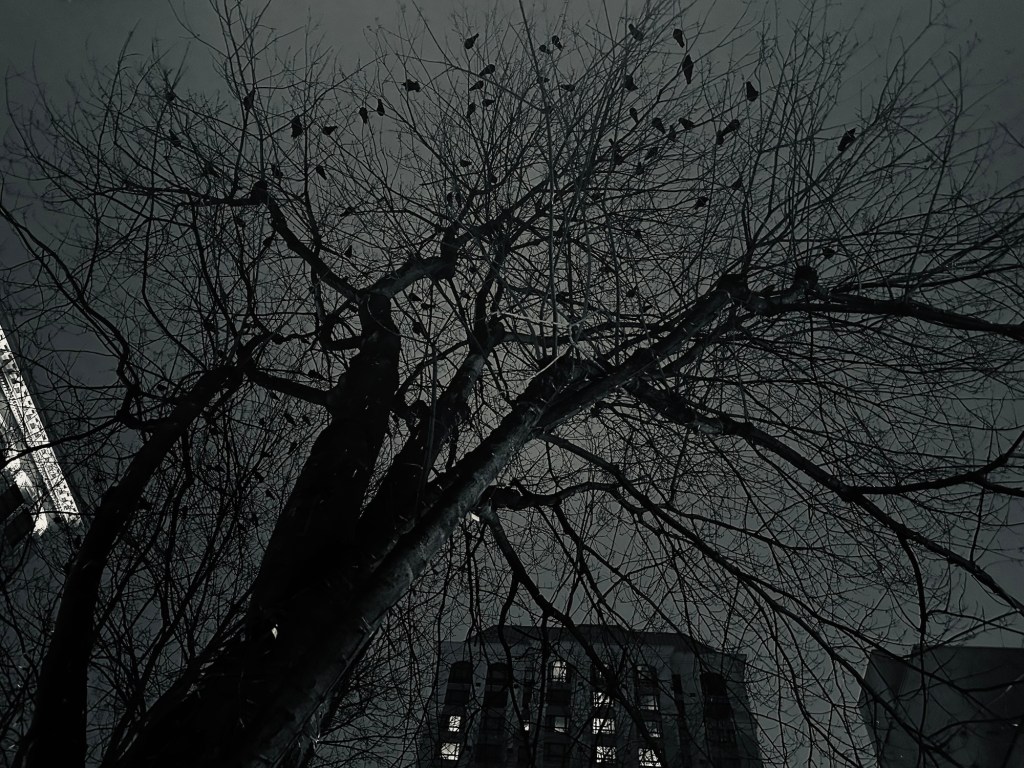
In the early morning hours, walking home from the train station, I navigate mobs of crows clustered in the trees overhead. They cry out before they let loose, peppering the sidewalk with their droppings — a crude warning system. I walk carefully. There is something about the darkness at that hour, the industrial quiet broken only by wings and wind, that feels both ancient and immediate.

Crows Overhead

Along the way I pass people sleeping in doorways. Sometimes there are dogs curled beside them, wrapped in blankets, loyal in ways the rest of us struggle to be. The city breathes differently at that hour. Stripped down. No pretense. Just bodies trying to endure until daylight.

“You’re a very empathetic person,” my therapist friend once told me. “You give so much. Most people aren’t like that.”

I didn’t know what to say then. Empathy feels less like virtue and more like exposure. You feel everything. You absorb it. And lately, there has been a lot to absorb.

The people I looked up to most of my life are dying now. My father included. I have tried to memorialize them the best way I know how — in words — but grief does not move in tidy lines. It comes in waves. Regret rides in with it. Regrets, I’ve had a few. Some small. Some seismic.

The transit agency job keeps my writing afloat. I’m taking a college course in electricity, too. Dad would have liked that. There is something solid about learning how currents move, how power is transferred. It makes the invisible visible.

When I was disqualified from the rail operator position, the union stepped in and saved my job. That was the good news. The bad news was the overnight shift — outside, in winter — moving, coupling, and decoupling trains for the next day’s service.

The yard is all steel and breath and repetition. My fifty-year-old body has begun to protest. I sleep more. I battle colds and congestion. I’ve run out of sick time. With budget cuts looming, I pray for health the way some people pray for miracles. Just get me to spring. Let me sign up for a day shift. Let light return in some practical way.

David remains my rock. At his age, working forty hours a week in retail is no small thing. I wish he didn’t have to, but it keeps him moving. That’s the trick, isn’t it? Motion as survival. My step count has never been higher since taking the yard hostler role. A coworker told me, “I have no desire to be caged in that cab for ten hours a day.” I understood what he meant. Movement feels like proof of life.

Still, I miss the sun. I miss Florida’s warmth, even though there have been days colder there than here in the Pacific Northwest. It isn’t just temperature — it’s the rain. The gray. The way it seeps into the psyche. After eight years, I sometimes think I have battled depression to a draw. Not defeated it. Not surrendered. A stalemate.

I try not to get pulled into politics. I am a public servant. But the news some days is unbearable. The cruelty. The speed with which outrage ignites. Digital life has given us constant connection and constant combustion. It is hard not to look. Harder to look away.

I think often of the summers when I worked in the parks. The disconnection. The way nature set the pace. I fell in love in Yellowstone. It was, without exaggeration, the best summer of my life.

There are alternate versions of me that sometimes feel more vivid than the one I inhabit. The version who eloped to Italy with Ann. She loved me. It was true. I often wonder what that life would have been.

But there was a secret then. A stigmata I carried too long. It shaped my choices, narrowed my courage. Decades pass in the space of one unresolved truth. And just like that, the realization lands: I will never be a father. The sting comes sharp and sudden, like a Georgia yellowjacket on a hot afternoon. You don’t see it coming. You just feel the burn.

At my annual physical, I learned I have high blood pressure. Dad had it too. I ask myself why I cannot relax. Am I still trying to prove something? Am I restless because some part of me believes another life-altering opportunity has slipped by? Is this as good as it gets?

I flew to Alabama to see my mother and brother. I won’t write more about that. Empathy again — the instinct to protect, to soften edges, even when they cut me.

Tomorrow night, I will return to the train yard. The crows will still be there. The cold. The coupling and uncoupling of cars. The small prayers whispered into the fog.

My spirit is not broken. But it is bruised.

And I am hopeful — stubbornly, irrationally hopeful — that this static feeling will pass, that something in me is still recalibrating, that winter, like grief, like regret, like love withheld and love remembered, is not the whole story.

It is only a season.


The Shrink Next Door

28 09 2024

Safely onboarded into a new career, I turned my focus to home.

Together, David and I had made tremendous strides in five years in Portland. We had a new apartment, blessed with good health and eager to turn the page in post-COVID times.

The Doctor will see you now

The new apartment ignited an interest in cooking — something that I had never fully explored, aside from the occasional spaghetti dinner. Our gas stove soon became a focal part of our lives. I began making casseroles, biscuits and muffins; sautéed steaks, grilled fish and many other delicious meals.

Nearing a half century of existence — an age, frankly, I didn’t think I’d ever see —- I finally felt at peace with my life. Publishing a book was sort of my grand finale. There wasn’t a lot of sales, but perhaps I need to die to be discovered or appreciated. Seems to be the case with a lot of famous writers.

Our apartment building was buzzing with creative types, mostly Millennials and Gen Zers. Once a month, management hosted a themed party on the rooftop in an effort to get residents to connect with their neighbors.

That’s where we met Stanley.

A published author of critically acclaimed sex therapy books, Stanley and I hit it off from the start. I liked his intellect and there wasn’t a lot of walls thrown up — something I had run into a lot at work.

Stanley was David’s age, but dealing with some major health problems. He had a partner from Mexico, who was quite younger and an aspiring singer with rugged good looks.

The four of us went out for drinks a few times at a nearby cocktail bar. I shared with Stanley about my past as a journalist and how I never would have imagined that at this age, I would be doing blue collar work.

“The body eventually breaks down,” Stanley said. Was this foreshadowing?, I thought.

David, of course, pulled out his New York playbook and began rehearsing stories I had heard many times before. They both lived in the city when 9/11 happened. Stanley, tragically, had a front row seat in Tribeca.

Stanley was intrigued by relationships and it didn’t take him to long to inquire about how David and I met and came to be a married gay couple. Realizing, a professional shrink lived next door, I let down my guard and shared how David and I navigated our different desires.

None of what I shared came as a shock to Stanley. He had been in practice for quite some time. It only took a few meetings for him to deliver an assessment that lifted a heavy burden off my shoulders.

With martini in hand, Stanley served up some truth.

“You’ve never had and never will have the love you needed from your father,” he said in that sort of 60 Minutes interview way.

Then he leaned forward, hovered over the table and put it in no uncertain terms.

“What you need to do, John, is go out and have some fun. Unleash your true feelings and, for God’s sake, find something that makes you happy and then…just do it!”


A Hands Off Approach

25 06 2023

Going through all the hurdles of a security clearance is not easy. Nor should it be.

But I stayed the course and went through every step and finally secured a report for duty status at the airport. It was sort of surreal to be working for an agency most journalists outright despise. What I would come to learn is the TSA — a response to the 9/11 attacks — was the lowest paid government agency and morale was poor.

Granted COVID still had a stranglehold on the travel industry with the omicron variant just coming out. Like the warehouse and the grocery store, we were required to be masked at all times, but since this was a federal government job, only vaccinated employees were allowed to return to workplace.

I sailed through classroom training, feeling like a nerd in history class again as we studied the different terrorist attacks over the years. We watched a video on 9/11 with interviews and footage I had never seen before and it was so powerful tears welled up in my eyes. That was when I knew this job meant more than a paycheck.

“John, you are the smartest one in the class, you’ll do fine,” said Garrett, our stout, barrel-chested trainer with a ponytail and one of those Oregon accents of unremarkable note.

And while, I scored great in the classroom and navigated all the computers, websites and passwords with ease, I would struggle on checkpoint, realizing too late that the cards were stacked against me. Without revealing secrets, let’s just say it was a blessing in disguise that I was unable to get my officer certification before the training hours ran out.

I was relieved of duty after two months. It was crushing.

There was a moment of clarity during the certification process, when it hit me that if I progressed any further I would be required to perform pat-downs on passengers. This was not something I was looking forward to. Just getting them to empty their pockets, take off their shoes and xray luggage was invasive enough. For some reason it never occured to me during this entire process that pat-downs were a big part of a TSA officer’s functions.

Talk about the dog focused on catching the car. The chase was over. The fun part done. Now what?

My refusal to quit eventually forced the agency’s hand. I knew something was up one day when Garrett, normally friendly to me, would not make eye contact and avoided me in the back office. A young female supervisor, clearly sympathetic to what had become my awkward role in all of this, had me take online tactical courses for most of the day, while upper management figured out a way to get rid of me.

I knew the die had been cast, when Garrett walked behind my desk one morning as I was clicking through online tests and muttered underneath his breath, “game over.”

Thankfully, when I was relieved of duty, the agency arranged for me to go on unemployment, which for a decade or more had been unattainble for various reasons. This time the benefits came in quick and without probing questions. A small consolation prize that I would gladly take and I needed the rest.

The train ride home from the airport after getting the axe was one of the lowest feelings of my life. When your country rejects you, it’s hard to accept. And yet at my most vulnerable, a familiar face was there to lift me up. My champion came through again.

“Let’s take a drive to the coast,” David said.


Pandemic Pains & Wisdom

19 05 2020

I am writing this to you wearing a surgical face mask. We are now entering phase two of this pandemic.

But all is not lost.

The buses still run in Portland. Ridership is down and unemployment rising. More people appear to be living and sleeping on the streets. Not a pretty sight in some cases. COVID-19 is turning the old town and Chinatown sections of the city into slums. I have been witness to awful screaming and fighting among the homeless. The city, much like the nation, often challenged to do more for the mentally ill.

The pandemic has brought forth all the pain America has to bare.

Personally, I’m in decent shape all things considered. Last week, an oral surgeon took three of my teeth. Extracting wisdom, as we say. The process of discovering a health problem was painful. X-rays determined surgery was needed and for the first time in good while, I drifted off to sleep. When I woke up the teeth were gone and my mouth full of bloody gauze. They wheeled me down to the car where David picked me up and drove us home.

Four days later I’m writing to you, readers and loyal followers to say thank you. Thank you for reading and supporting my endeavors through the years and the wonderful journey life has provided.

COVID-19

These are truly challenging times. I have lost dear friends to this pandemic. I have listened attentively to my friends, neighbors and co-workers concerns about society and government. The Coronavirus has impacted so many lives and created intersections that are not always fatal.

I have been privileged to meet the acquiantances of and become friends with some truly remarkable people. You will never forget those people you worked with through this pandemic. The level of learning I have experienced is off the charts. Not exactly the original job description of a housekeeper.

Helpers, scoundrels, the naive and dumb, egotiscal tech bros, mama hens and grizzled veterans have all been exposed. I have found who cares, who acts and who sits on the sidelines.

I have fallen in love at times and felt the sting of disappointment as well.

How we got forth as a world will be interesting.

We must re-evaluate what we prioritize, fund and take care of. We must change our behaviors and consumer habits. Most importantly, we have to look out for each other beyond wearing masks and checking symptoms.

Don’t let relationships reach a dead end without seeking or asking for help.

Pull yourself together and check on your spouse, partner, friend, family member, pet, building superintendent, area supervisor, etc. etc.

And remember, you got this.

See ya on the next travel adventure, hopefully.

Ciao for now.

John


Cold Calculations

1 03 2019

It’s winter in Oregon. The winds blowing through the gorge can be harsh at times. There is very little snow fall in the city. That’s ok.

Getting through my first winter in the pacific northwest has been quite interesting. I was warned about the long nights, cold, dampness and the need to stock up on vitamin D. I am also coming to understand the nihilistic, doom and punkish attitude populating parts of Portland. “Keep Portland Weird!” is a frequently used expression.

It’s annoying sometimes. I’ve been harassed on the streets here so much that I worry my demeanor may be sinking to the level of those sludge covered “homeless” campers.  The empathy I had upon arrival is shrinking. Originally instructed to recognize these gypsies’ existence, I now recognize ignoring their savage tactics is the best option.

In the face of these challenges there is still much to be learned. What I am discovering about the pacific northwest millennial species is they are complex, creative, intelligent and quite daring. Winters push most indoors. There are those who brave the mountains, skis in hand. I haven’t ventured up to the slopes yet. This old Florida dude is still adapting.

At work I have benefitted from social policies enacted by left wing bureaucrats. The goal is to continue performing well and lifting the company. David reminds me not to focus all of my energy there. Journalism remains my passion. I write now for love and peace.

Travel-wise, San Francisco and Alaska have been on my mind. San Francisco is obviously one of America’s great cities and Alaska a newer frontier that seems forrested in mystery. Bored with work, I have decided to pursue a graduate degree in urban planning and design.

Entering the university academic realm again seems odd and the threat of student debt is like a flagger on a construction site. However, there are advantages to returning to campus. For starters, the interactions and access to a diverse representation of society is important. There is a human tendency to retreat into safe spaces and minority bubbles. We all live, from time-to-time, in our own little echo chambers. This probably best describes my tenure in south Florida.

After two meetings with the graduate studies director, I decided to seek a master’s in urban and regional planning. I ordered a book from the library in Burbank, California. It was recommended by my friend Wong in San Francisco. Guide to California Planning states there are five elements to planning:

  1. Laws & Regulation
  2. Environmental Analysis
  3. Socio-economic Analysis
  4. Political Approval
  5. Design

Dreams the way we planned them — if we work in tandem.

Shall we begin.


Gratefully Injured

11 11 2018

I injured myself. It was bound to happen.

“You’re lifting too much,” Ani said. Smart kid, that Ani.

Yes, my housekeeping duties require extensive lifting and reaching. It’s a physical job and I’m grateful to have it. Aside from cleaning chores, the interactions with co-workers like Ani are important. After years of indepedent contractor work, it is refreshing to be a part of a company again.

Great cities are built by great companies, mind you.

Life in Portland is going just swell. I have been invited on two press tours since my arrival here — Long Beach, California and Puerto Rico. Long Beach was a solo adventure and Puerto Rico a group effort. Both destinations interesting in their own way. Long Beach, in the shadow of Los Angeles, is run by a young mayor. A gay man determined to improve living conditions by implementing new concepts in this coastal southern California port city.

Puerto Rico, still suffering from a barrage of hurricanes, offers beautiful nature and lots of rum. Bacardi is the major player there. I learned how to make a simple refreshing cocktail. Pronounced Die Q Re. It’s basically sugar, superior Bacardi rum and ice. It’s hot in the tropics and ice is a key ingredient.

My tour group in Puerto Rico was a lot of fun. It included seasoned travelers and newcomers. It was designed for the LGBTQ community. There were journalists from Los Angeles, New York and San Francisco there. I managed to connect on a personal level with some of them.

Our group sets sail.

Long Beach seemed to be this vision of what we can accomplish. Puerto Rico offered a chance to relax from the heavy work load, over-reaching and contenious mid-term elections. I knew I was hurt when the luggage became hard to handle at the airport. Perhaps I could have packed lighter. I did not use the laptop, but the sports coat was put to good use.

David gave his blessing on both trips. He stayed in Portland continuing to piece together our studio. We both received influenza vaccinations before I departed to San Juan. When I returned the doc diagnosed me with lateral epicondylitis, aka tennis elbow.

So I’m slowed down. Just in time for the holidays.

Time to reflect on the incredible year we have had. A cross country move. New friends and new challenges. A rennaissance of the soul.

I believe this injury is divine intervention to force my conscience into absorbing the events of the past year. To still be standing and breathing — much less working — is something to be eternally grateful for. I am in a good place in life. Time to cherish that and offer a rum filled toast to even better times ahead.

Long Beach stairs


Coming Back, Gracefully

7 08 2018

Recovery going well. It has been a surprisingly hot summer in Portland. I accepted a union job offer from a local grocery store. Cleaning toilets and taking out the trash. It’s a smelly job, but somebody’s gotta do it and I am damn glad to have the work while earning a decent wage.

Walking the streets has been challenging but it has made me stronger. One must stay ever vigilant in certain sections of the city (Old Town/Chinatown) where those who have fallen on hard times lurk and dwell. I was not prepared for such a stark reality. Skid row here is ugly. Real ugly. These conditions I had not seen since the summer of 2009 in New York. People had lost their minds and were living like dirty gutter rats.

Old Town’s Stag

I’ve seen that here. On more than one occasion.

At my new job it is required to interact with the public. A daily evaluation of the local market. Even in brief conversations, messages can be exchanged. Understanding the neighborhood is important. Knowing hot and cold trends keeps you in the game.

Physically, the job can be exhausting. There is a lot of time on your feet. I average seven miles a day. There is also a lot of lifting to be done. There is even a demolition component involving “bottle machines.” The bottles and cans provide a source of revenue for people living on the margins. A tiny profit for people living on the streets or neighborhood folks trying to pay down bills.

I walk to and from work most days and nights. It is a safe neighborhood with a hospital nearby, plenty of construction projects, shopping and street car lines. Portland, I’m learning, is a major rail city. David and I enjoy riding in the street car. We’ve taken it to the riverfront, library and over to the eastside. Our studio apartment is coming along, albeit slowly. The biggest fix was getting rid of the leaking air mattress.

The Jeep is gone as well. God bless that vehicle. It did its job and more from Calgary to Miami. But, when in recovery mode — rebuilding lives — one needs less worries not more. Vehicles in the city are a luxury. There are risks to street parking no matter where one calls home.

I’m still reporting on queer issues for south Florida and, locally, have picked up a restaurant beat for a Portland neighborhood newspaper. We have joined an Episcopal Cathedral and begun volunteering at community events. Friends are planning visits…. I’m happy again. That’s the most important thing. 


A New Home In The City

15 06 2018

In Portland I had to learn the city streets again. A hard place to live. I rode my bicycle around the neighborhood a few times but decided it was better to walk. Cars are not as plentiful here as in Florida urban areas. There are many options for transportational needs. There are more options for a lot of things here.

Portland is the nation’s 26th largest city and largest in Oregon. It is often advertised as a brawny lumberjack type town — which still has merit but was constructed with help from a Japanese businessman. We struck gold near the city’s core. Space in an old apartment building in the northwestern section of Portland came open. A small studio that would soon be filled with peace and love.

View of Portland, Oregon from the roof of Washington High School.

Springtime in Portland sees a mix between rainy and dry days. The sun does come out and the nights become shorter. It’s an interesting city with many parks and gardens, a well organized public transit system and a abundance of cafes, theaters and micro breweries.

David’s brother helped us move in. It’s a two story walk-up from the basement and Russell’s extra lifting helped us get all of our belongings moved in one day. I don’t want to see another Uhaul truck for a long time. The studio has tall ceilings and beautiful hardwood floors with a tiny kitchen, one closet and mandatory tub, sink and toilet. We were glad to have found it. Our building supervisor is a pretty young lady with two small children.

We both sought aide from social services agencies and non-profits while beginning the search for a new spiritual home. We visited Lutheran, Episcopal, Presbyterian and UCC churches our first month. Trust God to lead us to the right congregation, David said. I researched the nearby Catholic Cathedral and Jewish Temple. Both had website videos proclaiming their embrace of diversity and same-sex couples.

Portland’s prevailing liberal attitudes is another reason why we settled here. In addition to equal rights for LGBT people, Portland is worker friendly and a solid pro-labor city. It has restaurants of every culture imaginable, a thriving arts and design scene and sizeable Asian population. Black lives matter in Portland. Women hold positions of authority and young people happily roam trendy neighborhoods.

People read here and the myth of print media’s demise is clearly exposed. I immediately linked up with the president of Oregon’s Society of Professional Journalists chapter. We had a nice chat at a downtown coffee shop and she referred me to a couple of newspaper publishers. I am still writing magazine pieces for South Florida’s LGBT community and working on a historical assignment for Huffington Post’s Queer section.

All and all, things are looking up.

“It will turn around, John,” I recall my friend Stephen telling me during our Valentine’s Day dinner back in Fort Lauderdale.

And it is starting to. A phone call came from the human resources department of a major company last week with a job offer. Hello, Portland. Glad to be here.