Purpose & Alignment

20 06 2025

I left Japan with confidence and purpose.

Keita had been an excellent host and travel partner. Our shared interest in history, arts and logistics was a good match.

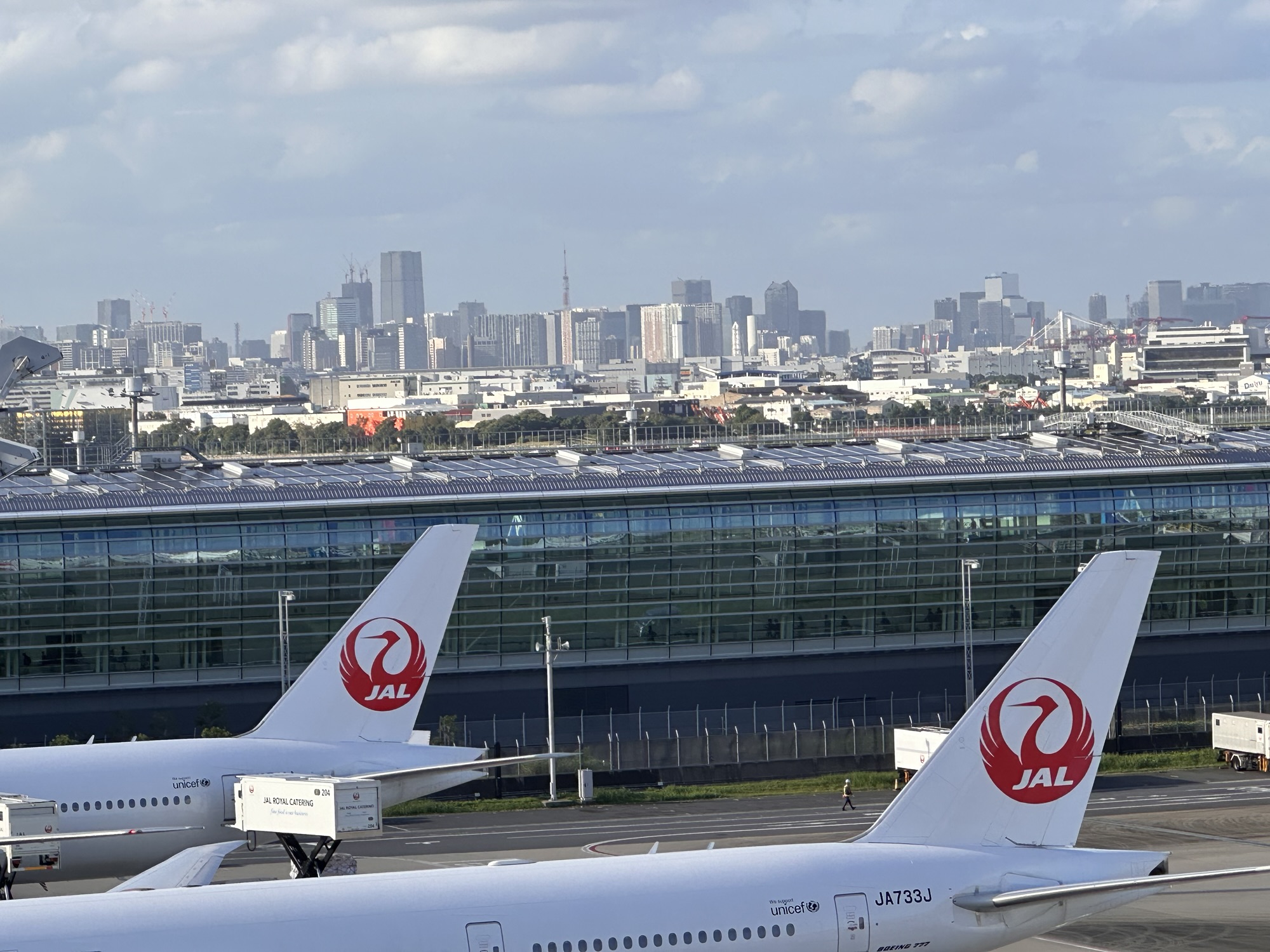
As we said our goodbyes at the airport, for some reason, it felt like I would be back someday. There is still so much of the country to see, including Mount Fuji, which was shrouded in clouds on the day we traveled to Fuji Kawaguchiko for a hike.

Mt. Fuji hiding in the clouds

“Take care of yourself,” he said, before giving me a long hug, its squeeze a sign of the tight bond we had developed through the years.

Our embrace was a rare demonstration of public affection from this quiet and reserved man. There were no performative bows as we departed, just a respectful energy exchange. Equal parts love and admiration.

I slept most of the flight to Hawaii. With a three hour layover in Honolulu, I found a seat at a crowded bar and sipped on a crisp IPA, while scanning through backlogged emails on my phone.

Above the beer taps, cable television networks broadcast the latest developments from the presidential campaign. It was all but over at this point. A disastrous debate performance had felled President Biden. Trump 2.0 was on the way.

Even Keita was sold on the strongman schtick.

“Trump will keep you safe,” he told me one night over soba noodles in a trendy Tokyo restaurant.

Turning away from the news, I found an email from my recruiter about the train conductor program. From a pool of nearly 900 applicants, my number was one of 50 chosen. I felt lucky indeed.

The program would run for 12 weeks, from late November to early February. Several hurdles needed to be cleared to begin training.

A cognitive test, which included basic math, reading and writing was first followed by a panel interview with questions like: ‘Think of a difficult situation you experienced and how did you solve it?’

Then came the physical tests, making sure you could get in and out of the train, throw a switch and raise the pantograph (the part of the train that connects to the overhead wire) on your own. After that it was on to the classroom, where I joined a group of external hires just out of CDL training.

This would be my new family for the next three months and I couldn’t have asked for a more down to earth and kind hearted group. No more insensitive comments from immature assholes trying to one up each other on the toxic masculinity scale.

In my new setting, we applauded each other’s wins, sent encouraging text messages and genuinely wanted to see each other succeed.

That’s what made this group special. I could let my guard down and not have to worry about someone looking for a weakness to exploit.

Because of my previous experience in maintenance as a shop helper, I had a leg up on the early weeks as we learned about reading switches and the geography of the yards. Out on the mainline is where the big challenge would come as we were introduced to signals and system maps — known as the ‘alignment’ in work lingo.

“The alignment always wins,” one of my line trainers told me. “It’s like a casino. The house always wins.”

“But, why are we competing with the alignment in the first place?,” I asked.

Silent for a couple of seconds, the trainer shook his head and sighed.

“You’re not, John. That’s the point.”


In Hot Water

29 05 2025

What left an impression on me about Japan was its culture of cleanliness and respect, qualities that were ever apparent as we traveled the country.

Admittedly, there was a sense of embarrassment for my homeland. Japan’s trains and stations were clean, riders were considerate of fellow passengers and there was nary a whiff of smoke — much less illegal drugs in the air.

Most of the platforms had vending and recycling machines, which would be impossible to maintain in a vandal plagued Portland.

To my surprise, some train cars were designated for women only. I found this a bit odd, considering the country’s reputation for male chauvinism.

Keita’s mother, on the other hand, was not one to be subjugated. An octogenarian who was still driving — a stick shift car no less — she fetched us from the train station and always made sure we ate a big breakfast each morning.

After a long bus ride from Tokyo we arrived in Kusatsu, where you are greeted instantly by the rotten eggs smell of sulfur from the hot springs.

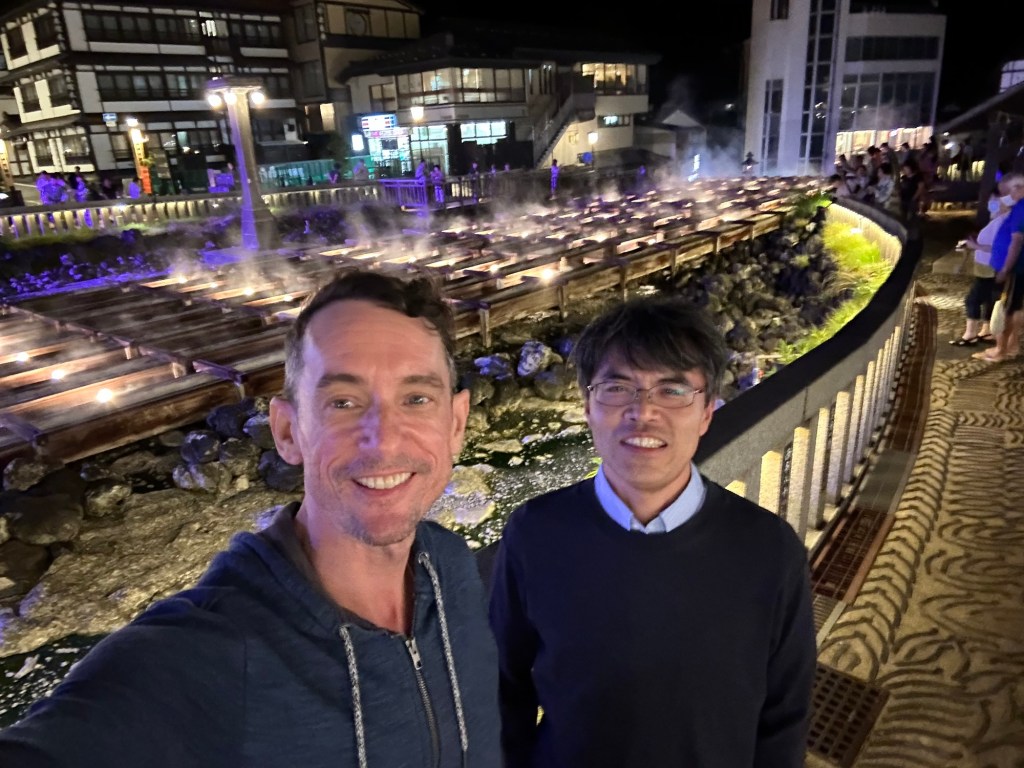
In the town square sits the Yubatake, a field of water, where people gather particularly at night to socialize. Some believe the minerals from the hot springs have healing properties. If true, I was more than ready for a soak.

“Let’s do the Onsen after we check in,” Keita said to me as we hiked through the narrow and curved streets up to our hotel.

Donning our yukatas (robes), we entered the male side of the Onsen. Inside, phones and cameras are strictly forbidden and it is custom to bathe naked. To set the mood, relaxing zen music played overhead as I stepped into the tile enclosed pool.

Life takes unexpected twists and turns and here I was, the lone Western figure at a remote hot springs resort tucked away in the mountains of Japan’s Gunma prefecture.

And the water was wickedly hot!

It’s heat pulsing as I stood knee deep and naked in the Onsen’s large pool. The convection like an attack on my nervous system.

While the temperature stymied me, others were easily submerged in the mineral waters.

“John, are you okay?,” Keita politely asked, noticing my hesitation to take a deeper plunge.

“Yeah, it’s just very hot,” I replied, thinking there was no way I could go any further.

Then I heard what sounded like a frog noise beside me. I turned to see an older man, sitting in the pool, with no expression on his face. Then suddenly, that sound again:

Ribbet, Ribbet.”

I smiled at him, but knowing very little Japanese, did not speak. Keita engaged the man in friendly banter, translating for me.

“He says you’ll get used to the temperature,” Keita told me. “And he thought you were French.”

The metaphor could not have been more fitting.

After that exchange we waded away from the man and I did eventually work up the courage to go completely under. This being the first step in my transformation. I was washed and exposed and felt no shame.

I slept good that night. The Onsen brought my Misogi challenge more into focus. I was determined to become a train conductor and upon returning home would enroll in a program to begin this process, leaving behind mundane janitorial duties.

Yes, this frog had escaped the boiling water.

Ribbet, Ribbet.

John & Keita at the Yubatake in Kusatsu, Japan


My Misogi Challenge

4 05 2025

In Japan they have a concept that is designed to create profound personal growth through very difficult situations.

Undertaking a challenge like this will likely result in failure, but the higher purpose is for the process to test your limits and ultimately change you for the better.

This concept is called the Misogi Challenge and is rooted in a traditional water cleansing of the mind, body and spirit. Before accepting my assignment, I traveled to Japan to visit an old friend, whom I had not seen in nearly 15 years.

Keita and I met in New York City. It was the summer of 2009, when I naively tried to move to the Big Apple with just a few bucks in my pocket and big dreams floating around in my head.

Keita offered to help — giving me a place to sleep for a few nights. That’s when I first learned that mattresses are not a necessity in Japanese culture.

Keita did return the visit to Florida, flying into our brand new airport in Panama City Beach. He took a real shine to me and I was flattered by such exotic attention.

We kept in touch over the years, thanks in large part to Facebook. When the pandemic hit, Keita returned to Japan to live with his mother, a recent widow. There wasn’t much a classically trained violinist could do at that time.

For me, traveling to Japan was also a test to see if I still had the bravery to venture out of my comfort zone and explore unknown territory. I was also aware that I would need to demonstrate diplomatic skills as to not come off as an ugly American.

After a long flight from Portland, with a layover in Hawaii, our Airbus A330 landed safely at Tokyo’s Haneda Airport. There was a long line for customs as Japan was one of the last countries to reopen post-COVID and had quickly become a popular travel destination.

Once cleared, I entered the landside area and there was Keita waiting for me. He was easy to spot in the crowd, eagerly anticipating my arrival. As I approached, an expression of relief washed over his face.

John, welcome to Japan,” he said, with a quick bow of his head while enthusiastically reaching to assist with my luggage.

Keita had aged well. He was lean and fit, a few inches shorter than me with slightly more gray hair. We took the train to his hometown of Hamura, where arrangements had been made for me to stay in a hotel. In the morning, we would depart for the mountain resort town of Kusatsu.

That night as I laid in bed, in a room the size of a luxury closet, I thought about how fortunate I was to be here — and how far I’d come professionally. When I first met Keita, I was a destroyed man in survival mode, aimlessly wandering the New York streets, foolishly thinking charisma and the ability to write would propel me to success.

As hard as that stage of my life was, the adversity helped shape me into the stoic, can do person I am today. It toughened me up for harder times in South Florida and the Pacific Northwest.

I was prepared for my Misogi challenge. The next day would come the water.