Getting ready for Glacier

14 05 2014

Hi Ho Hi Ho it’s back to the wilderness I go.

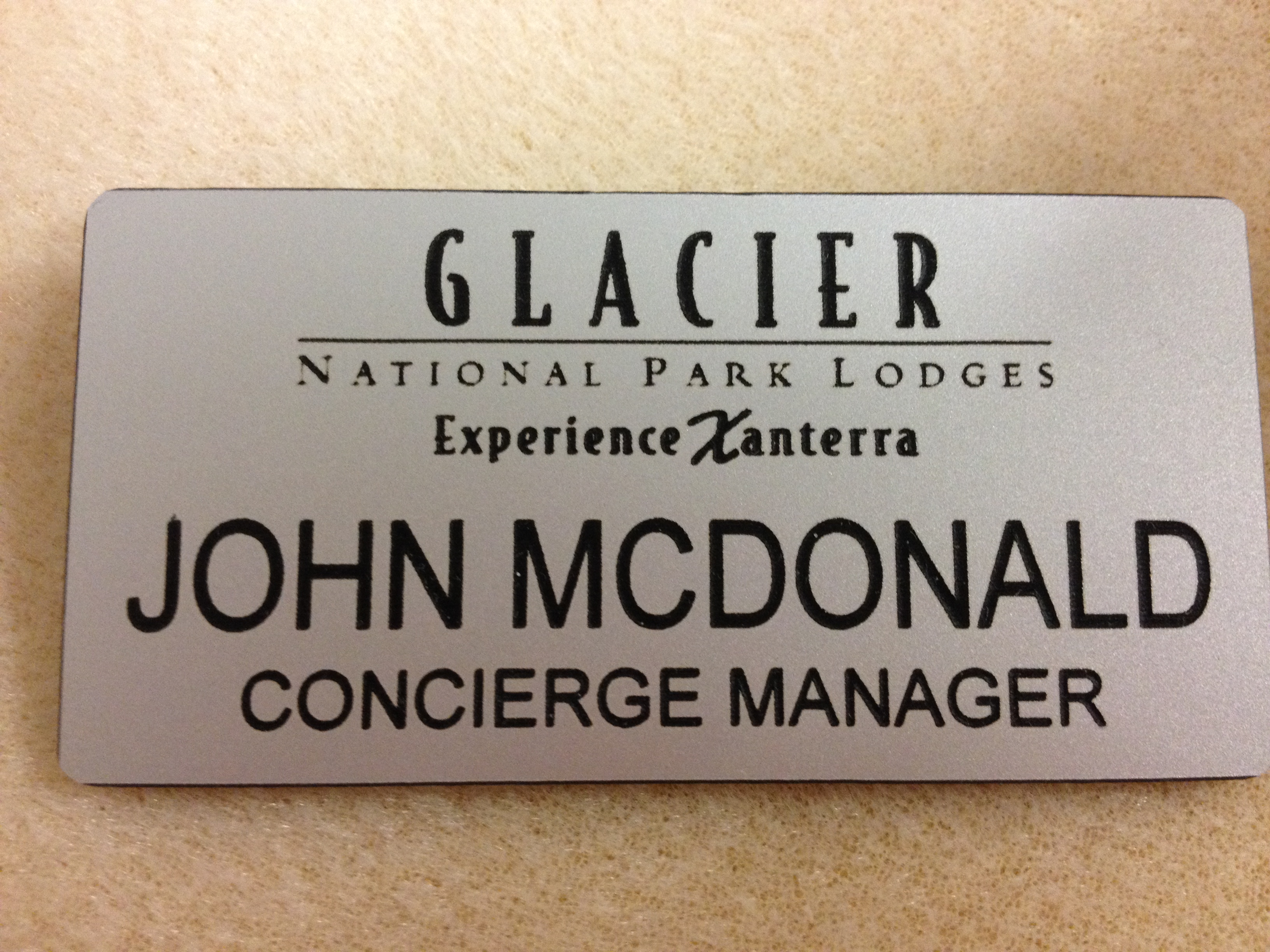
Soon I embark on another summer of duty in America’s National Parks. This year I am headed to Glacier National Park in northwest Montana on the border with Canada. This was a late decision as I had planned to return to Yellowstone and negotiated, what I thought, was a better contract. And then in early April, out of the blue, I got the call from the human resources director for Xanterra Parks & Resorts, the new concessionaire at Glacier.

“We would like to steal you away from Yellowstone, John,” the nice lady on the other end of the phone said.

I was flattered. For the first time in a long time I was a hot commodity in the workplace.

I explained to Glacier’s recruiter that I was committed to Yellowstone and had just signed a new contract. I was excited to be moving to a new location — Lake Hotel — the park’s oldest hotel and by far the swankiest facility in hundreds of miles. The Glacier recruiter, however, was relentless.

“John, Lake McDonald Lodge is celebrating its 100th anniversary this year and we sure would like you to be a part of that,” she said.

Wow. A Lodge with my family name. How could I not listen to the offer.

I agreed to hear her out and she then proceded to ask me a few general management questions. She was interested in how I would handle certain situations of dispute and what not. They were also aware of my certification by the National Association for Interpretation and all those years of studying French seemed to be finally paying off.

Satisfied with my answers the recruiter said she would call back later with an offer. I returned to writing my gay stories, still planning to return to Yellowstone, yet intrigued by this new development.

I kept David apprised of the situation. The move to South Florida had certainly been a struggle and finding a steady paycheck that offered a fair wage was the goal. We were both still dealing with closing the door up in Panama City, trying to sell a house that was draining us of the proper resources required to make the transition to South Florida a success.

I tried to remain chipper, but my freelancing barely kept gas in the tank and food on the table. I began to lose weight from the stress of it all. Living in poverty is truly awful no matter how hard you try to look to the bright side. I could write a book just on my demoralizing experiences at the food pantry.

So when the recruiter from Glacier called back with her offer I was stunned. They wanted me in management at a salary I had not received in what seemed like forever. I accepted immediately and called Yellowstone with the news. They understood.

If there is one thing I have learned — and learned well — through the last six years of my walk through poverty, it is grace. I know, deeply, what it is like to have nothing and to be invisible to society. I know the hurt of shame, the yearning of hope and the compassion of community. While soul crushing as this journey has been at times, I believe it has made me a better person. Stronger and much wiser.

I now leave for a summer to work in my fortress of solitude. Eager to see what life throws at me next.


Velvet Raging

28 03 2014
Miami Design District

Miami Design District

For about a month now I have been in a constant state of agitation, frustration, confusment. And, worst of all, depression.

South Florida — and all of her quirky games — is weighing on me. I recognize living in a metropolitan, urban area is no piece of cake and there are certain aspects of unpleasantness here that I have come to terms with. (horrible traffic, chief among them.) The attitudes of the gay community has been tough to get used to. For a community that craves acceptance, the judging it can dish out is down right devastating. There are certain pockets of Wilton Manors and Miami Beach I would dare not visit for fear of being ripped to shreads at first sight.

The irony here is I came to South Florida to experience and live in a free and open society. The idea was to relocate from a place where I was merely tolerated to somewhere where I could be celebrated. Dreamy stuff, I know, but, hey, why not? I’m afraid, however, I will leave the Sunshine State with a bitterness I have never held before.

But let’s look to the bright side, shall we. David says my cup is always half empty. He enjoys the difficulties that life throws at you much more than I do. Waiting around for a repair man, fixing a broken appliance or getting stuck in traffic for hours is nothing new to him. His health is also improving after another round with the prostate cancer. I wish I had his patience and caring.

But I do not. We are from different generations. I am driven. Driven by ambition to succeed. To conqueor.

And yet I do not know who I am.

It was the gays who bailed out my journalism career. Credit must be given there. I have reported largely about LGBT issues since arriving here in October and remain truely grateful for the work, the paychecks and the opportunity to return to writing. There are occasions when I am indeed, “gay” or happy as the old timers once referred to it. But I am not a homosexual. I am a bisexual and I am finding this out more and more about myself as I continue on life’s journey.

I miss Ann and what we had in Yellowstone. We chat only briefly via Facebook now. I worry I have broken her heart.

The agitation in my life seems to stem from a desire to do everything by the book, play by the rules and yet still come out ahead. This appears to be a fantasy. My strive for independence has been costly. I am nearly broke once again. Working freelance gives me the ability to set my own schedule and type away on a keyboard in my pajamas, but it does not pay all the bills. Thankfully, David is helping with that — and our partnership has never been stronger.

I suppose when you reach a certain point in life you began to set keener priorities. Getting out of Panama City was the right thing to do, that much is clear. I was blacklisted from working in the region and it was time to move on. It is remarkable I have been able to make such an impact in South Florida during just a six month period. Again, I am grateful to the publishers of SFGN for this opportunity.

I think the root of my depression can be found in my work. In writing about the move for equality for gays and lesbians I seem to be frustrated that I have not found my equal. I wonder if I ever will. I am not worried about making up for lost time and I do not dwell on mistakes of the past or relationships lost. I am not consumed by money, although I still seek a stable existence.

I realize now it is validation I am after. And soon I will travel across this great land of ours in that quest for answers.


Chantel’s Story

16 02 2014

New Year. New Life. Much to be grateful for and humble.

I am working a lot. New York calls quite frequently now. I am living on a golf course where they host professional tournaments. Physically, I am in the best shape of my life. It almost feels like a dream.

But it’s not.

Chantel has yet to respond to my emails. We toured Art Basel together and dined on Lincoln Road where she granted me an interview. Balans, she insisted, would do. As we walked the outdoors mall in Miami Beach, I playfully teased her that the N.F.L. was looking to expand in the European market and I was not referring to soccer. She was having none of it.

Chantel turned into much more than I had bargined for. She was young — 29 as a matter of fact, but at first glance it would be easy for someone to mistake her for much younger. I had observed throughout the day that she was clearly a person who could get things done. She had such confidence when speaking with the gallery representatives at Art Basel. This, no doubt, instilled by her mother. Chantel spoke of her mother fondly, saying she was responsible for raising social justice awareness in the family, particularly those key issues on the continent of Africa.

“She told us which brands not to buy from,” Chantel said of her mother’s consumer advice.

We were in the convention center for hours. We talked about a lot of issues of importance in Britain and America. People stared at us. I was flattered to be in her company.

“I believe the human spirit is inherently good,” I said. Chantel was not as convinced. She seemed more interested in my taste of art and design than my philosophical views.

At Balans, Chantel proposed we dine inside so I could conduct the interview free of the hustle and bustle of Lincoln Road. She asked the manager if she could use her Balans card at this location. He said yes, but I took the the bill. Chantel told me she attended a prestigous university in London — a red brick school as I recall — and was on her way to Los Angeles in hopes of publishing a novella about sexuality. She also admited to having a girlfriend — confirming her bisexuality which she revealed during our walk through the convention center. She refused to give her name.

She then turned the tables as I hurried to jot down her words.

“John, have you ever written about human trafficing?” Chantel asked.

I was stunned. The burger I had woofed down just minutes before suddenly felt like coming up.

“Pardon me,” I said.

“In your writings, John, have you ever covered sex workers?” she asked again.

I had not. It was just not the kind of topic I was assigned while working the sports desk back in Dothan, Alabama. But I was not naive about the subject matter. Chantel, it turns out, had done the research, extensive research, in Britain, America, Thailand and Africa. She then asked me if I had ever been a “rent boy” ?!

I said no, of course. This conversation began to make me feel uncomfortable. I didn’t know what to say next. The interview was over.

We hugged as we parted ways outside of Balans.

“Be well,” she said.

I have yet to receive any e-mail from Chantel acknowledging our meeting.

Her story is now a mystery.

Ghosts

Ghosts


Art Basel Introductions

28 12 2013

Miami and I have battled to a stand still.

Some — actually probably most — thought I could not make it here. The traffic, the people, all the realities that come with living in a metropolitian market. It has been a different change of pace than sleepy Panama City and certainly worlds away from what I experienced in Yellowstone.

David is on the mend, recovering from an invasive procedure. His surgeon reminds me a little bit of Albert Einstein. He’s from the North and now practices at a Catholic medical center in Broward County, Florida. Needless to say, he is a busy man.

The doc has also been educating me on the realities of ObamaCare — the good, the bad and the ugly.

“They didn’t consult a physician when they passed this thing,” is his biggest complaint.

No matter how you slice it, whoever has the most money will always come out on top in capitalistic America, because the best drugs cost the most money. This we are painfully learning.

But alas, there have been good times here as well.

My work is getting published a lot. One of my Instagram photos even appeared in the Fort Lauderdale Sun-Sentinel. A few of my stories have gone national, including a fun little preview of the Gay Ski Week in Aspen, Colorado.

But it was Art Basel where I wanted to make my mark. I had my eye on this event for quite some time. It has a reputation in art circles for gathering elite galleries together from around the world to showcase groundbreaking modern art. I attended the first installation in Miami Beach years ago as a wide eyed young features writer for the Panama City News-Herald. I remember it being pretentious beyond belief. Little has changed in that regard.

David and I drove down to Miami Beach in the Beamer on a Saturday afternoon. Although just 24 miles away it took nearly two hours with the traffic. We chose to take U.S. 1 (or Federal Highway as it is also known) and I was pleasantly surprised with the gentrification taking place in North Miami. Once over the causeway and into Miami Beach, parking became the issue as we circled the streets looking for a spot to land. Parking was never an issue in the Panhandle. Here it is part of everyday living. I’m getting used to that.

Chantal at the Co-Op

Chantal at the Co-Op

Once on foot we strolled through several exhibits, including the “public” portion of Art Basel erected on the lawn outside of the Bass Museum. There were interesting pieces, but rarely did I find something I would display proudly in my home. It was a lot of message and shock art. Eventually, we found our way into a Lincoln Road co-op … and that is where I met Chantal.

She was volunteering at the co-op, visiting Miami from Great Britain, a tall slender young lady of mixed features with a delicate British accent. I informed her I was a journalist looking for a story. And, oh boy, did she have one for me.

Not long into our discussion, Chantal revealed she too was a writer and her subject matter focused on sexuality. I took her picture and she introduced me to a few of her newfound friends. All was quite cordial. “Have you been to the convention center?,” she asked.

I had, but refused to pay the high dollar entrance fee. My press request had been denied two weeks eariler. The Swiss, I was told, were being quite stringent with access.

“I have two VIP passes for Sunday, would you care to go with me?,” Chantal asked.

The offer surprised me. I glanced quickly at David, emersed in conversation across the room, but realizing I didn’t need his approval, I accepted Chantal’s offer and quickly made arrangements to call her tomorrow. I would be returning to Art Basel for one more day with a lot to prove and a story to tell.


Going under in South Florida

2 12 2013

Two months in South Florida and already I’m dreaming of Yellowstone. I came here to see David and relax in a tropical climate. It has been anything but relaxing.

Challenging is the word. I have returned to journalism, currently writing for the South Florida Gay News, an alternative weekly publication with legitimate press ties. This week we put out a 96-page print edition. They only do that kind of stuff in Canada anymore. Thus, there is potential here.

And there are people here. Lots of them. Miami-Dade County alone has 2.5 million of Florida’s 19 million people. You must travel by car here because the buses and trains seem inadequate and traffic is thick. I’ve dropped anchor in Broward County where Fort Lauderdale seems more navigable. The locals, the vast majority transplants from the Northeast (New York and Boston), have been friendly and welcoming. David and I have joined a gym, attend civic meetings and regularly monitor our health. South Florida is home to a wonderful medical community. NFL stars have all their sporting operations here — and so do the Cougars for facelifts.

I am writing just enough to support myself and, thank God, the Jeep is running well. I have yet to travel by train or bus — save a one way ticket to Panama City on the ol’ dirty dog herself. The Tallahassee station is still the worst on the route. Filthy.

Down this way, the landscaping and planning are first class and the condominiums quite towering. My articles are serious and typically cover health. I have written about cancer, HIV/AIDS, substance abuse and poverty. The subject can be depressing, but I am learning a great deal, getting a paycheck and coming to understand this region of the country.

Yellowstone seems so far away in so many ways.

The wealth here in South Florida is staggering. People are showy with their toys, especially the sports cars. Coming from Subaru country, it was surprising to see so many Ferraris, Porsche, Rolls Royces and Maseratis on the roads. When I first arrived, David secured a loaner car from the BMW dealership and we motored around in style, making our first excursion into Miami’s South Beach where models, aspiring and oblivious, stroll the outdoors Lincoln Road mall by the dozens. A few blocks away from Lincoln Road, where the tourists feel safe to shop is where you will find the real story of Miami Beach.

The island is going under.

Miami Beach is a 7.5-mile barrier island. It’s a densely populated playground for the rich and famous and it has a flooding problem.

David and I discovered this first hand — or more appropriately first foot — as we hiked the back streets from Lincoln Road to Espanola Way. It was my birthday. A time to celebrate. I do not recall a heavy rain that day but soon the sidewalks were under water and the streets were disappearing as well. I mistakenly thought you could pass with a little tippy toe dance through the water. I was wrong and my toes plunged deeper than thought to find firm footing. The water was ankle deep. I would be dining with wet shoes. Not a pleasant situation.

David was able to get around the standing water easier. He has longer legs. The experience, nevertheless, prompted me to pause and contemplate climate change. There is no doubt the situation is changing in Miami Beach. Waters are rising, but not everyone appears concerned. The young girl working as a hostess at the Espanola Way restaurant we came to brushed off my report of flooding conditions as if it were no big deal.

“Oh it’s Miami Beach,” she said with just the right amount of arrogance to indicate this sort of thing happens all the time. The rest of the restaurant staff spoke Spanish as a first language. This is a language I must improve in. We dined on a mediocre, overpriced meal that night — just as thousands of tourists had done before — fooling ourselves to think we were paying for the ambience.

Living here has opened my eyes to realities of the urban world, realities not found around the Old Faithful geyser basin. Practicing journalism again has reminded me of the discoveries that sometimes you wish had remained buried. Tides change on every new moon in Miami Beach. Billion dollar fortunes are just one hurricane away from disaster. Could there be such a storm on the horizon?


Interrogated and Admitted

30 10 2013

The bus driver stared through the glass doors at me, looking down every so often at his watch. He was waiting on me — and so were 20 some other people sitting on the Cantrail bus.

Meanwhile, the border patrolman continued his interrogation.

“John, you sell your stories, right?” he asked. “Yes,” I replied, and then I began to give him more background on my career before he stopped me again.

“And what are you doing in Canada?,” he asked.

Again, I had no plans. This trip was more of a whim. I was this close, staying with a dear friend in Seattle, why not? Actually, I had always thought my first excursion into Canada would be into Quebec or Ontario. British Columbia, however, was proving to be difficult.

I told the officer I was planning on seeing two new friends for dinner that night in Vancouver. I had never met these gentlemen and that was part of the intrigue. One being a Canadian citizen, the other from Indonesia.

“How did you meet them?,” the officer asked, now sitting down in front of his computer behind the counter, no friendly expression on his face. To my left, through the glass doors, the bus driver began to pace. No doubt pissed with this situation and probably hankering for a cigarette.

“I only know them through the internet,” I explained. “This will be the first time we’ve met.”

At the border

At the border

This ticked off the officer even more. He demanded the address of the restaurant and immediately looked it up on his computer. It was a pizza place near the bus station.

“You don’t have a hotel reservation, you can’t tell me who you are here to see and I don’t know how you are getting back,” the officer declared. “I don’t know, John, this all sounds suspicious.”

He wanted my airline reservation back to Florida, but I was not letting him into that e-mail account. He then went for the holy grail — Facebook.

“Let me see it,” he said, demanding the i-phone. “I have one of these too.”

Suddenly, the bus driver came through the glass doors.

“How much longer we got here,” he asked the officer, while another Canadian guard, a black man about my age, walked past me and into the office behind the counter. He stared at me while he passed. I smiled and he continued on his way, but I did not want to see where he was going and I had had just about enough of this situation.

“I wanted to write about your beautiful country. This is my first time here,” I said.

The officer told the bus driver a few more minutes and turned his attention back to me. “I’m sure, John, if I was to come to Panama City you would want to know about me,” he sarcastically said.

“I would welcome you,” I said. “We are allies, after all.”

This was the one time during the course of his interrogation where we agreed. Scanning through my Facebook account, he asked what I wrote about in Panama City. I recalled one of my last assignments at the News-Herald when I reported on a murder case at a bayside motel. I told the officer I had always maintained a professional and courtesy relationship with the police.

“Why don’t you join them?,” he then asked, again with a sarcastic, yet serious tone. I had no answer.

He didn’t need one.

“Okay John, I’m going to let you in,” he declared, getting up out of his chair and handing me my passport back. “But make sure you don’t miss that flight back to Florida.”

Some welcome.

He then gave me my i-phone back, remarking “It looks like you like to hike a lot.”

I felt so defeated. I met the bus driver outside and we walked to the bus together without uttering a word between us. I was greeted by a strange silence as I climbed aboard the bus again. Some glances thrown my way but no one spoke. Before I could take a seat in the back, the driver loudly announced, “Next stop, Vancouver.”

At the station, I waited for the driver to unload everyone’s luggage before approaching and giving him a nice tip. He smiled and shook his head, “That’s the world we live in, kid,” he said.

Politically, tensions abroad were running high as the United States weighed its military options on Syria while a covert war raged across Africa. My first order of business in Canada was to the Greyhound Bus terminal to purchase a ticket back to Seattle. I would have less than 24 hours to celebrate Canadian liberty and I was damn determined to make the time count.

Keep Exploring

Keep Exploring


Border Bliz

12 10 2013

My first visit to Canada almost did not happen. It gave me pause, literally.

Still in Seattle celebrating the end to a four-month long and arduous government contract, I decided to take a trip and see what our neighbors to the north were like. Ryan had to work so I was on my own. He recommended taking this “bullet bus” that cost just 20 bucks, but I stubbornly ignored him, intent on purchasing my fare from the Amtrak Station. It took a couple buses to get there as the station was located near the NFL football stadium and, by chance, there was a game that day. Seattle has a good team this year. The Seahawks they are called.

Of course it was raining.

The station was elegantly designed and the Amtrak tellers sharply dressed in their vests and ties. I showed the Ginger behind the window my passport and bought a one-way ticket to Vancouver, British Columbia, Canada. As we waited, the rain continued to fall and Seahawks fans filled the terminal. Leaving around midday meant that I would not be taking a train, but rather a bus. I quickly made friends with the driver.

“Is there a bar on this thing?” I asked.

“You’ve had enough,” he shot back with a grin. The driver had a stomach that overhung his belt. It looked like blubber. He also chain-smoked. But he would ultimately come to my aid. The bus didn’t even display the company markings of Amtrak — “Cantrail,” it read on the side in big green letters. It was about half full of Canadians and Americans. As we left, the crowd from neighboring Century Link Field roared with the excitement of the Seahawks doing battle against the visiting Jacksonville Jaguars.

“What’s that sound?,” one young lady asked, oblivious to the sports world.

I sat near the back, wearing Levi blue jeans, a white and tan plaid shirt, my trusty Columbia hiking boots and Yellowstone ball cap. I had just my black hiking backpack with me. Someone on a previous trip had even left a copy of the Vancouver Weekly in the seat so I perused it while filling out customs form. The entertainment ads were quite impressive. Everything was perfect.

And then we stopped at the border.

Everyone had to get off the bus and go through a border “security” line. Posted directions were in English and French. The first border patrol officer, in his 40s, tall and resembling an Indian, perhaps, with dark black hair and brown complexion, asked me where I was going. “Vancouver,” I responded. He looked at my passport and asked me who I was going to see. “Friends,” I responded.

“How did you meet these friends,” the officer asked.

“On the internet,” I replied.

“What website?,” the officer asked.

And without thinking … “Instagram,” I replied.

This answer prompted him to send me into the office behind him, while everyone else on the bus was allowed to exit stage left and reboard. The next border patrol officer, from behind a counter, stood up to greet me as soon as I walked in — asking my occupation, who I worked for and what I was doing in Canada. I explained I had recently finished an assignment in Yellowstone National Park in Wyoming and was traveling on vacation and while I was a freelance journalist, I had no itinerary and, more troubling to him, no hotel reservations.

“All this sounds suspicious,” the officer said. He was younger than the first guard and had much more of a dominant attitude. Caucasian, 6-foot-5, blond buzz cut. He didn’t like me. “Give me the address of where your friends live,” he continued.

I didn’t have it.

Frustrated, the Canadian pressed forward.

“What kind of articles do you write?”

“Travel and adventure,” I replied. And this was certainly turning into just that. The officer, dressed in cobalt fatigues with the name “Anderson” etched across his left chest, continued his questioning as the rest of my fellow travelers sat on the bus waiting.

“I can’t believe you don’t have a address or a hotel reservation. Do you have a ticket back to Florida?”

I did, but I did not have a way of showing him. My I-phone was jammed. No signal. Now, I felt he was clearly playing games. He made it clear that he did not want me to overstay my welcome and enroll for Canada’s “social services.” I told him we had this issue in America and I assured him this would not happen. I then complained that I had recently traveled to Italy and getting in was not nearly like this.

“Yeah, well, Europe has a lot more lax standards,” he said.

The interrogation would continue.


Seattle First Report

22 09 2013

I’m in Seattle. Gloomy clouds linger over the skyline. I have a perfect view from my friend’s flat in Capitol Hill. Ryan and I are former colleagues in journalism from my time in the Florida panhandle. Ryan did four years. I stupidly stayed 10. Glad to be reunited in Seattle. This is my first visit and the city is quite amazing, its terrain much like that of the hilly layout found in West Coast neighbor San Francisco. I have had no problem hiking this concrete jungle, rarely getting winded. Yellowstone has prepared me well.

Ryan has been taking me to some of Seattle’s unique nightclubs and already I have encountered interesting characters. The Queer community here is strong and appears to be well organized. Ryan usually spots a friendly face. I have experienced similar reactions during my daily patrols of the city. People here seem to strive to be nice. I have seen quite a few gestures of kindness and goodwill toward fellow man. While waiting for Ryan to finish work at a smoothie shop in Queen Anne (the rich neighbourhood) I saw this eldery man attempt to drive his vehicle the wrong way on a one-way street. He didn’t get too far. Thankfully. Another man came off the sidewalk, hands waving and yelling for the car to “Stop!”  It did, thankfully,  without incident and was able to turn around and continue on.

Walking in the city has been my mode of transportation. I am reminded of how Stephen Ambrose described Merriweather Lewis as a good explorer, writing that he had “long legs” which allowed him to cover much ground in one day. While not near the level of Lewis’ Oregon Trail journey, my time here is one of discovery nevertheless. My dear Ann is in Chicago, staying at a hostel at last word. I pleaded with her not to go to the south side where there is so much violence and death reported. She probably thinks I’m being an overcautious daddy. She might be right.

I have perused the Pike’s public market these last two days. Fresh fruit, chocolate, cheese and fish in abundance. From the docks you can take a scenic cruise into the bay or beyond with a chance of seeing whales. Everyone here seems happy. It is quite touristy, but the workers do a good job of entertaining. An old hippie playing a wooden piano in the center of the market earns a good living. Music is a major part of Seattle. While still a baby compared to its European contemporaries, Barcelona and Krakow, perhaps, Seattle is definitely an emerging travel destination. Rooted in a grungy style of rock & roll with favorite sons such as Kurt Cobain and Jimi Hendrix, Seattle, certainly, has its place in sound. So far I have only experienced those talents of a record dee-jay although I hope to see a band perform soon.

Despite its socialist tendencies, Seattle does require money to live in as I’m finding out. Ryan works two jobs and lives in a fabulous neighborhood, neatly mixed with brick apartment complexes and wooden row houses. The locals call it Capitol Hill or “The Hill” for short. There are pretty coffee shops and retail shopping nearby as well as that big bank bastard BofA. I like the bus stop just a few blocks down le rue. Lots of cultures here as one bus ride will tell you and it takes a true talent to drive one of those things up and down some of these hills. On my ride down to the Space Needle our driver must have thrown at least five people off the bus. Just by his driving alone. He looked like a crazy mad scientist type, just back from resurrecting Frankenstein.

Gotta go. Write later.

Pike's Place

Pike’s Place


What’s next after Yellowstone?

15 09 2013

My Yellowstone experience is coming to an end. I can now safely say it has been a wonderful summer, filled with adventure, achievement, learning, and, not to be forgotten — love. There are so many stories to tell, episodes to write and characters to develop, I don’t know where to begin.

We’ll start with the stars. They are incredible here. At 7,000 feet, the Milky Way is quite visible to the naked eye (with the help of glasses.) I’m still wearing Clark Kent style frames courtesy of that great American retailer, Sears. A few nights ago, I put on those glasses and joined my Canyon colleague Kirk for a late night ride into Hayden Valley. Initially we had planned to just blow off some steam after work, but it turned into an amazing evening of star gazing and elk listening. With no moonlight, the stars were spectacular and the constellations all there, although I’m still trying to figure out where Ursa Minor begins and ends. Kirk says it reminds him of a “planetarium” he went to in high school. Kirk, I’m finding out, had a privileged childhood.

The elk bulging made the night cooler. These beasts are in their mating period or “rut” as it is known in slang terms. The males are seeking to create harems and cry out in the darkness for new members. We are told to stay far away from the bull elk during this time as their behavior can get quite aggressive. Mammoth Hot Springs, where we stayed during training, is typically overrun by the elk this time of year.

Meanwhile, the fires that had been burning in nearly every section of the park have subsided, but it was scary for a while there. Dry and windy conditions coupled with lighting strikes had set Yellowstone ablaze once again. Apparently, this is quite a common occurrence with some years — 1988 comes to mind — being worse than others. During “Fire Season” this year we were greeted each morning by the smell of burning pine trees and sage brush and a sky colored in hazy pink. Some of us were lucky enough to have a front row seat. From my post inside the ticket office at the Canyon Corrals, I could see the Alum Fire raging across Hayden Valley. Tourists, rightfully so, were concerned.

“Why don’t they put it out?,” they kept asking me before saddling up for their one-hour horseback ride.

In Yellowstone, what happens naturally, stays naturally — including fires.

But the fires weren’t the only thing burning in Yellowstone. My relationship with Ann was heating up by the day. Our hitchhiking adventure led to more hikes into the backcountry and soon we were spending all of our free time together. This was not something I had expected nor pursued. It just happened, naturally and I find myself searching for ways to describe these feelings.

We met at a difficult time in both our lives. “I thought there was no love for me in this world,” Ann revealed.

I understood. On our hike to the Canyon’s brink of the lower falls, I shared with Ann my spectacular fall from grace in the summer of 2008. The story of greed, ignorance, betrayal and ultimately, ruin. Much to my surprise, with each devastating detail, Ann pulled me closer as we made our descent, hand in hand. The brink of the lower falls is an amazing sight to see and because of its steep drop, it is not a trail many visitors to the park take on. But I had become accustomed to crawling out of canyons and compared to last year’s hikes in Arizona, this was a piece of cake. At the brink, you witness the full fury of the Yellowstone River as it crashes 309 feet over the falls and into this deep and colorful canyon. This is where we kissed, passionately and so much so that a nearby tourist offered to take a picture of the, “love birds.”

As happy as I am for this blossoming relationship, I have no idea what the future holds.

Soon, Ann will return to Italy and continue her studies in hopes of one day becoming a teacher. As for me, I am unsure where life will take me next. I have a little money in my pocket again, a plane ticket to Seattle and a strong desire to return to journalism. Last year, my summer in Grand Canyon emboldened me for the campaign trail. Having survived six months in the desert, I was able to enter the hostile Florida panhandle with no fear and carry out a “boots on the ground” winning effort.

I wonder what a summer romance in Yellowstone will lead to?

Yellowstone Canyon Lower Falls

Yellowstone Canyon Lower Falls


Hitchhiking with Ann

22 08 2013

We hitchhiked around Yellowstone with a little angst, a lot of luck and ultimately much joy. It was Ann’s idea and I protested all the way. She had done this before with her girlfriends, but I had yet to try my hand at thumbing a ride. I’m cautious. It comes with age.

Ann hitching a ride.

Ann hitching a ride.

Ann, her 21-year-old spirit beaming, was intent on getting to Old Faithful for the first time. Maybe that was another reason why I was dragging my feet on this little outing. Having spent nearly two months at the location, you could say I was quite geysered out. Ann, however, had never seen Old Faithful erupt and thus her Yellowstone experience was incomplete. I proposed taking one of our bus tours to Old Faithful, but Ann rebuked the notion by stating those tours — those precious tours I sold — were for “families and old people.” She said we could get there faster by hitchhiking. And she was right.

No longer than five minutes after standing roadside holding a makeshift cardboard sign with the words, “Old Faithful Employee” scribbled across it, Ann got her ride. As the truck pulled over she raced ahead to greet it, yelling back at me: “In your face!”

People love to prove me wrong.

The driver, as it turned out, worked security at Canyon and he and a buddy were on their way to Chico Hot Springs, Montana. They carried us to Norris, where we got off and started hitchhiking again. This time a young British couple came to our aid, picking us up quickly. Again, Ann rejoiced in my skepticism defeated. We would reach Old Faithful in just over an hour’s time. Surprised, I was.

Being back at Old Faithful wasn’t the most pleasant feeling. The crowds are still huge, by far the largest in the park. There must have been a couple thousand people huddled around the geyser, not a bleacher seat left. The boardwalks, likewise, were crowded and the kids were annoying. And yet Ann wanted the whole tour. We stopped at geysers, hot springs, steam vents and thermal pools. I also took Ann into the Old Faithful Inn so she could see where I once worked. It was near noon and the place was a madhouse as usual. Buses unloading, people scurrying in and out of the gift shop, artists selling paintings and photographs in the lobby while flashes from cameras flickered across the historic wooden structure. Ann was impressed, letting out a few “wows” as we walked around.

After lunch we hitched a ride to Lake Yellowstone, again getting picked up quickly, this time from some fellow Canyon employees. Two middle aged women, one from Minnesota, the other from Mississippi. The one from Mississippi gave us a good scolding about the dangers of hitchhiking. I can’t say that I disagreed with her, but in Yellowstone with so many international workers and those, like me, without wheels, hitchhiking is an accepted practice. And we were exceeding at it.

Now this wasn’t the first time I had hitchhiked, but it had been a while. I was about eight when I decided to ditch the summer camp I was attending in Central Florida and hitchhike home. Thankfully, a nice man and his teenage daughter picked me up and called my parents, who, understandably were shocked. They were angry at me, but also at the summer camp staff for allowing me out of their sights. All because I didn’t want to take swimming lessons. To this day, my mother loves to tell that story as an example of what a weird kid I was growing up.

Back in Yellowstone, the women dropped us off at Lake Hotel just as rain drops fell from the sky. We went inside and visited with Terry (aka Mr. Fantastic) at the concierge desk. Terry and I basked in the fact we were “survivors” of our original training group and, the good Lord willing, we were going to make it to the finish line. Ann wanted to relax in the lobby of the hotel so we found a comfy couch and enjoyed the beautiful view of Lake Yellowstone, the largest alpine lake in North America, its deep cobalt blue water mesmerizing to gaze upon. Lake Hotel altogether feels like something out of the Great Gatsby era, elegantly outfitted employees, fine fixtures and the soothing sounds of a string quartet in the evening hours.

Unfortunately, we wouldn’t be hanging around to hear the performance. Nightfall was just hours away and we did not want to get caught in Hayden Valley hitchhiking after dark. So we strapped on our backpacks and made our way through the sage brush along the trail to Fishing Bridge. The rain had subsided, but a new smell suddenly  filled the air the closer we got to Hayden Valley. It was the unmistakable odor of burning pine trees. Those clouds in the distance were not rainclouds at all, but rather large, puffy clouds of smoke.

Yellowstone was on fire.