Purpose & Alignment

20 06 2025

I left Japan with confidence and purpose.

Keita had been an excellent host and travel partner. Our shared interest in history, arts and logistics was a good match.

As we said our goodbyes at the airport, for some reason, it felt like I would be back someday. There is still so much of the country to see, including Mount Fuji, which was shrouded in clouds on the day we traveled to Fuji Kawaguchiko for a hike.

Mt. Fuji hiding in the clouds

“Take care of yourself,” he said, before giving me a long hug, its squeeze a sign of the tight bond we had developed through the years.

Our embrace was a rare demonstration of public affection from this quiet and reserved man. There were no performative bows as we departed, just a respectful energy exchange. Equal parts love and admiration.

I slept most of the flight to Hawaii. With a three hour layover in Honolulu, I found a seat at a crowded bar and sipped on a crisp IPA, while scanning through backlogged emails on my phone.

Above the beer taps, cable television networks broadcast the latest developments from the presidential campaign. It was all but over at this point. A disastrous debate performance had felled President Biden. Trump 2.0 was on the way.

Even Keita was sold on the strongman schtick.

“Trump will keep you safe,” he told me one night over soba noodles in a trendy Tokyo restaurant.

Turning away from the news, I found an email from my recruiter about the train conductor program. From a pool of nearly 900 applicants, my number was one of 50 chosen. I felt lucky indeed.

The program would run for 12 weeks, from late November to early February. Several hurdles needed to be cleared to begin training.

A cognitive test, which included basic math, reading and writing was first followed by a panel interview with questions like: ‘Think of a difficult situation you experienced and how did you solve it?’

Then came the physical tests, making sure you could get in and out of the train, throw a switch and raise the pantograph (the part of the train that connects to the overhead wire) on your own. After that it was on to the classroom, where I joined a group of external hires just out of CDL training.

This would be my new family for the next three months and I couldn’t have asked for a more down to earth and kind hearted group. No more insensitive comments from immature assholes trying to one up each other on the toxic masculinity scale.

In my new setting, we applauded each other’s wins, sent encouraging text messages and genuinely wanted to see each other succeed.

That’s what made this group special. I could let my guard down and not have to worry about someone looking for a weakness to exploit.

Because of my previous experience in maintenance as a shop helper, I had a leg up on the early weeks as we learned about reading switches and the geography of the yards. Out on the mainline is where the big challenge would come as we were introduced to signals and system maps — known as the ‘alignment’ in work lingo.

“The alignment always wins,” one of my line trainers told me. “It’s like a casino. The house always wins.”

“But, why are we competing with the alignment in the first place?,” I asked.

Silent for a couple of seconds, the trainer shook his head and sighed.

“You’re not, John. That’s the point.”


In Hot Water

29 05 2025

What left an impression on me about Japan was its culture of cleanliness and respect, qualities that were ever apparent as we traveled the country.

Admittedly, there was a sense of embarrassment for my homeland. Japan’s trains and stations were clean, riders were considerate of fellow passengers and there was nary a whiff of smoke — much less illegal drugs in the air.

Most of the platforms had vending and recycling machines, which would be impossible to maintain in a vandal plagued Portland.

To my surprise, some train cars were designated for women only. I found this a bit odd, considering the country’s reputation for male chauvinism.

Keita’s mother, on the other hand, was not one to be subjugated. An octogenarian who was still driving — a stick shift car no less — she fetched us from the train station and always made sure we ate a big breakfast each morning.

After a long bus ride from Tokyo we arrived in Kusatsu, where you are greeted instantly by the rotten eggs smell of sulfur from the hot springs.

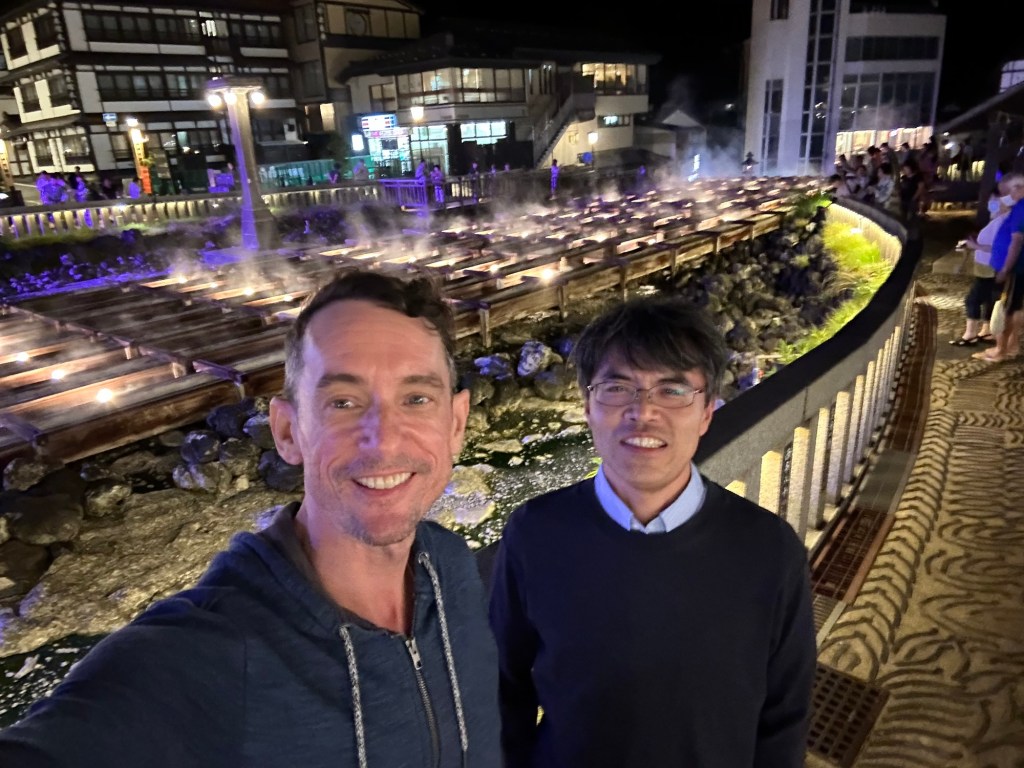
In the town square sits the Yubatake, a field of water, where people gather particularly at night to socialize. Some believe the minerals from the hot springs have healing properties. If true, I was more than ready for a soak.

“Let’s do the Onsen after we check in,” Keita said to me as we hiked through the narrow and curved streets up to our hotel.

Donning our yukatas (robes), we entered the male side of the Onsen. Inside, phones and cameras are strictly forbidden and it is custom to bathe naked. To set the mood, relaxing zen music played overhead as I stepped into the tile enclosed pool.

Life takes unexpected twists and turns and here I was, the lone Western figure at a remote hot springs resort tucked away in the mountains of Japan’s Gunma prefecture.

And the water was wickedly hot!

It’s heat pulsing as I stood knee deep and naked in the Onsen’s large pool. The convection like an attack on my nervous system.

While the temperature stymied me, others were easily submerged in the mineral waters.

“John, are you okay?,” Keita politely asked, noticing my hesitation to take a deeper plunge.

“Yeah, it’s just very hot,” I replied, thinking there was no way I could go any further.

Then I heard what sounded like a frog noise beside me. I turned to see an older man, sitting in the pool, with no expression on his face. Then suddenly, that sound again:

Ribbet, Ribbet.”

I smiled at him, but knowing very little Japanese, did not speak. Keita engaged the man in friendly banter, translating for me.

“He says you’ll get used to the temperature,” Keita told me. “And he thought you were French.”

The metaphor could not have been more fitting.

After that exchange we waded away from the man and I did eventually work up the courage to go completely under. This being the first step in my transformation. I was washed and exposed and felt no shame.

I slept good that night. The Onsen brought my Misogi challenge more into focus. I was determined to become a train conductor and upon returning home would enroll in a program to begin this process, leaving behind mundane janitorial duties.

Yes, this frog had escaped the boiling water.

Ribbet, Ribbet.

John & Keita at the Yubatake in Kusatsu, Japan


My Misogi Challenge

4 05 2025

In Japan they have a concept that is designed to create profound personal growth through very difficult situations.

Undertaking a challenge like this will likely result in failure, but the higher purpose is for the process to test your limits and ultimately change you for the better.

This concept is called the Misogi Challenge and is rooted in a traditional water cleansing of the mind, body and spirit. Before accepting my assignment, I traveled to Japan to visit an old friend, whom I had not seen in nearly 15 years.

Keita and I met in New York City. It was the summer of 2009, when I naively tried to move to the Big Apple with just a few bucks in my pocket and big dreams floating around in my head.

Keita offered to help — giving me a place to sleep for a few nights. That’s when I first learned that mattresses are not a necessity in Japanese culture.

Keita did return the visit to Florida, flying into our brand new airport in Panama City Beach. He took a real shine to me and I was flattered by such exotic attention.

We kept in touch over the years, thanks in large part to Facebook. When the pandemic hit, Keita returned to Japan to live with his mother, a recent widow. There wasn’t much a classically trained violinist could do at that time.

For me, traveling to Japan was also a test to see if I still had the bravery to venture out of my comfort zone and explore unknown territory. I was also aware that I would need to demonstrate diplomatic skills as to not come off as an ugly American.

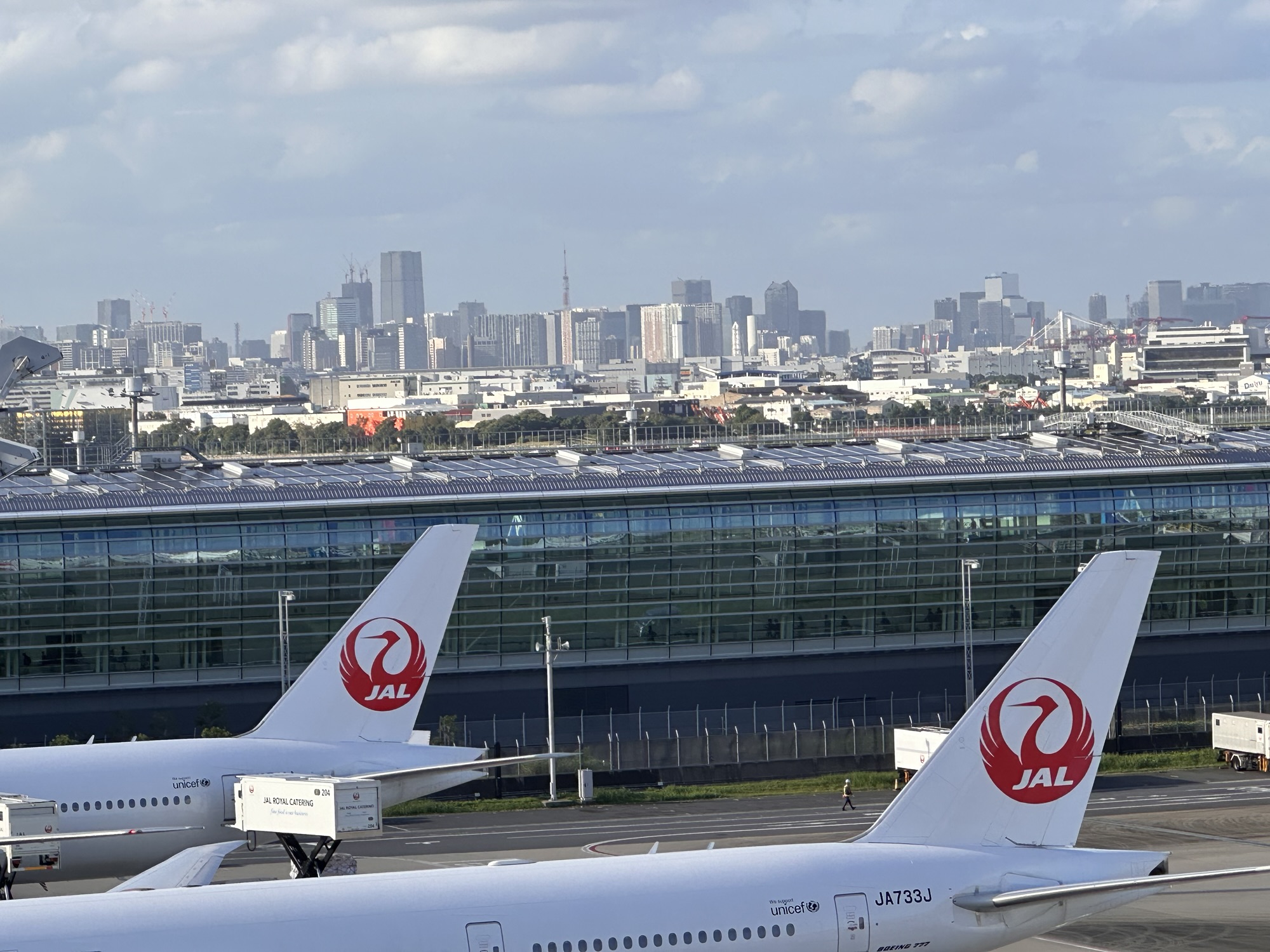
After a long flight from Portland, with a layover in Hawaii, our Airbus A330 landed safely at Tokyo’s Haneda Airport. There was a long line for customs as Japan was one of the last countries to reopen post-COVID and had quickly become a popular travel destination.

Once cleared, I entered the landside area and there was Keita waiting for me. He was easy to spot in the crowd, eagerly anticipating my arrival. As I approached, an expression of relief washed over his face.

John, welcome to Japan,” he said, with a quick bow of his head while enthusiastically reaching to assist with my luggage.

Keita had aged well. He was lean and fit, a few inches shorter than me with slightly more gray hair. We took the train to his hometown of Hamura, where arrangements had been made for me to stay in a hotel. In the morning, we would depart for the mountain resort town of Kusatsu.

That night as I laid in bed, in a room the size of a luxury closet, I thought about how fortunate I was to be here — and how far I’d come professionally. When I first met Keita, I was a destroyed man in survival mode, aimlessly wandering the New York streets, foolishly thinking charisma and the ability to write would propel me to success.

As hard as that stage of my life was, the adversity helped shape me into the stoic, can do person I am today. It toughened me up for harder times in South Florida and the Pacific Northwest.

I was prepared for my Misogi challenge. The next day would come the water.


Can Do

20 01 2025

One word convinced me. Actually, it was the concept behind the word.

That concept took me to another level — snapping me out of a cautious funk of settling for the easy way out or crumbs along the path of least resistance.

The word is CAN.

It first came to my attention through a sticker on the back of my cousin’s jeep. Come to find out a Hawaiian man, battling depression, decided to defeat the doubt and negativity in his life by changing his mindset.

CAN defeats Can’t. Simple as that, right?

Well, it’s not as easy as it sounds. As those who have accepted a challenge can attest, half the struggle is just getting started.

I have been fortunate enough to accomplish certain things in life that seemed impossible as a youngster. The list of achievements include running for public office, hiking the Grand Canyon, publishing a book, covering a presidential election and getting married.

Some would say that’s a life well lived.

But I know there is more to experience. Who wants to be mopping trains forever? Not this guy. Could I operate them? You bet, I can.

There was also a not so subtle desire to start a family. This is something Stanley picked up on in our therapy sessions, particularly when it came to my attachment to River.

“You want to be needed,” he said.

Who doesn’t, I thought.

David still needs me and we had a lovely time in Hawaii. The hospitality Rob & Shelley extended to us was above and beyond.

It’s amazing how fast the time goes. I still vividly recall summers on St. George Island and Apalachicola with Rob and all my other cousins. I now realize how precious those moments were.

Looking back, was there anything that could have altered my path? Would a different decision at a critical juncture turned out for the better?

Second-guessing now seems silly.

Changes did await on the mainland. A new work assignment, on the other side of town, would free me from the graveyard shift, challenge my thinking and provide the opportunity to put my new ‘CAN DO’ attitude on display.

For the first time in years, checking on my folks in Florida seemed both doable and desirable. My father’s health continued to deteriorate and mom’s cries for relief were like a broken record.

An old friend from Japan was also on my mind. Like many of the international friendships forged during my younger days traveling, promises of reunions now seemed possible.

CAN was already at work in me.

Fear no longer had a grip on my emotions. Failure, I had come to realize, was just part of the process — not the end result.

I was ready to enter the arena again. To dare greatly while speaking my truth softly. To strive valiantly without coming off overconfident and cocky.

I think I CAN. I think I CAN. Choo-Choo!

All Aboard!


Hawaiian Reset

12 12 2024

Heeding Stanley’s advice, I began to distance myself from River.

And the therapist wasn’t the only one delivering this message. Kieran — my loyal friend all through the pandemic and beyond — was uncharacteristically blunt. He had been observing a disturbing change in me.

“He’s using you and he’ll take you down with him,” Kieran warned. “A narcissist with addiction issues is a dangerous combination.”

River had a lot of drinking buddies so replacing me in his rotation would be no problem. My sympathies for him remained and as Stanley had predicted, it hurt as I cut off communication.

Luckily for me, I had some vacation time coming that would chase my blues away. Not long after the new year, David and I traveled to Hawaii to see my cousin Rob and his wife Shelley. Empty nesters, with both kids recently graduating from college, they had graciously offered to let us stay with them during our visit.

We left Portland just as a big winter storm approached. David’s brother chained up the tires on his SUV and navigated along frozen back roads to get us to the airport. On the tarmac, crews worked hard to de-ice the plane, enabling our takeoff in what felt like a true escape from winter’s clutches.

We flew directly to Kauai, one of the less populated islands, known for its lush greenery. It had been years since I last saw Rob and Shelley. Rob grew up in Miami, went to UF and worked as a defense contractor on the technical side, even living abroad for a time in the Middle East.

Rob picked us up at the airport in his blue jeep with a orange Florida Gators logo on the side door. He had long hair and was wearing shorts, flip flops and a T-shirt. It was the classic beach bum look.

Aside from the heat, one of the first things I noticed as we left the airport, were the chickens. They were everywhere and their cock-a-doodle-dos could be heard all over the island.

Rob took us to lunch at a waterfront restaurant where at night herds of sea turtles crawled to shore.

“How’s your dad?,” he asked.

“Not good,” I replied.

My brother had recently sold dad’s truck. He was never going to drive again. The Parkinson’s was progressing and dad refusing his medications didn’t help.

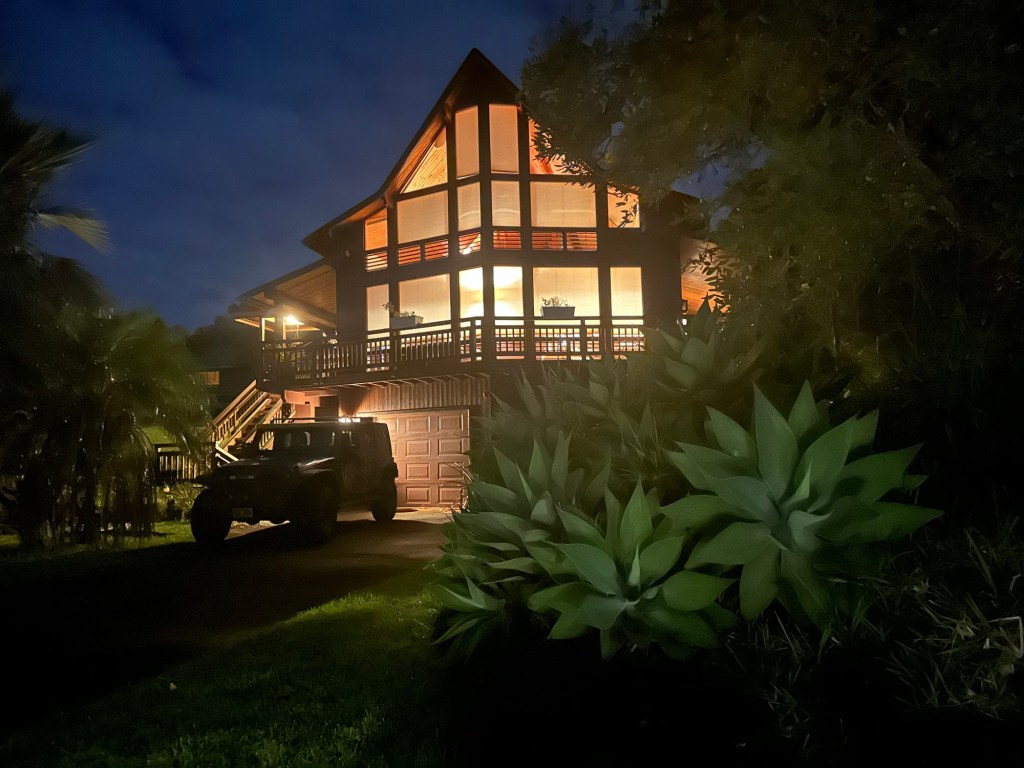
After lunch, we drove on Kauai’s one main road to the southern side of the island, where Shelley welcomed us into their cozy cedar home. They had two dogs and a big backyard full of colorful flowers, plants and trees.

Fritz House

It was so peaceful and serene. Just what we needed.

“Make yourself at home,” Shelley said as she showed us to the downstairs guest room.

The walls were covered with pictures of their wedding, children and travels. You could feel love resonating through the frames.

I slept soundly that night in paradise. Something was stirring inside of me. As we would soon find out, it was the power of CAN.


Building Update

3 09 2020

Hi,

Yes, i am still in America. It is not as bad as they say.

We visited a few Midwestern states for vacation. Traveling in the age of COVID-19 takes some getting used to. We took the train on this trip. Mandatory mask wearing for coach travelers and no access to the dining cart. It was a projected 46-hour ride — both ways.

We chose the Empire Builder.

It was a beautiful ride, sleep be damned. I did not realize how enchanting fields of corn, grain and sunflowers could be.

Cascadia

From Portland, Oregon, train travelers have multiple options. Amtrak operates routes to Seattle, San Francisco, Los Angeles and beyond. The Empire Builder ends in Chicago. We got off one stop before, in Milwaukee, Wisconsin. It was quite a journey.

The Washington stretch is nothing short of amazing. Traveling along the Columbia River Gorge, we were front row to spectacular views of mountains, waterfalls, farms, villages and fishing boats. Looking back, the train made good time.

We climbed out of the gorge and onto a plateau near Spokane, Washington. Once in Spokane, we hooked up with the train coming from Seattle. The Seattle cars were placed up front behind two engines. A dining car and an observation/lounge/cafe car separated the Seattle section from the coach and sleeper cars that had originated in Portland. The train was far from full, which allowed for proper physical distancing.

Yes, pandemic protocols were still in effect as we were required to wear face masks at all times, except when eating and drinking. I did my best to stay properly hydrated. Sleeping in coach chairs proved to be a challenge. Our car’s air cooling system had no problems. Perhaps Amtrak was testing its future chill car.

From Cascadia, The train makes one stop in Idaho and then tours through Glacier National Park and into Montana. This could be considered the high point of the route. Jagged mountain tops and crystal clear rivers. We were lucky enough to see Glacier and Blackfeet Nation lands on the “to” and “from” routes.

Eastern Montana and pretty much all of North Dakota are grasslands. Fields of grain and crops.  On some parcels of land there appeared to be the presence of hydraluic fracking operations. Wells extracting natural resources. Designated by a flame.

That process is called flaring. This is where we are now.

Good night, America. Write soon.

John


Notes From The Virus Front Lines

22 03 2020

Where does one start when seeking a literary agent? Who should I approach? Is my story even worthy of book status?

All valid questions. I do think I have lived a remarkable life and walked a different path. I have also enjoyed the privileges of travel and being in place for important happenings.

Mexico was another example.

Play ball

I had pleasant interactions with locals in Oaxaca. In a clothing store a few blocks from the Zocalo, a young man helped outfit me with some Guayabera shirts. He tossed a few compliments my way and we bargained back and forth over the cost.  I wore one of the shirts to church Sunday morning. Ron invited us to a tiny Episcopal congregation where we met American missionaries and Mexican Christians. It was a delightful service in a modest setting.

Unlike the grand temples and cathedrals constructed under Roman Catholic eyes, this tiny Episcopal church felt more like a small, nurturing school. Here, we climbed to the rooftop and got our first panoramic view of Oaxaca. It was a nice moment to share with David.

After a couple of days, securing a tour to Monte Albán became the prime objective. This ancient mountaintop site was Mesoamerica’s first metropolis. It was breathtaking and worth the process of ascending to these sacred grounds. That process involved paying for a driver and guide. We rode in a small van with other tourists up the winding, dusty road to Monte Albán.

At the gates of this world heritage site, we were split into two groups — one for English interpretation and one for Spanish speakers. Getting past some of the vendors was challenging. They swarmed David as we hopped out of the van. At the mountaintop a man appeared promoting his reproduction of an ancient artifact — an Aztec ballplayer. David purchased the little athlete as our guide explained the history behind this long ago community.

Danzantes

Disease eventually came to Monte Albán, our guide explained, wiping out the people of the clouds. Evidence of this suffering is depicted in the Danzantes or rock art carvings found around the temples.

Where did this plague start? Was there no quarantine issued? No social distancing practiced?

The disease apparently was stronger than any medicine. And just like that a civilization disappeared.

As I write this blog post — going back through my notes and photographs — a new disease has its death grip on the world. These are difficult times to say the least.

Trying to describe what I have experienced recently is a hard task. The range of emotions expressed in my daily interactions here at home include stressed out grocery stores, cavalier attitudes by twenty and thirtysomethings, anger from the marginialized, concern for the sick and vulnerable and a lot of fear both justified and irrational.

I have also witnessed hope and courage from heroes. Not the costumed variety of an over-manufactured Hollywood model, but heroes in doctor’s masks and nurses’ gloves. Heroes driving trucks of supplies. Heroes bagging groceries and heroes working in sanitation.

Our better angels are winning. We will get through this.


The Hunt For A Literary Agent

11 02 2020

The search is on.

If I am to discover the book publishing process, maintaining this blog is essential. It’s time to get some of these stories in print before I lose recollection of them. The adventures are adding up, you see.

We just returned from Mexico, a week-long excursion into the southern state of Oaxaca, a valley community known for its “Day of The Dead” celebration.

Boy, do I feel dead alright.

I’m not sure what I picked up on the plane but three days after returning stateside I felt like I got run over by a tractor trailer. This wasn’t one of those Moctezuma’s revenge illnesses, but more a long the lines of cognitive paralysis.

Couldn’t type, put thoughts together or even rise from my bed for that matter. I was in this state for three days. It was horrible.

And, of course, it was cold, windy and raining in Portland. This is, after all, one of the primary reasons for traveling to Mexico — to see the sun again, near its zenith.

So let’s roll out of bed and retrace our steps south of the border. I worked my tail off over the holidays in order to have a “vacation.” The old days of two to three weeks paid time off automatically are a relic of the corporate past, almost like a supermarket checker.

With time off secured after a busy holiday season, I booked the airfare and going by one simple presentation to a group of seniors, decided Oaxaca was the place to get away to. It certainly satisfied my desire to do something different. Often when you mention Mexico the first thoughts are of the coastal resorts where cruise ships docked.

No, I wanted to go somewhere not yet ruined by ugly tourists.

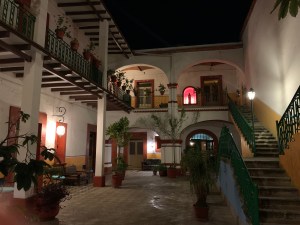
So off to Oaxaca we went. Ron, our guide from the cathedral, booked us at his hotel. After 14 hours and three flights we arrived late at night. There was a note at the front desk from Ron saying he’d meet us for coffee in the morning. The hotel was certainly not luxurious by American standards, but had cozy rooms with tall ceilings, running hot and cold water and a quaint hacienda style patio feel.  Most importantly, it was in a central location to museums, restaurants and other historical sites.

At coffee the next morning, Ron pointedHotelOaxaca out the important places from the lending library where Western ex-pats gathered to the pastery shop where you could score a delish chocolate crossiant. The Zocalo, he said, is where we would find a browner, more indigenous population.

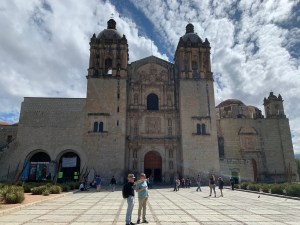
Ron took us, via the side door, into Oaxaca’s magnificant Templo de Santo Domingo de Guzman. A beautiful baroque style structure, the former convent would serve as one of our landmarks for the week, it’s bells often ringing in the dawn and dusk hours.

TemplodeSantoDomingo

Our size set us apart from the locales. Here, we were tall. Ron, a seasoned traveler, said I had the look of a southern European and I did my best to engage the locals in a Spanish tongue, sometimes pulling off the conversation and other times steering the dialogue to Francais, English or letting the local define it.

Wherever we went I never felt like there would be a breakdown in communication. The delicate dance was to be as respectful at all times of the Mexican culture and customs.

And to have a good time. This was our mission.

To Be Continued


Happy Birthday, John

18 10 2019

I write this on the eve of my 47th birthday.

Glad to be here.

It’s raining in the autumn in Oregon. We’re in the state’s interior for a few days. High desert country in the fertile Cascade Mountain range.

It’s a needed respite from city life.

Central Oregon features interesting buttes, forests, calderas and caves. There’s also powerful flowing rivers and breaktaking mountain top lakes all in a day’s journey. David found a condominium for rent on Airbnb in the Sunriver community. Sunriver — in a way — reminded me of Baypoint and the St. Joe Company developments in Northwest Florida.

The accomodations, however, would not be the highlight of this trip. No, this trip was more about to determine if David and I could travel together after such a harrowing crash in the Rogue river valley. Could we make the three-and-half hours drive from Portland and back safely and without incident or argument? This was the test.

I took the wheel leaving Portland. Going over Mt. Hood brought back memories for David as he shared stories of Timberline Lodge, Government Camp and Skibowl. We stopped at a roadside diner on the Warm Springs Reservation where respect was given and we were served an excellent breakfast. The Confederated Tribes’ fried bread was delicous.

After breakfast we crossed the Deschutes River and passed through Madras where we were surprised to find a major airport. The Central Oregon area is definitely growing in population and business. We ate dinner in Bend at a tavern along the Deschutes’ flowing waters. Temperatures were dropping. It was getting colder.

Crater Lake

The next morning we made our way to Crater Lake. The park was open but most of the offices and concessionaire operations had closed for the season. It was still an exciting visit as temperatures dropped below freezing and wind gusts picked up considerably. Just getting out of the car to snap a few pictures along the lake’s rim was a daunting task.

And fun. We were indeed lucky to traverse the east rim drive this time of year. The road provides access to those hiking Mount Scott (8,929 ft.), the park’s highest peek. Crater Lake is a beautiful example of nature’s fury. Almost eight thousand years ago Mount Mazama erupted. The volcanic mountain became the volcanic lake before us.

Coming to Crater Lake was an emotional roller coaster, the least of which being David’s driving. This was a park I had hoped to work for but the lodging concessaire went with another candidate. That stung. We got over it and moved to Portland where we find ourselves in year two. The challenges have been great and, for that, I remain grateful and cautiously optimistic.

I am learning and growing and, God willing, developing mature critical thinking skills.

On our last night in Central Oregon we went to the Pine Tavern in Bend for happy hour. We had hiked the upper Deschutes River trail eariler and visited the ski lodge at Mount Bachelor. It was quite cold that day with snow on the ground. The joy of traveling kicked in that night in the tavern.

There we were — finishing another great outdoors excursion in a cheersy bar surrounded by happy people.

Nice way to celebrate another year in the life.


Gratefully Injured

11 11 2018

I injured myself. It was bound to happen.

“You’re lifting too much,” Ani said. Smart kid, that Ani.

Yes, my housekeeping duties require extensive lifting and reaching. It’s a physical job and I’m grateful to have it. Aside from cleaning chores, the interactions with co-workers like Ani are important. After years of indepedent contractor work, it is refreshing to be a part of a company again.

Great cities are built by great companies, mind you.

Life in Portland is going just swell. I have been invited on two press tours since my arrival here — Long Beach, California and Puerto Rico. Long Beach was a solo adventure and Puerto Rico a group effort. Both destinations interesting in their own way. Long Beach, in the shadow of Los Angeles, is run by a young mayor. A gay man determined to improve living conditions by implementing new concepts in this coastal southern California port city.

Puerto Rico, still suffering from a barrage of hurricanes, offers beautiful nature and lots of rum. Bacardi is the major player there. I learned how to make a simple refreshing cocktail. Pronounced Die Q Re. It’s basically sugar, superior Bacardi rum and ice. It’s hot in the tropics and ice is a key ingredient.

My tour group in Puerto Rico was a lot of fun. It included seasoned travelers and newcomers. It was designed for the LGBTQ community. There were journalists from Los Angeles, New York and San Francisco there. I managed to connect on a personal level with some of them.

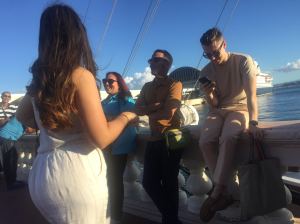
Our group sets sail.

Long Beach seemed to be this vision of what we can accomplish. Puerto Rico offered a chance to relax from the heavy work load, over-reaching and contenious mid-term elections. I knew I was hurt when the luggage became hard to handle at the airport. Perhaps I could have packed lighter. I did not use the laptop, but the sports coat was put to good use.

David gave his blessing on both trips. He stayed in Portland continuing to piece together our studio. We both received influenza vaccinations before I departed to San Juan. When I returned the doc diagnosed me with lateral epicondylitis, aka tennis elbow.

So I’m slowed down. Just in time for the holidays.

Time to reflect on the incredible year we have had. A cross country move. New friends and new challenges. A rennaissance of the soul.

I believe this injury is divine intervention to force my conscience into absorbing the events of the past year. To still be standing and breathing — much less working — is something to be eternally grateful for. I am in a good place in life. Time to cherish that and offer a rum filled toast to even better times ahead.

Long Beach stairs