Coming to My Senses in Canada

17 08 2026

It was the summer of 2026 when I finally let River go.

There was no ceremony to it, no last conversation in which everything was explained and the scales were somehow balanced. Life rarely gives us endings that clean. What remained instead was the knowledge that I had spent three years trying to understand someone who had hurt me, as though understanding the hurt might somehow make it hurt less. I kept looking for the explanation that would turn cruelty into confusion, indifference into damage, damage into something I could forgive.

For a long time, I told myself he might not know what he was doing. Perhaps his aloofness was an act, some private wound behind it. Perhaps he simply couldn’t see what his behavior did to another person. Was my compassion generous, or had it become a hiding place?

Eventually, there was only one fact left that I could no longer explain away: he didn’t care. That realization arrived quietly. I began to understand that my patience had become permission. Sometimes wisdom consists of knowing when the generous interpretation of another person has become an ungenerous interpretation of yourself.

I had people around me who understood this before I did: friends who had traveled their own versions of this road, coworkers who expected more of me than I was expecting of myself, and David, my husband, who had been right more often than I wanted to admit. They had watched me make accommodations for behavior I would have told anyone else never to tolerate. Sometimes hope is the enemy.

Now that I had ended it, I needed distance. Distance from River, certainly, but also from the version of myself that had remained standing at the same locked door, waiting for it to open. I rediscovered my best self in Canada.

Our trip to Vancouver did not begin auspiciously. The train was three hours late, and by the time David and I arrived it was after midnight. At the border came the familiar questions.

“Why are you coming to Canada?”

“Where are you staying?”

“How long will you be here?”

“How are you leaving?”

There was nothing particularly menacing in the questions, but there was a chill to the exchange, the bureaucratic suspicion of two tired men arriving after midnight with luggage and an explanation. Then I mentioned that David and I had come up from Portland for Pride. Something in the officer’s face changed.

“Enjoy your stay,” he said.

And we did.

Vancouver seemed to rise out of water and glass. Towers caught the shifting northern light while mountains stood beyond them, enormous and indifferent. The harbor moved constantly—freighters carrying the serious business of commerce, sailboats and yachts carrying the less serious business of pleasure. Everywhere there seemed to be green: forests climbing toward the mountains, parks opening unexpectedly inside the city, trees reflected in the blue-gray water.

Stanley Park sea wall

David and I settled into the rhythm that marriage often teaches you. Our differences became less something to overcome than something to use. I pushed him to walk farther than he wanted. He indulged my determination to dance late into the night in a cocktail lounge overlooking the harbor. We ate well, talked to strangers, bicycled through Stanley Park and watched a city celebrate Pride without appearing to apologize for its happiness.

Travel inevitably produces the question: “Could we live here?” Vancouver was a yes.

In some ways it resembled Portland: the mild wet climate, the devotion to green space, the proximity of water and mountains, the particular Pacific Northwest conviction that civilization and wilderness can coexist within sight of each other. But there was something else in Vancouver, something harder to photograph. There was a sense of joy.

I don’t mean that everyone in Vancouver was happy, but there was an ease in the streets, a sense that people expected something pleasurable might happen to them. After three years of allowing another person’s darkness to occupy too much space in my own life, I noticed that ease immediately, probably because I had begun to want it again.

We returned to Portland carrying our luggage and the residue of a good weekend — the pleasant exhaustion, the private memories, the feeling that life might be easier somewhere else. That feeling was confirmed before we even reached our front door.

The contrast was immediate. The despair I had grown accustomed to now felt heavier, as though something in the city had hardened. Vancouver had reminded me what it felt like to move through streets animated by pleasure and possibility. Back in Portland, the atmosphere felt different: frayed, angry, unpredictable. What happened next seemed to confirm everything I was feeling.

Outside our building, a young man was destroying the thin trees planted along the sidewalk. They were hardly grand trees, just skinny urban saplings held upright by stakes, the kind cities plant as small declarations of faith in the future. He was breaking them deliberately.

David told him to stop. The man turned.

He was much younger than David, larger, perhaps forty years his junior. For a second there was only that primitive calculation one makes when a stranger begins moving toward you and you realize the ordinary rules governing public life have disappeared.

Then he hit David in the face.

I dropped the luggage and reached for my phone. Before I could do much of anything, another man—a stranger, younger and fitter than either of us—came running. He chased the attacker away.

Then there was silence. David’s nose was bleeding, but it wasn’t broken. We stood there on the sidewalk beside our luggage and the damaged trees, taking inventory of what had happened. A few seconds earlier we had been travelers coming home from a weekend away. Now we were two men confronting the strange fact that violence can enter an ordinary afternoon without invitation.

Something else had happened, too. I wasn’t afraid.

Or perhaps that isn’t quite right. Fear was there, but it no longer had the authority I had been giving it. Standing beside David on that Portland sidewalk, I understood something I had failed to understand during those three years with River: being compassionate does not require being passive. Understanding another person’s suffering does not obligate you to become its casualty. There are moments when turning away is wisdom, and there are moments when refusing to turn away is wisdom too.

River had humbled me. I can admit that now. He forced me to see the limits of my own compassion and the danger of confusing endurance with strength. Canada reminded me of something equally important: the self I thought had been destroyed was not gone. It had simply been buried beneath all that forgiving and hoping.

I had spent enough time examining my failures. I knew where I had been weak. I knew where I had surrendered ground. I knew the difference now between compassion and capitulation.
The trees outside our building would have to be replaced. David’s nose would heal. Vancouver remained across the border, glittering in memory, while Portland was still our city, damaged and difficult and asking something of us. I picked up the luggage.

The age of reflection was over. The age of action had begun.

I had spent enough time examining my failures. I knew where I had been weak. I knew where I had surrendered ground. I knew the difference now between compassion and capitulation.




Hawaiian Reset

12 12 2024

Heeding Stanley’s advice, I began to distance myself from River.

And the therapist wasn’t the only one delivering this message. Kieran — my loyal friend all through the pandemic and beyond — was uncharacteristically blunt. He had been observing a disturbing change in me.

“He’s using you and he’ll take you down with him,” Kieran warned. “A narcissist with addiction issues is a dangerous combination.”

River had a lot of drinking buddies so replacing me in his rotation would be no problem. My sympathies for him remained and as Stanley had predicted, it hurt as I cut off communication.

Luckily for me, I had some vacation time coming that would chase my blues away. Not long after the new year, David and I traveled to Hawaii to see my cousin Rob and his wife Shelley. Empty nesters, with both kids recently graduating from college, they had graciously offered to let us stay with them during our visit.

We left Portland just as a big winter storm approached. David’s brother chained up the tires on his SUV and navigated along frozen back roads to get us to the airport. On the tarmac, crews worked hard to de-ice the plane, enabling our takeoff in what felt like a true escape from winter’s clutches.

We flew directly to Kauai, one of the less populated islands, known for its lush greenery. It had been years since I last saw Rob and Shelley. Rob grew up in Miami, went to UF and worked as a defense contractor on the technical side, even living abroad for a time in the Middle East.

Rob picked us up at the airport in his blue jeep with a orange Florida Gators logo on the side door. He had long hair and was wearing shorts, flip flops and a T-shirt. It was the classic beach bum look.

Aside from the heat, one of the first things I noticed as we left the airport, were the chickens. They were everywhere and their cock-a-doodle-dos could be heard all over the island.

Rob took us to lunch at a waterfront restaurant where at night herds of sea turtles crawled to shore.

“How’s your dad?,” he asked.

“Not good,” I replied.

My brother had recently sold dad’s truck. He was never going to drive again. The Parkinson’s was progressing and dad refusing his medications didn’t help.

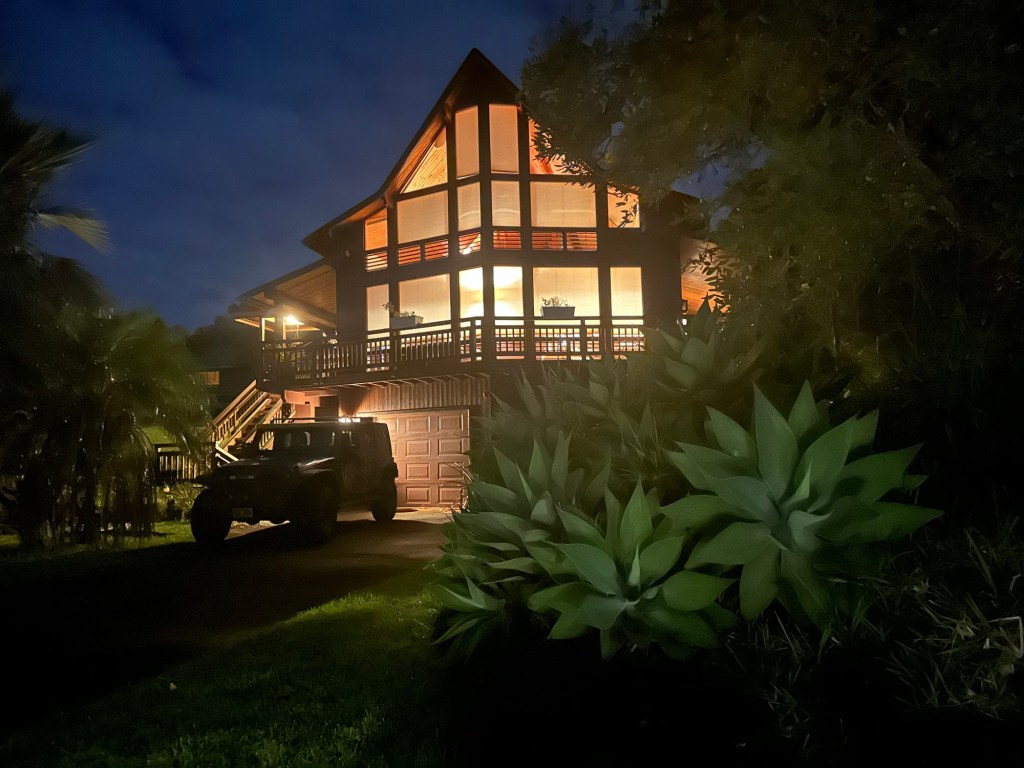
After lunch, we drove on Kauai’s one main road to the southern side of the island, where Shelley welcomed us into their cozy cedar home. They had two dogs and a big backyard full of colorful flowers, plants and trees.

Fritz House

It was so peaceful and serene. Just what we needed.

“Make yourself at home,” Shelley said as she showed us to the downstairs guest room.

The walls were covered with pictures of their wedding, children and travels. You could feel love resonating through the frames.

I slept soundly that night in paradise. Something was stirring inside of me. As we would soon find out, it was the power of CAN.


Blood Brothers

21 11 2024

“All I saw was blood…blood everywhere. On the ground, all over my clothes. It was gushing out of my nose,” he said.

River’s nose had puffed up to clown size and purple bruises surrounded his left eye. He never saw it coming — walking home, listening to music with his headphones on and suddenly out of nowhere:

Shabam!

The stick smacked him across the face, knocking him to the ground and busting his nose wide open. The culprit was gone before he knew what hit him.

And yet somehow, River mustered the courage to come to work that week and clean trains in horrible pain with a fractured nose. I felt a tremendous amount of sympathy for him, knowing full well that could have been me.

But why would someone do that?

Despite my insistence, River refused to seek medical attention or file a police report. As I was quickly discovering, he seemed to detest health screenings and absolutely did not trust the police.

The attack drew me closer to River. I wanted to be there for him and I told this to Stanley, my next door neighbor psychiatrist. Stanley reminded me that I was supposed to be seeking more joy in my life and yet here I was trying to play a rescuer role.

“You can’t ‘save’ someone who does not want to be saved or feel there is a problem,” Stanley reminded me.

River liked to party and at his age who could blame him. He was quite the playboy, handsome and confident. Going out with him felt like riding shotgun with a celebrity because every bar we entered, someone there knew River.

While I reserved social outings for the weekend, River was going out nearly every night. I tried to sound the alarm about work, but he didn’t seem to care.

The job may stink now, I told him, but there were many paths within the organization that would lead to secure livability.

“You’re wasting your breath,” Stanley told me.

Stanley had been in this situation before and knew the ending.

“Why are you attracted to him?” he asked.

That was the billion dollar question.

Aside from having a savior complex, I saw a lot of my old self in River. Two decades earlier, I left my job as a sportswriter in Alabama to move to Houston, Texas to be with my first lover, Dennis.

I have never written about this time in my life. I did some things that I am not proud of. Things I wish that I had never done.

Dennis introduced me to a completely different lifestyle. A lifestyle of endless nightclub parties, rampant drug use and survival sex work.

Unpacking and acknowledging this time is important and so too is letting it go.

I saw River as a shot at redemption. He was living the same life I did and I wanted desperately to lift him out of it.

“You’re going to get hurt,” Stanley warned.

Sticks & Stones


Rolling with River

27 10 2024

With Stanley’s words ringing in my ear, I set out to find a little joy in my life.

Working the graveyard shift in the train yard made doing things on my days off a challenge. When I was up and ready to go, most people were sound asleep.

So while David slept, I put on headphones and watched a lot movies in our little studio apartment. I did some writing and cooking too and worked out in an empty gym.

But I was lonely. Very lonely.

Then one night, I came to work and everything changed.

I walked into the cleaners’ shack to find a new guy sitting at the table, staring intensely at his phone with a big backpack by his side.

A young man in his late 20s, tall and lanky with curly hair and a smooth skin tone that showed he had recently spent some time in the sun.

I sat down beside him as the other workers filed in and prepared for another tedious shift of cleaning trains. He looked up from his phone, nodded his head at me and immediately turned his attention back to the phone.

“Are you new here?,” I asked.

“Yep, first day,” he replied, without looking up while pecking away at his phone.

“Well, welcome aboard, I’m John.”

“Hey buddy, I’m River.”

I felt good energy between us. Positive vibes for sure.

After our crew meeting, the supervisor pulled me aside. A highly intelligent Navy mechanic, the sup knew how to communicate with me with little words or explanation.

“Look out for River, will ya,” he said.

“Sure thing,” I replied.

Model Cleaners

The sup informed me River would be taking the train to work too, which gave me a little more peace of mind on the commute. There was always some sort of drama on the train not to mention it had basically become a rolling homeless shelter — another casualty of Portland’s laissez faire attitude.

River’s attitude, on the other hand, was upbeat and cheerful.

He gave compliments without hesitation, was quick with a joke and talked frequently of his bold plans for the future.

“I want to own a house in different places all the world,” he told me one morning on our ride home.

“How are you going to do that?,” I asked.

“Oh, I have connections,” he grinned.

Those connections came from his previous work. It was a lifestyle that I was quite familiar with, albeit buried deep in my past.

“I was a dancer before I got this job,” he said. “Made a lot of money too, but I spent it just as fast as I made it.”

“What kind of dancing?,” I naively asked, already decided that I was going to play dumb for a while.

“Strippin’ at the bars downtown.”

As I listened, memories of my very first relationship with a man came flooding back into my consciousness like a tidal wave of emotions.

He went on, “There’s videos and pictures of me all over the internet.”

Before he could say any more, the train reached my stop and I wished River a good day.

“Get some sleep and I’ll see you later,” I said.

But I wouldn’t.

That was the night River was attacked.