The Dream Derailed

9 08 2025

It wasn’t the sirens. It wasn’t the alarms or the strobe of red light flaring against a sleeping city.

It wasn’t even the man collapsed on the floor of my train, lips slack, the color gone out of his skin like a tide receding. No, what undid me was the quiet afterward.

That winter night, I stopped the train at the platform as protocol required, keyed out, radio in hand and made my way to the trailing car. I found the man unconscious, his companion kneeling beside him in frantic disbelief. The evidence — needles, foil, the sour chemical reek — was all there, as it always is.

I followed the instructions we all know by heart: check for breath, check for pulse, check for signs of life. He had one. Just barely.

This wasn’t new. This was becoming ritual. I had imagined trains as vessels of order, of precision — steel-bound promises running on time. Instead, I found myself driving a shelter. A triage center. A dim, clattering corridor of last resort.

Back at the break room, I told the others. “Probably just wanted a warm place to pass out,” a colleague said without looking up. And he wasn’t wrong.

This is what it had become: a moving refuge for the discarded. Those too sick, too high, too cold, too far gone. They boarded without fare and without malice, most of them. And we — the drivers, the operators, the ones who still believed in timetables and track switches and clean fluorescent platforms — we bore the brunt.

Alarms blared at random intervals. The emergency stop cord yanked not out of panic, but curiosity or confusion, sometimes spite or to simply be recognized by a world that had passed them by. Delays cascaded like dominoes. And always, I returned to the cab a little more frayed, a little more unmoored.

So yes, the irony was sharp, almost comical. When I was called into the manager’s office and told I was being let go — for failing to run on schedule — I almost laughed. Not out of disrespect, but recognition.

How does one maintain a schedule when the job requires you to stop, literally and figuratively, to deal with overdoses, breakdowns, psychic collapse? How do you keep to time when you’re forced to become both conductor and caretaker, when the cost of returning to the rail is a few stolen minutes to breathe, to collect yourself, to remember what part of the city you’re even in?

Those minutes, those necessary silences, were not inefficiency. They were recovery. They were sanity. And they were, in the end, my undoing.

“Egress there, sir,” the security guard said as I walked out of the yard that once held my dream.

A dream not crushed, but dismantled piece by piece, like an old train car scrapped for metal. A dream damaged, yes. But not dead. Just waiting, maybe, for a different track.

Safety First


The Dream That Carried Me

18 07 2025

When I was a boy in the Florida Panhandle — where the heat made any breeze that cut through the pine trees feel like a gift from heaven — I used to press my ear to the railroad tracks and wait.

For what, I wasn’t sure. A rumble. A tremor. A sound that confirmed something was coming. Trains moved through our coastal town, carrying paper from the mill. They moved like ghosts, urgent and unbothered, and I wanted, more than anything, to be the one driving them.

That was the dream: steel, speed, the illusion of control.

And now here I am, fifty-two years old, riding in a single-car light rail train into Hillsboro, Oregon, cloaked in the dark hush of a December morning. I am the one pulling into an empty platform, the one with hands on the lever. My left brings her into braking. My right taps the bell. The train stops clean.

“You don’t need to have a death grip,” Jorge tells me. “Be gentle with her.”

We were halfway through our training program and on the overnight shift. There are nine of us left, split into three teams. Jorge, all Cuban warmth and exacting calm. James, slower, quieter — Los Angeles cool, but alert beneath it. They don’t teach you how to handle the machine as much as they teach you how to be with it.

“Relax, take your time,” Jorge advised. “Do each step individually and it’ll all tie together and become natural.”

Sage advice. Slow your roll, essentially.

Before the yard-to-yard test — the one that moves you from theory to real track — I got sick. A stomach virus that left me wrecked and sweating through nights I couldn’t remember. I missed one day. James let me make it up. Another trainer might not have. I passed. Just barely. I passed.

“Watch your intermediates,” James told me as we walked through the Beaverton yard.

Signals, I learned, are prophecy. Intermediates tell you what’s coming — when to slow down, when to stop. Ignore one and anything can go sideways. Signals, switches, speed. There is no room for sentimentality out here. Only precision.

Oregon’s light rail system is complicated. Beautiful, yes. Ingenious, even. But also dangerous. Tracks run through intersections, weave alongside bike paths, share spaces with cars, pedestrians, skateboarders, scooters and dogs on leashes. You are constantly negotiating with chaos.

After the test, we entered line training. Three weeks of shadowing operators who knew too much, but said very little. They spoke in glances, in warnings you felt more than heard. This was no longer the dream. This was the reality.

You learn quickly: revenue service is where romance goes to die. Where you stop seeing yourself in the story and start seeing everyone else — angry passengers, lost time, bullying supervisors and the thousand ways things fall apart.

Still the horn cuts through a sleeping city, something stirs in me. That boy on the tracks, listening for the future. He never imagined what the job would cost. But he’d still want it.

So do I.


Rolling with River

27 10 2024

With Stanley’s words ringing in my ear, I set out to find a little joy in my life.

Working the graveyard shift in the train yard made doing things on my days off a challenge. When I was up and ready to go, most people were sound asleep.

So while David slept, I put on headphones and watched a lot movies in our little studio apartment. I did some writing and cooking too and worked out in an empty gym.

But I was lonely. Very lonely.

Then one night, I came to work and everything changed.

I walked into the cleaners’ shack to find a new guy sitting at the table, staring intensely at his phone with a big backpack by his side.

A young man in his late 20s, tall and lanky with curly hair and a smooth skin tone that showed he had recently spent some time in the sun.

I sat down beside him as the other workers filed in and prepared for another tedious shift of cleaning trains. He looked up from his phone, nodded his head at me and immediately turned his attention back to the phone.

“Are you new here?,” I asked.

“Yep, first day,” he replied, without looking up while pecking away at his phone.

“Well, welcome aboard, I’m John.”

“Hey buddy, I’m River.”

I felt good energy between us. Positive vibes for sure.

After our crew meeting, the supervisor pulled me aside. A highly intelligent Navy mechanic, the sup knew how to communicate with me with little words or explanation.

“Look out for River, will ya,” he said.

“Sure thing,” I replied.

Model Cleaners

The sup informed me River would be taking the train to work too, which gave me a little more peace of mind on the commute. There was always some sort of drama on the train not to mention it had basically become a rolling homeless shelter — another casualty of Portland’s laissez faire attitude.

River’s attitude, on the other hand, was upbeat and cheerful.

He gave compliments without hesitation, was quick with a joke and talked frequently of his bold plans for the future.

“I want to own a house in different places all the world,” he told me one morning on our ride home.

“How are you going to do that?,” I asked.

“Oh, I have connections,” he grinned.

Those connections came from his previous work. It was a lifestyle that I was quite familiar with, albeit buried deep in my past.

“I was a dancer before I got this job,” he said. “Made a lot of money too, but I spent it just as fast as I made it.”

“What kind of dancing?,” I naively asked, already decided that I was going to play dumb for a while.

“Strippin’ at the bars downtown.”

As I listened, memories of my very first relationship with a man came flooding back into my consciousness like a tidal wave of emotions.

He went on, “There’s videos and pictures of me all over the internet.”

Before he could say any more, the train reached my stop and I wished River a good day.

“Get some sleep and I’ll see you later,” I said.

But I wouldn’t.

That was the night River was attacked.


Building Update

3 09 2020

Hi,

Yes, i am still in America. It is not as bad as they say.

We visited a few Midwestern states for vacation. Traveling in the age of COVID-19 takes some getting used to. We took the train on this trip. Mandatory mask wearing for coach travelers and no access to the dining cart. It was a projected 46-hour ride — both ways.

We chose the Empire Builder.

It was a beautiful ride, sleep be damned. I did not realize how enchanting fields of corn, grain and sunflowers could be.

Cascadia

From Portland, Oregon, train travelers have multiple options. Amtrak operates routes to Seattle, San Francisco, Los Angeles and beyond. The Empire Builder ends in Chicago. We got off one stop before, in Milwaukee, Wisconsin. It was quite a journey.

The Washington stretch is nothing short of amazing. Traveling along the Columbia River Gorge, we were front row to spectacular views of mountains, waterfalls, farms, villages and fishing boats. Looking back, the train made good time.

We climbed out of the gorge and onto a plateau near Spokane, Washington. Once in Spokane, we hooked up with the train coming from Seattle. The Seattle cars were placed up front behind two engines. A dining car and an observation/lounge/cafe car separated the Seattle section from the coach and sleeper cars that had originated in Portland. The train was far from full, which allowed for proper physical distancing.

Yes, pandemic protocols were still in effect as we were required to wear face masks at all times, except when eating and drinking. I did my best to stay properly hydrated. Sleeping in coach chairs proved to be a challenge. Our car’s air cooling system had no problems. Perhaps Amtrak was testing its future chill car.

From Cascadia, The train makes one stop in Idaho and then tours through Glacier National Park and into Montana. This could be considered the high point of the route. Jagged mountain tops and crystal clear rivers. We were lucky enough to see Glacier and Blackfeet Nation lands on the “to” and “from” routes.

Eastern Montana and pretty much all of North Dakota are grasslands. Fields of grain and crops.  On some parcels of land there appeared to be the presence of hydraluic fracking operations. Wells extracting natural resources. Designated by a flame.

That process is called flaring. This is where we are now.

Good night, America. Write soon.

John


Tea With The Cardinal

21 03 2015

All Aboard

All Aboard

My Hammam experience was far from thought on the train ride back to London. I was preparing for my next important interview — with an Irish Catholic Cardinal. I met the Cardinal a week earlier during a World AIDS Day mass in London’s Mayfair District. I approached him after mass during an informal coffee and conversation session inside the fellowship hall of the Church of the Immaculate Conception Farm Street. I gave him my card and disclosed my Catholic hertiage and interest in the Church. Much to my surprise, he responded a few days later, via e-mail, requesting I visit with him at his home in southwest London.

I left Paris before the break of dawn. The Euro Star is worth every penny. It is fast and connects people swiftly under the English Channel on a daily basis. This particular car was full. The man sitting next to me was a French businessman who shared his copy of “The Spectator” Magazine. I found the content, while obviously conservative, quite interesting. He asked about America, I said the country appeared headed for a re-run of the 1992 election. I asked about France, specifically the rise of Marine Le Pen’s National Front. Ms. Le Pen was quite the talk back at the Paris hostel where I had camped out for the weekend. Many of the young ladies I polled in the kitchen one evening during dinner had rejected the notion that Ms. Le Pen was a feminist. I found this fasnicating as I did most of the Parisan culture.

The French businessman dismissed any assertion that Ms. Le Pen was not a woman. He seemed only interested in my thoughts on Jeb Bush and Hillary Clinton. I said an election between the two would be costly. After that we said nothing more on that subject. Once we arrived in London, he made a quick dash for the door, saying he was late for a business meeting. I was in no hurry, my appointment with the Cardinal was later in the afternoon, so I hung around the train station and took a few pictures. Much like Gare du Nord, London’s St. Pancras station is fascinatingly put together with a mix of modern conveniences built into old world architecture.

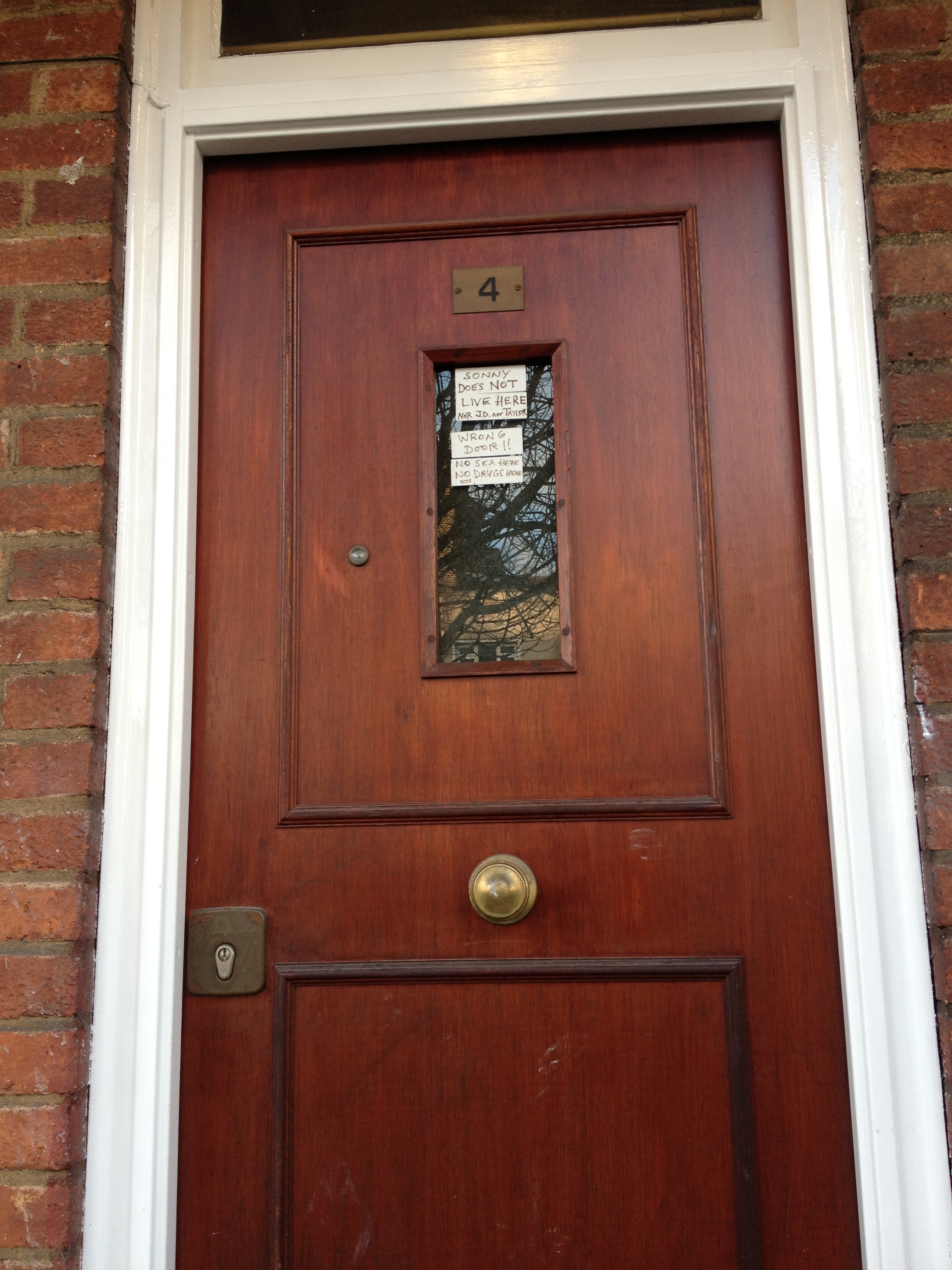
The Cardinal lived south of the River Thames. I got off the tube in Stockwell, directions in hand, and proceeded past an Irish corner pub and into a section of government housing projects. Once I arrived at the apartment, I noticed a sign on the front of the door which declared, “Sonny Does Not Live Here. Nor JD nor Taylor. Wrong Door!! No Sex No Drugs.” I found this quite interesting even though I was after neither, instead seeking simple counsel. Back in the south of Florida, I had begun writing about AIDS. The subject was challenging and broadened my journalistic abilities. It has traditionally been written about in the American media as a horror story and yet I was discovering more and more remarkable tales of bravery.

Cardinal Warning

Cardinal Warning

I was hoping the Cardinal could give me the United Kingdom’s perspective. I knocked on the door and Vincent invited me in.

“Come in, John, I’ve been expecting you,” he said. “The kettle is on.”

His apartment was full of books. It was small, humble and somewhat disheveled. I was there for almost three hours. Talking, sharing life stories. It was amazing. During our visit, a man and his apprentice came to check on the water line. Vincent was the building superintendent and the men needed direction. I said hello but nothing more. Once they left, I began my probe.

The Church, Disease, Power, Charity and, most important of all … Surrender.


Leaving Los Angeles just a Shadow of Myself

6 05 2013

I almost missed the train back to Arizona. “John, what time is your train?,” Normen asked as Joel and I browsed the sales racks at the Gap store in Hollywood.

“Oh yeah, the train,” I realized, pulling out my iPhone to check the time. I had one hour till departure. “We better go.”

And we did, briskly walking through the heavy crowds of people gathered on the sidewalks outside the Chinese Theater and down Hollywood Boulevard to where we had parked the car. On the windshield, a parking ticket courtesy of the City of Los Angeles greeted us. Union Station wasn’t that far away, but the traffic was thick and it was almost five o’clock. We would never make it, I thought.

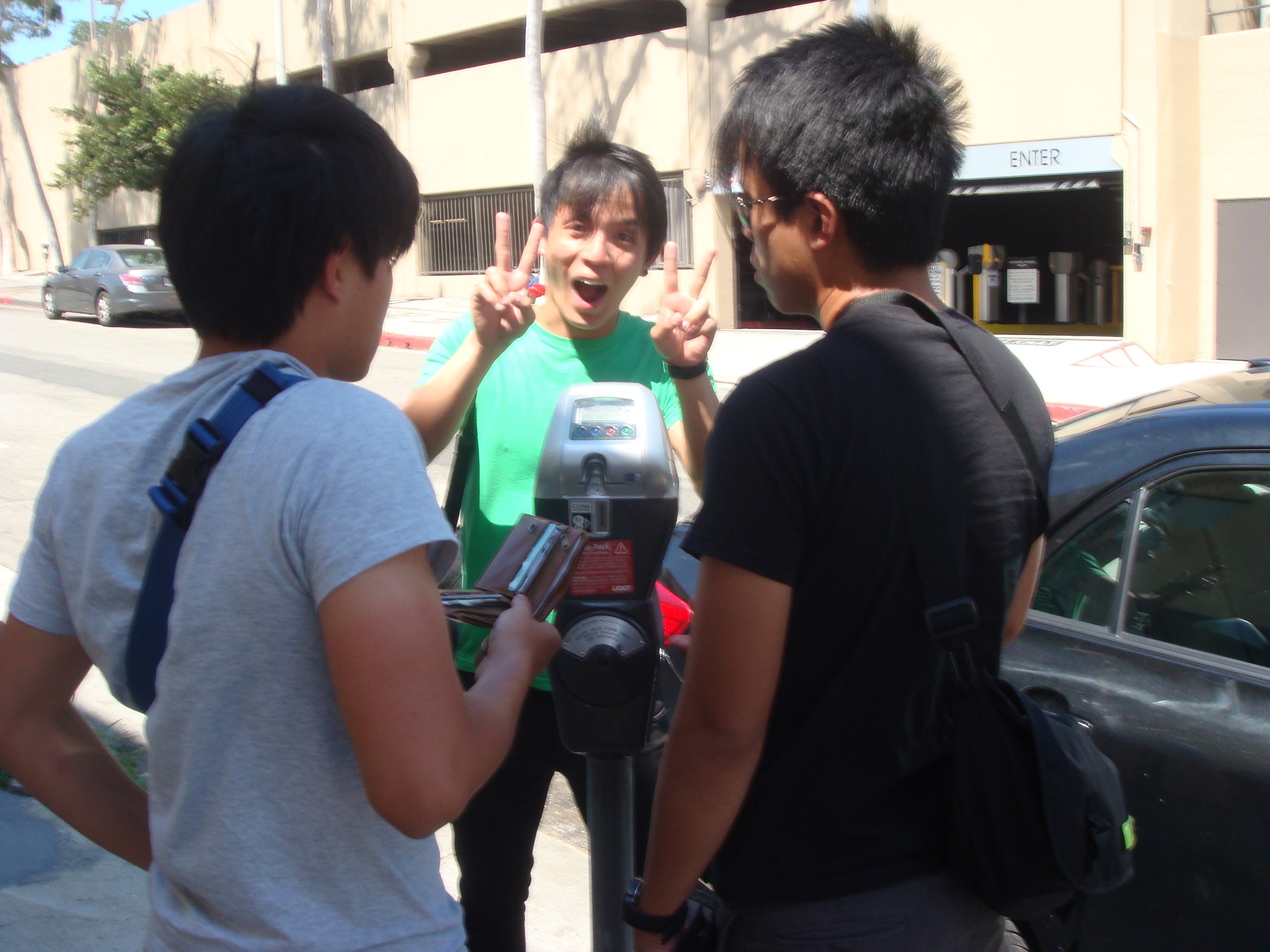
Normen gives the victory sign, as Cheng Yew and Jastine figure out the parking meter.

Normen gives the victory sign, as Cheng Yew and Jastine figure out the parking meter.

Crowds packed Hollywood Boulevard.

Crowds packed Hollywood Boulevard.

The guys were staying a few extra days in LA before driving up to San Francisco then flying across country to New York before departing back to Singapore. It would be one of those trips they would remember for the rest of their lives. I had made a similar journey to Europe as a teenager and those memories are still very much alive. I was thankful to have been a small part of their American experience.

Somehow we made it to Union Station with a few minutes to spare. Jastine and Cheng Yew accompanied me to tracks, where we said our goodbyes and had our hugs. They asked me to visit Singapore one day and promised to show me around. I said I would and thanked them for our friendship — a friendship developed over the course of living and working together for the past 10 weeks in the isolated, desert climate that is Grand Canyon. I would miss them. A lot.

The ride back to the Canyon was depressing. I was alone again — with still two months of work to go. Despite a nearly full train, I was the only one who made late dinner reservations in the dining car. The food was fair, the rolls hard as rocks, but the service was super. I enjoyed chatting with the Amtrak employees and conductors. They all were approachable and friendly, unlike those stuffy 50-something flight attendants often pushing the drink cart on a Delta plane. Most of the crew were in for the long haul to Chicago. One of the conductors asked me where I was from. “Florida,” I said and then he grinned and replied, “Interesting Governor you got there.”

Elected in 2010 during the Tea Party wave that swept me and many other Democrats out to sea, Florida Governor Rick Scott made a name for himself as an ideologue, hellbent on fighting the Obama Administration every step of the way. So when the federal government offered funds to the states to construct a high speed rail network, Scott refused the program and the money went elsewhere.

“They’re building a new connection from LA to San Francisco with your money,” the conductor gleefully said. “It’s projected to be the fastest route in America.”

“I’m sure it will be,” I replied, adding just a tinge of sardonic wit.

Florida was very much on my mind during those last months I spent working at the Canyon. I knew it would be a battleground state in the upcoming Presidential election and polls were showing Mitt Romney, the Republican nominee, to be leading in the Sunshine State. My break from politics had been refreshing and reinvigorating. Nature had truly heeled a lot of old wounds and now I was ready to return to the game.

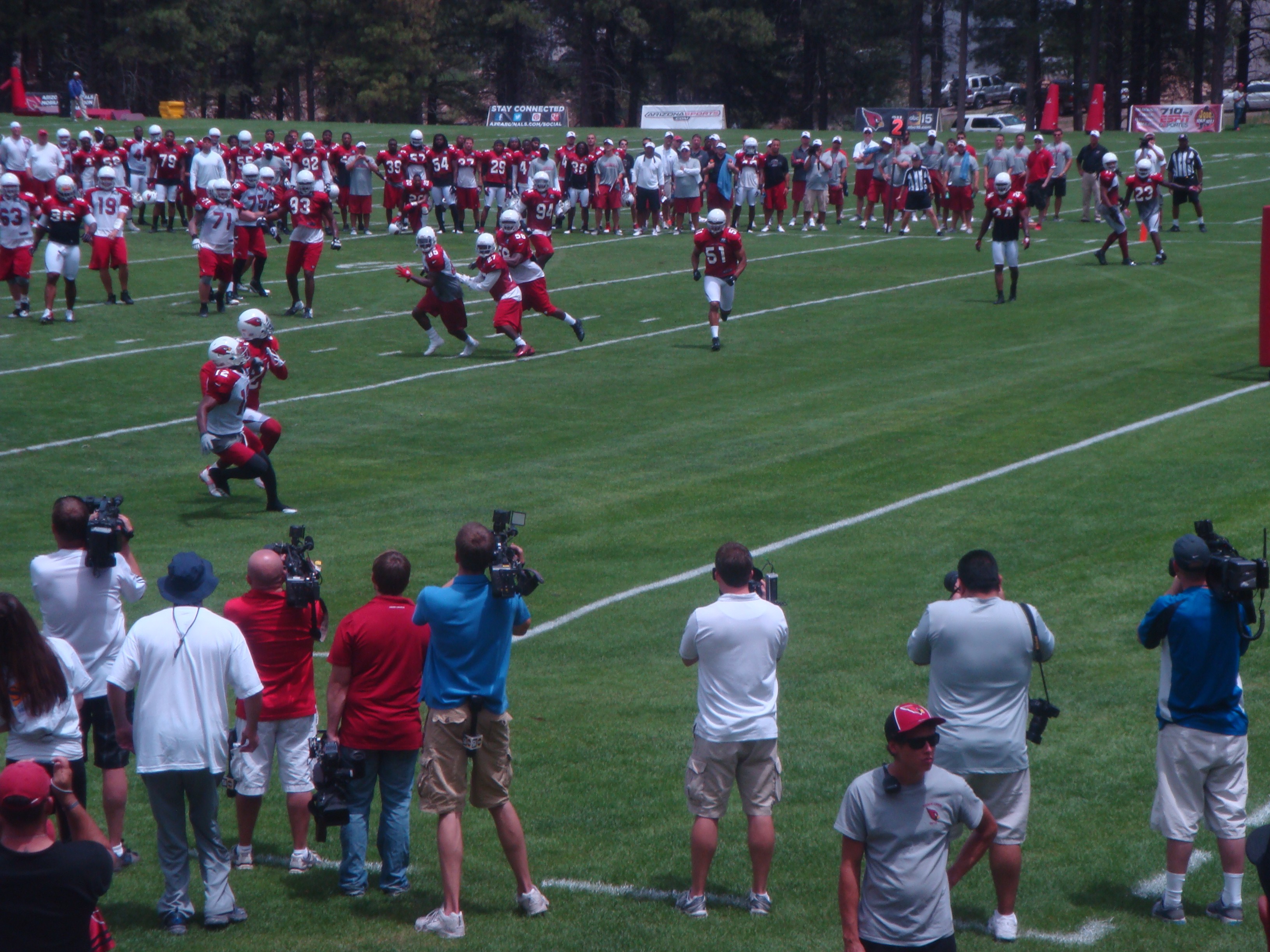
I spent the remainder of my time at Grand Canyon hanging out with my roommate Brian, who was eagerly anticipating the start of the college and pro football season. We traveled down to Flagstaff on one scorching Saturday afternoon to attend Arizona Cardinals training camp. The crowds were enormous that day and it was quite clear the people of the desert southwest were starved for a good NFL team.

Arizona Cardinals training camp in Flagstaff.

Arizona Cardinals training camp in Flagstaff.

When I wasn’t working or hanging out with Brian, I would go to the employee recreation center to lift weights, write, read the New York Times and visit with the international workers. I had gotten fairly close to a few of the Turks. One, a shaggy haired teenager named Ozgur, had become my table tennis buddy. He was quite gifted with the paddle. His English speaking skills were another story. I helped Ozgur with his English and he, in turn, taught me a few key phrases in Turkish. I would learn to say “Merhaba” and “Arkadas” with an Istanbul accent. Ozgur wanted to come to Florida with me after his work was finished. I really didn’t know what to say to this request, afraid he would not be able to understand my world back home.

I had not been entirely honest with my co-workers and friends from the Grand Canyon about circumstances involving my being there. But September was on the horizon and I would soon be stepping out of the shadows.


Catching the Chief to California

15 03 2013

We waited by the train tracks in the pitch black of the night.

“This is like a third world country,” Joel remarked as the shuttle bus dropped us off. It was anything but glamorous. Those who catch the westbound Amtrak Southwest Chief at Williams Junction, Arizona do so as if they were hobos hitching a ride. You wait by the tracks in the middle of a quiet pine tree forest and sometimes the wait can be long — “hours long” — confessed the shuttle bus driver, who stayed in radio contact with the train. Luckily for us, the Chief was running just a few minutes behind on this night, but it was still quite eery to be waiting in the woods with no sign of civilization for miles. No station, no depot, no benches, not even a single overhead structure for shelter.

On the opposite tracks, heading east, freight trains whizzed by as we looked down the tracks in hopes of spotting Amtrak’s oncoming lights. It would be almost 11 p.m. before the train finally arrived. We wearily climbed aboard and took the first available seats we could find. The train was fairly full and I was surprised by the roominess of coach seating. There were sleeper cars available, at a higher cost, but the standard seating was more than adequate and plenty spacious. Joel drifted off to sleep not long after we got settled in. I dosed off for a while and awoke when the train stopped in Needles, California. I tried to go back to sleep after that but couldn’t, the excitement of Los Angeles was building.

There were several more stops before we made it to our final destination of Union Station. I was amazed at the urban sprawl, picturesque mountains and the appearance of largely latino communities as we rolled through the San Bernardino Valley. By the time we reached Los Angeles, the sun was rising and most of the train had emptied out. Joel slept the entire way. At Union Station, we met up with the other guys — Jastine and his twin brother Normen and Cheng Yew, who had assumed the driving responsibilities. I snapped a few photos of Union Station, the lobby area in particular had a nostalgic feel to it. You could sense this was a bustling place before air travel became the norm.

The guys appeared surprisingly refreshed for having just bused in from Las Vegas. Jastine was the leader and he had arranged for a rental apartment in Hollywood. And it was pretty sweet. Not overly luxurious, but definitely a cut above the Holiday Inn and if location meant anything, our headquarters for the week was prime real estate — situated directly across the street from Paramount Pictures Studios. We stopped at the apartment just long enough to unload our luggage and then it was off to Venice Beach. Cheng Yew managed the traffic well and we arrived early enough to get a pretty good parking spot. Right away, I noticed this would not be like a Florida beach experience.

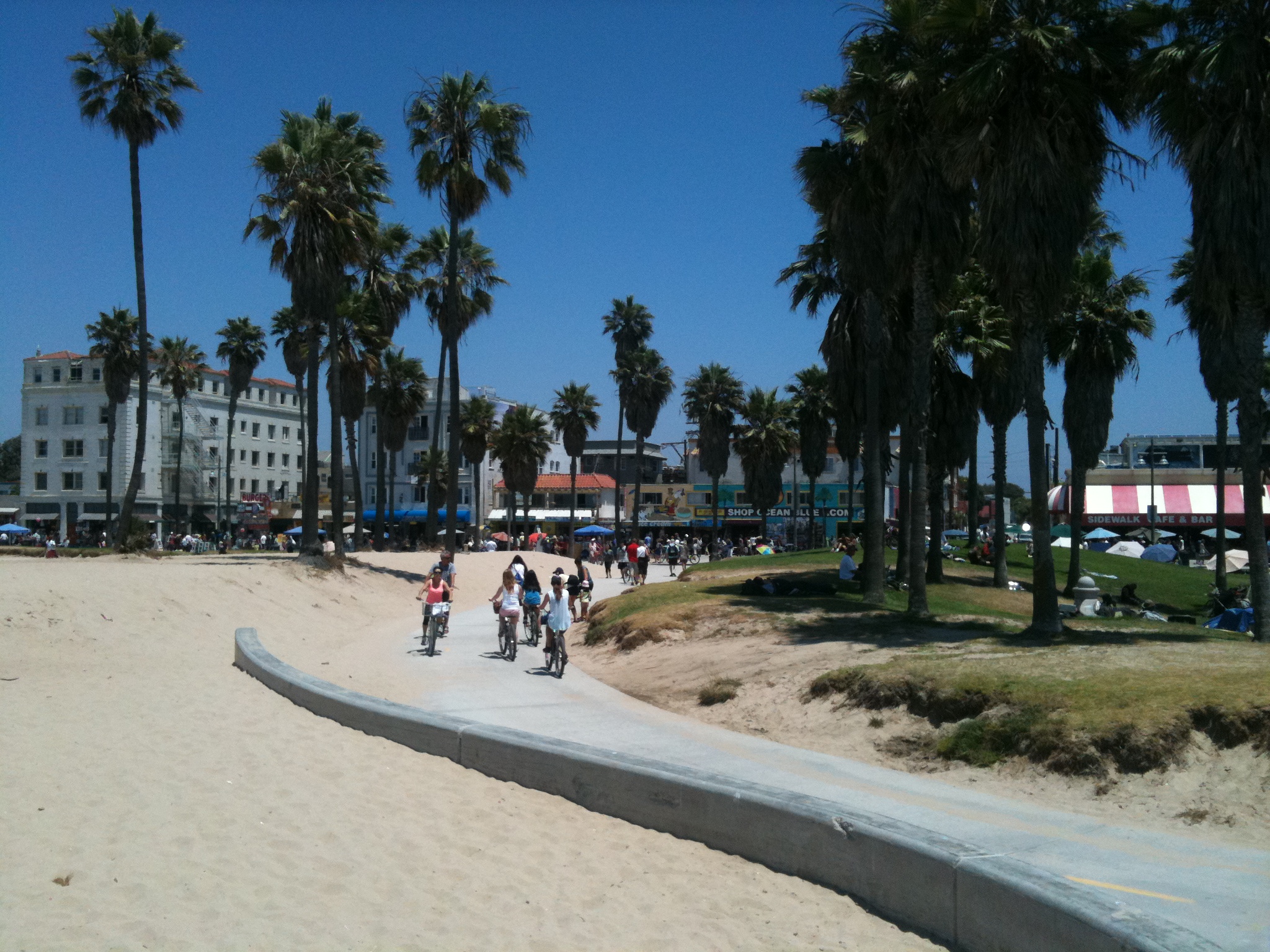
Cyclists enjoy the ride at Venice Beach, California.

Cyclists enjoy the ride at Venice Beach, California.

Unlike Panama City, where greedy developers built towering condominiums that block much of the public access and views of the water, Venice Beach was obviously designed with the pedestrian in mind. Nestled by the beach is an athletic oasis of basketball, tennis and handball courts, gyms, skateboarding pits, bicycle routes and jogging paths. And not to be left out, American consumerism lined the nearby streets with shops from high-end retail to fly-by-night gypsies waiting to capitalize. And we were eager to dive in, starting with a quick bite to eat at Jody Maroni’s hot dog stand, but before we could finish our dogs, a foul smelling panhandler approached and asked for some money. I offered to buy him a Maroni dog, but he said he wasn’t hungry. Guilted, I parted with some spare change, while the guys ignored him and he meandered on.

“You’re going to get that a lot in New York, fellas,” I warned them.

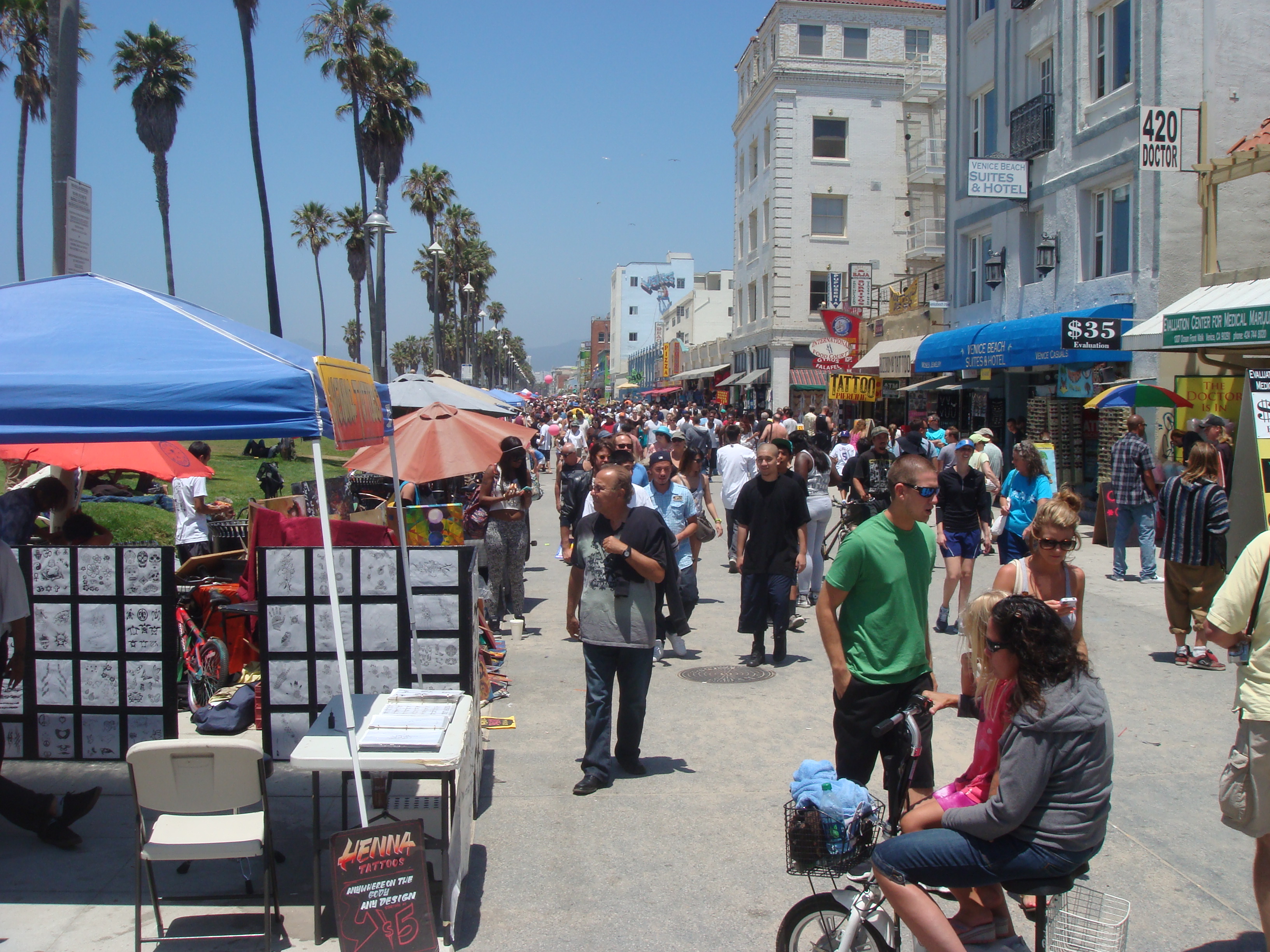
Refueled, we continued down the ocean front walk, snapping pictures and soaking in the atmosphere. It was a beautiful Sunday afternoon. Under clear skies, throngs of people from all walks of life had converged on Venice Beach for some fun in the California sun. It was hard to believe just 24 hours ago, Joel and I were in the Grand Canyon. The others didn’t say much about Las Vegas, honoring the code of what happens there, stays there. But as we made our way down the boardwalk, an odor engulfed us all. I knew right away what it was and Normen did too.

“I smell weed,” he said.

And then, as if on cue, a young man appeared out of the crowd, dressed in green surgeon’s scrubs. He handed Normen a business card, which read “The Green Doctor” with a Marijuana leaf in the background and then smiled and said, “Welcome to California, boys.”

Venice Beach Boardwalk

Venice Beach Boardwalk


Joel’s Ring of Fire

26 02 2013

This would not be my first trip to California, but it had been some time since setting foot inside the Golden State. One of the fringe benefits of working at the Grand Canyon was an opportunity to explore the Southwest either through trips offered by the employee rec center or independently. The group from Singapore had planned an impressive tour of the US before returning home — Las Vegas, LA, San Francisco, Yosemite and New York. I requested to tag along for the LA part, provided I could get there. This was part of the challenge and, as most travel agents will tell you, part of the fun.

Since noticing the Amtrak station in Flagstaff, I had been intrigued by the train and what it was all about. Rail passenger service in the South is almost nonexistent. Hurricanes have decimated tracks along the Gulf Coast and the states there seem to have no interest in restoring routes. Most of the poor and those without a vehicle travel primarily by bus in the South. Having experienced Greyhound before, I was in no hurry to ride the dirty dog again.

So in figuring out the way to LA, I decided to take the Grand Canyon train to Williams, Arizona where I could connect to Amtrak’s Southwest Chief and ride into Los Angeles just before dawn. It would be around a 15-hour trip and luckily I would not be making it alone. Joel, one of the Singapore entourage, would travel with me while the others went ahead to Las Vegas. Joel’s work contract called for him to stay a few more extra days in the Canyon and although he was not happy about it, he honored the deal and consequently missed out on the Vegas portion of the group’s American adventure. Of all the Singapore guys, Joel had the most uninspiring Grand Canyon job. He was a kitchen utility worker at Yavapai Lodge, where he cleaned cafeteria tables and loaded dishwashers.

“So much wasted food,” Joel would grumble when I asked about his duties. He cheerfully added, he would get me all the soda I could want when I was in the cafeteria. One of the few perks of his job.

I had gotten to know Joel better one afternoon when we hiked up the Hermit’s Nest Trail to watch a rare solar eclipse. A fierce soccer player, Joel described his matches as if they were all out war and revealed he was often at odds with his coach. He was also quite the romeo and not long after arriving in the Canyon, Joel began dating a cute Thai girl from housekeeping. As the solar eclipse got closer, it was Joel who found an awesome spot to view it. We climbed down from the rim — beyond the guard rail — and settled on a flat column of rock just past Hopi Point.

Hopi Point Solar Eclipse with Joel

Hopi Point Solar Eclipse with Joel

A solar eclipse occurs when the Moon passes between the Earth and the Sun and essentially creates a “Ring of Fire.” We had equipped ourselves with special viewing glasses and from our vantage point overlooking the Colorado River and the many chasms of Grand Canyon, the eclipse was indeed an awesome sight to behold. But staring too much into the sun is never a good thing. As we posed for pictures afterward, I remember Joel stumbling and damn near falling into the Canyon. I don’t think even he realized how close he had come to certain death.

Traveling by train to LA would be much less risky. As employees, the train ride to Williams was free, but it sure wasn’t fast. On average a 45-minute trip by car turned into a 2-hour slow descent through barren land. Joel had made the trip before, taking his girlfriend to Williams for an overnight excursion. He knew what to expect, right down to the super corny staged “holdup” by wild western outlaws. The entire train ride was geared toward children and families. We were merely taking advantage of our employee status and thus endured stale jokes for the free lift.

Once in Williams we had a few hours to kill before catching the Amtrak so Joel recommended grabbing a bite to eat at a nearby Thai restaurant. After months on a steady diet of National Park cafeteria food, I gladly agreed. The women working the restaurant remembered Joel from his previous visit and we were treated like kings. The food was flat out delicious. As we dined on Pad Thai and other recipes that I cannot begin to spell, Joel let loose frustrations of working with some of the Native Americans at the park. They were sentiments similarly expressed by the blunt Western author Edward Abbey in his great novel, “Desert Solitaire.”

I did not dispute any of Joel’s observations and served more less as his therapist when he told me how, on his last day, he had basically told this one older Indian woman to take a long walk off a short pier.

“She was always telling me what to do,” he said. “And she never did anything.”

After dinner, we returned to the train depot where a bus waited to take us to the Amtrak station, a few miles south of Williams. But as we would find out, there was no station and no train in sight.